
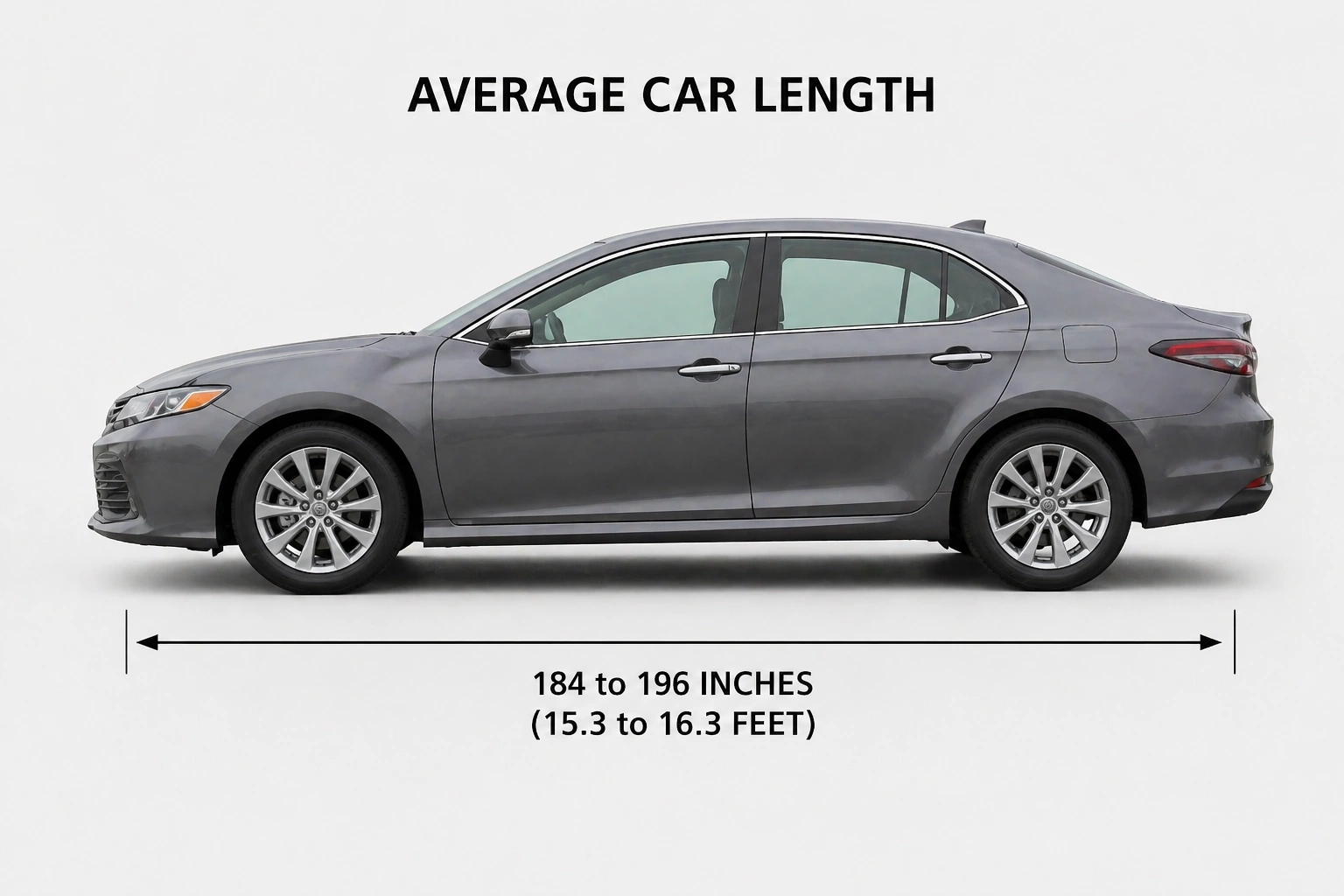
Car size often becomes an important detail when choosing a vehicle, planning parking space, or simply comparing different models. Length is one of the first measurements people notice, yet it is not always clear what counts as average.
Vehicles vary widely depending on their purpose, design, and segment, which makes the idea of a single “standard” length more complex than it seems.
From compact city cars to full-size sedans and large SUVs, each category has its own range. Even within the same segment, small differences in design can change overall length by several inches.
These variations affect not only how a car looks but also how it fits into daily life, from garage space to maneuverability in tight areas. A clear look at average lengths across different types of vehicles helps create a better sense of what to expect and how size influences usability.
What Defines The Length Of A Car
How Car Length Is Measured In Practical Terms
Car length is measured from the very front of the vehicle to the furthest point at the rear. This includes bumpers, body panels, and any fixed external components. It is a straightforward measurement, yet it plays a major role in how a car functions in everyday situations.
Manufacturers provide this measurement as part of the vehicle’s specifications. It helps buyers compare models and determine whether a car will fit into a garage or parking space. Even a small difference in length can make a noticeable impact when navigating tight areas.
Length is often considered alongside other dimensions such as width and height. Together, these measurements define the overall footprint of the vehicle. However, length tends to have the most direct effect on parking and maneuvering.
Understanding how length is measured helps in making accurate comparisons. It ensures that decisions are based on actual dimensions rather than visual impressions alone.
Why Length Varies Across Vehicle Types
Vehicle length varies because different types of cars are designed for different purposes. A compact car is built for efficiency and ease of use in crowded areas, which keeps its length shorter. In contrast, a larger vehicle such as an SUV or sedan is designed to offer more space and comfort, which increases its overall size.
Design priorities also influence length. Some vehicles focus on maximizing interior space, while others emphasize style or performance. These choices affect how the exterior is shaped and how long the vehicle becomes.
Safety features and structural requirements can also add to length. Modern vehicles often include reinforced areas at the front and rear to improve protection, which slightly increases overall dimensions.
Each category of vehicle has its own balance between size and function. This is why there is no single average length that applies to all cars, but rather a range that depends on the type of vehicle.
Average Length Of Different Types Of Cars
Compact Cars And Small Vehicles
Compact cars are among the shortest vehicles on the road. Their average length typically falls between 12 to 14 feet. This size makes them ideal for urban environments where space is limited and maneuverability is important.
These vehicles are designed to be easy to park and navigate through tight streets. Their shorter length allows drivers to fit into smaller parking spots and handle crowded areas with less difficulty. This makes them a popular choice for city driving.
Despite their smaller size, compact cars still offer practical interior space. Advances in design have made it possible to maximize cabin room while keeping the exterior dimensions compact. This balance allows them to remain functional without becoming bulky.
The shorter length also contributes to better fuel efficiency in many cases. Less weight and a smaller footprint often result in reduced energy consumption, making compact cars both practical and economical.
Sedans And Mid Size Cars
Sedans represent a middle ground in terms of length. Most sedans fall within the range of 14 to 16 feet, depending on whether they are classified as compact, mid-size, or full-size. This category offers a balance between space and practicality.
Mid-size sedans are among the most common vehicles, providing enough room for passengers while remaining manageable in everyday use. Their length allows for comfortable seating and a spacious trunk, making them suitable for both daily commutes and longer trips.
Full-size sedans extend slightly beyond this range, offering additional legroom and cargo space. These vehicles are often chosen for their comfort and smooth ride, which comes from their larger dimensions.
The length of sedans also contributes to stability on the road. A longer wheelbase can improve balance and handling, especially at higher speeds. This makes them a versatile option for a wide range of driving needs.
SUVs And Larger Vehicles
Sport utility vehicles and larger models tend to have greater length, often ranging from 15 to 18 feet or more. This additional size allows for more seating capacity and increased cargo space, making them suitable for families and long-distance travel.
SUVs are designed to provide versatility. Their length supports features such as third-row seating, larger storage areas, and enhanced comfort for passengers. This makes them a popular choice for those who need extra space.
Larger vehicles also offer a higher driving position, which can improve visibility. However, the increased length can make parking and maneuvering more challenging, especially in tight spaces.
The trade-off between space and convenience is a key factor when considering larger vehicles. While they offer more room and capability, they require more attention when navigating urban environments.
How Car Length Affects Daily Use
Parking Space And Maneuverability
Car length has a direct impact on how easy it is to park and move in tight areas. Shorter vehicles can fit into smaller spaces and require less room to turn. This makes them ideal for crowded cities and areas with limited parking options.
Longer vehicles, on the other hand, may require more planning when parking. They need larger spaces and wider turning angles, which can make certain situations more challenging. Drivers often need to be more aware of their surroundings to avoid obstacles.
Parking structures and residential garages also have size limits. Knowing the length of a vehicle helps ensure that it fits comfortably without difficulty. This is especially important in areas where space is restricted.
Maneuverability is closely linked to length. Shorter vehicles tend to be more agile, while longer ones provide stability but require more space to operate. Balancing these factors helps in choosing a vehicle that suits daily needs.
Interior Space And Comfort Considerations
Length plays a significant role in determining interior space. Longer vehicles generally offer more legroom and storage capacity. This makes them more comfortable for passengers, especially during extended trips.
Shorter vehicles may have limited space, but they are often designed to maximize efficiency. Clever interior layouts can provide adequate comfort despite smaller dimensions. This makes them suitable for everyday use.
The relationship between length and comfort is not always straightforward. Some vehicles prioritize interior space without significantly increasing length, while others focus on exterior design. Understanding this balance helps in evaluating different options.
Choosing the right length depends on individual needs. Those who prioritize comfort and space may prefer longer vehicles, while those who value convenience and ease of use may opt for shorter ones.
Choosing The Right Car Length For Your Needs
Matching Vehicle Size To Lifestyle
Selecting the right car length depends on how the vehicle will be used. For city driving, shorter vehicles offer clear advantages. They are easier to park, navigate, and maintain in crowded environments.
For families or those who travel frequently, longer vehicles provide additional space and comfort. The extra length allows for more seating and storage, making them better suited for carrying passengers and luggages.
Lifestyle factors such as daily commute, parking availability, and travel habits all influence the ideal length. Considering these aspects helps in making a practical choice that fits everyday needs.
Balancing convenience and functionality is key. A vehicle that matches the intended use ensures a better overall experience without unnecessary compromises.
Future Trends In Car Size And Design
Car design continues to evolve, and length is influenced by changing trends and technology. Modern vehicles are often designed to maximize interior space while keeping exterior dimensions efficient. This allows for better use of available space without significantly increasing length.
Electric vehicles are also influencing design trends. Their layouts often differ from traditional cars, which can affect overall dimensions. Some models offer spacious interiors within compact external sizes.
Urban planning and environmental concerns are encouraging the development of smaller, more efficient vehicles. At the same time, demand for larger vehicles remains strong in certain markets. This creates a wide range of options for different needs.
Future designs are likely to focus on balancing size, efficiency, and practicality. This ensures that vehicles continue to meet the demands of modern زندگی while adapting to changing conditions.
Conclusion
The average length of a car depends on its type, purpose, and design. Compact cars, sedans, and larger vehicles each fall within their own range, offering different advantages based on size. There is no single measurement that applies to all vehicles, but understanding these ranges helps in making informed decisions.
Length affects many aspects of daily use, from parking to comfort. Choosing the right size ensures that the vehicle fits both practical needs and personal preferences. A clear awareness of these factors makes it easier to find a car that suits any lifestyle.
Car size will continue to evolve as technology and design advance. Staying informed about these changes helps in selecting a vehicle that remains practical and efficient over time.