Booster seats sit at an important point between car seats and adult seat belts. They are meant for children who have outgrown harnessed seats but are not yet tall enough for a seat belt to fit correctly on its own.
Because boosters look simpler than traditional car seats, many parents assume installation rules are also simpler. That is where confusion often begins.
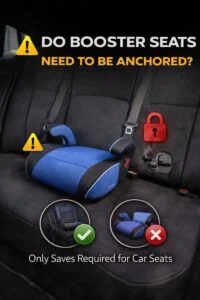
One of the most common questions is whether booster seats need to be anchored to the car using LATCH or similar systems.
Some boosters come with visible connectors, while others simply rest on the vehicle seat. Instructions vary by model, and laws differ by region, which adds to the uncertainty.
Anchoring affects how the booster behaves when the child is not in the seat, how stable it feels during use, and how it performs in certain crash situations.
This guide explains when booster seats need anchors, when they do not, how different booster designs work, and how to choose and use one safely without overcomplicating the process.
What A Booster Seat Is Designed To Do
A booster seat does not restrain a child the same way a harnessed car seat does. Its primary job is to position the vehicle’s seat belt correctly.
A properly used booster:
- Raises the child so the lap belt sits low on the hips
- Keeps the shoulder belt centered on the shoulder
- Helps the belt contact strong parts of the body
The seat belt does the restraining work. The booster only improves belt fit and positioning.
Because of this design, booster seats follow different anchoring rules than harnessed car seats.
What Anchoring Means In Child Seats
Anchoring usually refers to the Lower Anchors and Tethers for Children system, often called LATCH.
LATCH anchors are built into the vehicle and allow a child seat to attach directly to the car without using the seat belt.
In harnessed car seats, anchors hold the seat firmly in place and manage crash forces.
In booster seats, anchors serve a different purpose depending on the design.
Do All Booster Seats Require Anchors
The short answer is no.
Most booster seats do not require anchors to be used safely. Whether anchoring is needed depends on the type of booster seat.
Booster seats fall into two main categories:
- Backless booster seats
- High-back booster seats
Each category has different anchoring considerations.
Backless Booster Seats And Anchors
Backless booster seats are the simplest design. They consist of a raised seating surface with belt guides.
Most backless boosters:
- Do not have LATCH anchors
- Rely entirely on the vehicle seat belt
- Are held in place by the child’s weight
When the child is buckled in, the seat belt secures both the child and the booster together.
When the child is not in the seat, the booster is usually unsecured and can move freely.
This is normal and allowed for most backless boosters.
High-Back Booster Seats And Anchors
High-back booster seats provide head and torso support in addition to belt positioning.
Some high-back boosters include LATCH anchors, while others do not.
Anchors on high-back boosters:
- Hold the seat in place when not occupied
- Improve stability during everyday driving
- Prevent the booster from becoming a projectile when empty
In many models, anchors are optional rather than required.
Why Some Booster Seats Have Anchors
Anchors on booster seats are mainly for convenience and stability, not for crash restraint.
Since the seat belt restrains the child, the anchors are not managing primary crash forces.
Instead, anchors:
- Keep the booster from shifting during entry and exit
- Make buckling easier for the child
- Reduce movement on slippery vehicle seats
They also help keep the seat positioned correctly at all times.
When Anchors Are Required By The Manufacturer
Some booster seat manufacturers require anchors to be used if they are provided.
This requirement is model-specific and clearly stated in the instruction manual.
If a booster seat includes anchors and the manual says they must be used, then they are part of the approved installation.
Ignoring manufacturer instructions can compromise safety and void certifications.
Always follow the instructions for the specific booster model.
When Anchors Are Optional
Many booster seats include anchors that are optional.
In these cases:
- The booster is safe with or without anchors
- Anchors are recommended but not mandatory
- Seat belt use remains the primary safety feature
Optional anchors are common in high-back boosters designed for flexibility across vehicles.
Booster Seats Without Anchors Are Still Safe
A booster seat without anchors is not unsafe by design.
Millions of children ride safely every day in non-anchored booster seats.
The key factor is correct seat belt fit, not anchoring.
If the seat belt fits properly and the booster is used correctly, the absence of anchors does not reduce protection for the child.
What Happens In A Crash With An Unanchored Booster
In a crash, the seat belt restrains the child.
The booster moves with the child because it is under them and held by the belt.
The main concern with unanchored boosters is not during the crash itself, but when the seat is empty.
An unoccupied booster can become a loose object if not secured or removed.
Securing A Booster Seat When Not In Use
If a booster seat does not have anchors, it should still be managed safely when empty.
Options include:
- Buckling the seat belt around the booster
- Storing the booster in the trunk when not in use
- Using a model with anchors if frequent empty travel occurs
This reduces the risk of the seat moving around during sudden stops.
Legal Requirements And Anchoring Rules
Laws generally focus on proper restraint use rather than anchoring details.
Most regulations require:
- A booster seat for children within a certain height or age range
- Correct seat belt use with the booster
Very few laws require anchors for booster seats specifically.
Manufacturer instructions usually set the rules for anchoring, not legislation.
How Vehicle Design Affects Booster Anchoring
Not all seating positions have lower anchors.
Center seats often lack anchors even in newer vehicles.
Booster seats with optional anchors allow flexibility for center-seat placement.
If anchors are required by the booster and not available in the chosen seat position, that booster cannot be used there.
Vehicle manuals help identify anchor locations.
High-Back Boosters With Adjustable Anchors
Some modern high-back boosters include adjustable anchor systems.
These allow the booster to fit a wider range of vehicles.
They also make it easier to keep the seat flush against the vehicle seatback.
These systems are designed for stability, not crash load management.
Belt Fit Still Matters More Than Anchors
Regardless of anchoring, belt fit remains the most important safety factor.
A properly fitted belt should:
- Lie flat across the upper thighs
- Cross the center of the shoulder
- Stay in position during movement
If belt fit is poor, anchoring does not fix the problem.
Choosing the right booster size and design matters more.
When Anchors Can Improve Everyday Use
Anchors can make daily use easier in certain situations.
They help when:
- The child climbs in and out independently
- The vehicle seat is leather or slippery
- Multiple children share the back seat
Anchors reduce the need for frequent repositioning.
Ease of use encourages consistent, correct usage.
Backless Boosters And Stability Concerns
Backless boosters tend to move more when empty.
This is expected and not a safety flaw.
Parents should simply secure or store them when not in use.
Backless boosters are often chosen for:
- Travel
- Carpools
- Older children close to adult belt fit
They remain safe when used as intended.
Common Myths About Booster Seat Anchors
One myth is that anchors make boosters significantly safer in crashes. They do not change how the seat belt restrains the child.
Another myth is that unanchored boosters are outdated or unsafe. Many are fully certified and approved.
A third myth is that anchors replace the seat belt. They never do.
Understanding these points helps avoid unnecessary worry.
Choosing A Booster Seat With Or Without Anchors
The choice depends on usage patterns.
Anchored boosters may be better if:
- The booster stays in one vehicle
- The child enters and exits alone
- Stability matters for convenience
Non-anchored boosters may be better if:
- The seat moves between vehicles
- Anchors are not available
- Simplicity is preferred
Both types can be safe when used correctly.
Manufacturer Instructions Always Take Priority
Every booster seat is tested and approved under specific conditions.
Those conditions are described in the manual.
If anchors are required, they must be used.
If anchors are optional, follow guidance based on your situation.
Ignoring instructions can undermine the seat’s tested performance.
Installation Checks That Matter Most
Regardless of anchoring, check that:
- The booster sits flat on the vehicle seat
- The child sits upright without slouching
- The belt retracts smoothly
- The shoulder belt guide is used correctly
These checks influence safety far more than anchor presence.
When It Is Time To Transition Out Of A Booster
Booster seats are used until the seat belt fits properly without assistance.
This usually happens when:
- The child’s knees bend at the seat edge
- The lap belt stays low on the hips
- The shoulder belt stays on the shoulder
- The child can sit properly for the whole trip
Anchoring does not affect readiness for this transition.
Final Thoughts
Booster seats do not always need to be anchored, and in many cases, they are designed to work safely without anchors at all. The vehicle’s seat belt is the primary safety system, while anchors mainly add stability and convenience. Some high-back boosters require anchors, some offer them as an option, and most backless boosters do not use them at all.
The most important factor is following the booster seat’s instructions and ensuring proper seat belt fit every time the child rides. Anchors can make daily use easier, but they are not the foundation of booster seat safety. Correct positioning, consistent use, and attention to fit are what truly keep children protected on the road.