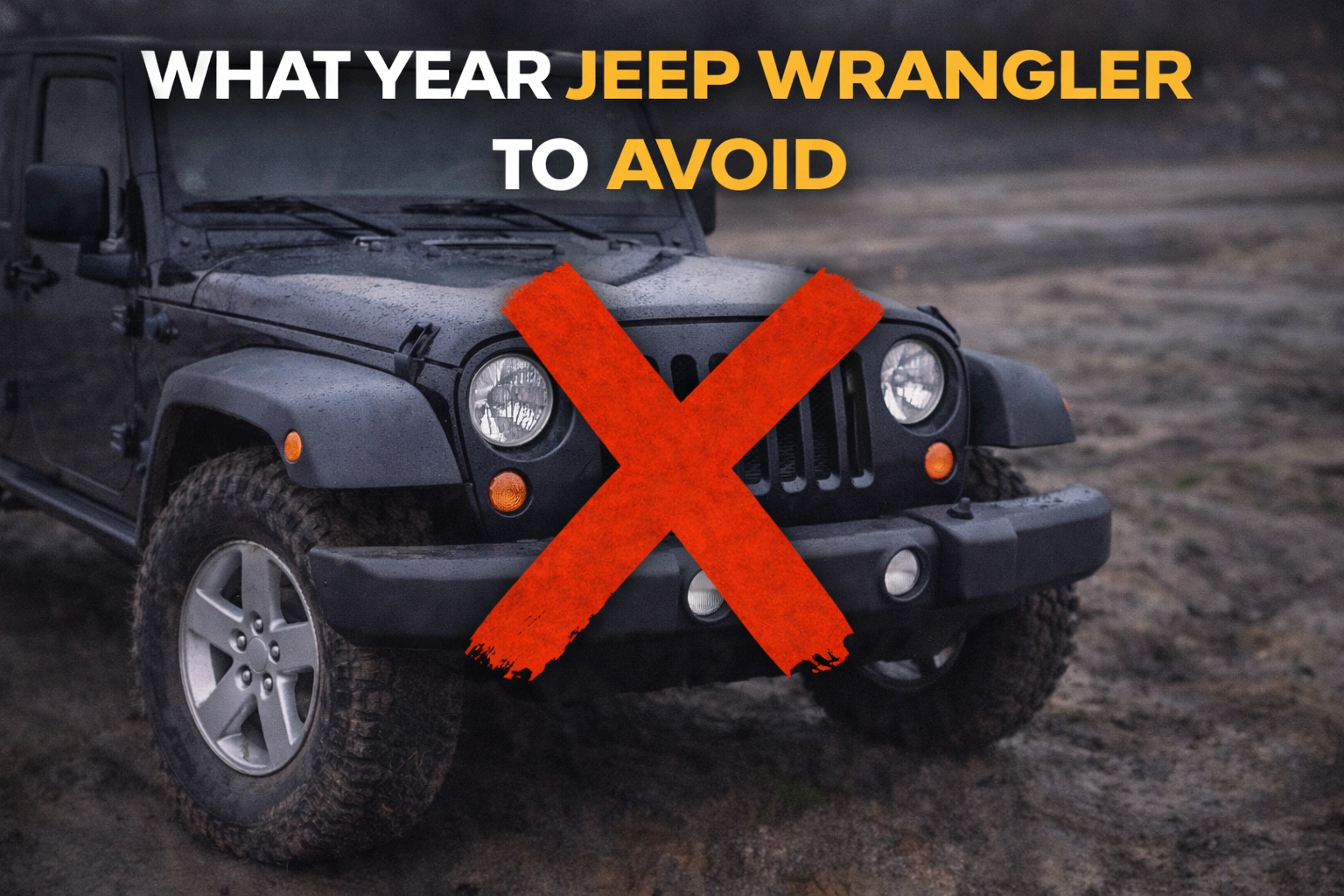
The Jeep Wrangler has earned a loyal following for one simple reason: it stays true to its roots. Removable doors, solid axles, rugged styling, and real trail capability separate it from crossovers that only look adventurous. For many buyers, owning a Wrangler represents freedom, durability, and the ability to go places other vehicles cannot.
However, not every model year delivers the same reliability. Over the decades, different generations introduced new engines, transmissions, and electronic systems. Some years became known for mechanical problems, electrical faults, or build quality concerns that can turn ownership into an expensive experience.
Choosing the right year matters more than many buyers realize. While Wranglers hold value well, certain model years require closer inspection and careful budgeting for potential repairs. A detailed look at problem-prone years and common trouble areas helps separate solid purchases from risky ones.
Early JK Generation Concerns And Notable Trouble Years
2007 Jeep Wrangler Issues Linked To First Year Redesign
The 2007 model year marked the beginning of the JK generation. It introduced a four-door Unlimited version and a new 3.8-liter V6 engine. While the redesign brought more practicality, it also introduced early production concerns.
The 3.8-liter engine was criticized for modest power output and oil consumption in higher-mileage examples. Some owners reported excessive oil use between service intervals, leading to long-term engine wear if not monitored carefully.
Electrical gremlins also surfaced in early builds. Faulty wiring connectors, intermittent warning lights, and sensor malfunctions appeared more frequently compared to later JK models.
First-year redesigns often carry minor build inconsistencies as manufacturing processes adjust. Buyers considering 2007 models should review maintenance records closely and confirm proper engine care.
2008 And 2012 Transition Year Problems
The 2008 Wrangler continued with the 3.8-liter engine and experienced similar performance and oil-related concerns. While not universally problematic, higher mileage units often show signs of wear if oil levels were neglected.
The 2012 model year introduced a significant change: the 3.6-liter Pentastar V6 replaced the older engine. Although the Pentastar improved power and efficiency, early production versions in 2012 experienced cylinder head issues.
Some engines developed ticking noises due to valve train concerns. In certain cases, cylinder head replacement was required under warranty. While later 2012 builds improved, early examples may still carry this reputation.
Buyers considering 2012 models should confirm whether any recall or warranty work was completed.
Transmission And Drivetrain Concerns Across Generations
Manual Transmission Clutch And Gear Engagement Issues
Certain JK model years experienced premature clutch wear, especially in vehicles used off-road or in heavy traffic conditions. Drivers reported difficulty shifting and occasional gear grind symptoms.
Manual transmission durability varies depending on driving habits. Wranglers used for towing or rock crawling place additional stress on clutch components.
Replacement costs depend on parts and labor complexity. Clutch replacement can become moderately expensive due to transmission removal requirements. Evaluating clutch engagement smoothness during a test drive provides valuable insight into wear levels.
Automatic Transmission Hesitation And Shifting Concerns
Some Wrangler owners have reported delayed shifting or hesitation in automatic transmissions, particularly in earlier JK models. Software updates resolved certain shifting irregularities in many cases.
Transmission issues often appear gradually. Harsh engagement, slipping under acceleration, or warning lights should not be ignored.
Addressing transmission fluid maintenance regularly improves longevity. Neglected service intervals often contribute to shifting irregularities.
Electrical And Steering Issues To Watch Carefully
“Death Wobble” And Steering Instability
One of the most widely discussed Wrangler concerns is steering vibration commonly referred to as “death wobble.” While not exclusive to a specific year, it has been reported in multiple JK models.
This issue typically occurs at highway speeds after hitting a bump, causing the front suspension to oscillate rapidly. Worn track bars, bushings, or improperly balanced tires often contribute to this condition.
Proper suspension maintenance reduces the likelihood of steering instability. Buyers should inspect steering components thoroughly and test highway stability before purchase.
Electrical Module And Sensor Failures
Wranglers from certain years have experienced intermittent electrical faults. Issues such as malfunctioning window switches, door lock failures, or random dashboard warning lights appear occasionally in owner reports.
These problems often trace back to wiring harness wear or module communication glitches. While not catastrophic, repeated electrical repairs can become frustrating.
Reviewing service history and checking for consistent electrical behavior during inspection helps identify potential concerns.
JL Generation Improvements And Early Production Observations
2018 JL Launch Year Considerations
The JL generation launched in 2018 with updated styling, improved technology, and refined engines. While overall reliability improved compared to early JK years, first-year models occasionally experience minor software and electronic quirks.
Early infotainment system glitches and sensor calibration updates were reported in some vehicles. Software updates addressed many concerns.
As with most redesign years, confirming recall completion and software updates is essential before purchase.
Engine Variants And Turbocharged Options
Newer Wrangler generations introduced turbocharged four-cylinder engines and mild-hybrid systems. While these engines offer improved efficiency and torque, long-term durability data remains more limited compared to traditional naturally aspirated engines.
Turbocharged engines require strict adherence to oil change intervals. Delayed maintenance increases the risk of premature wear.
Buyers should evaluate maintenance consistency and confirm no warning lights or abnormal sounds during operation.
How To Choose The Right Jeep Wrangler Year
Prioritizing Maintenance Records Over Model Year Alone
While certain years have stronger reputations than others, maintenance history often outweighs production year. A well-maintained 2009 Wrangler may prove more reliable than a neglected 2016 model.
Look for consistent oil changes, documented repairs, and evidence of suspension upkeep. Off-road usage is common with Wranglers, so inspecting undercarriage components for damage is important.
Service records reveal how responsibly the previous owner treated the vehicle.
Budgeting For Suspension And Wear Components
Wranglers use solid axles and durable suspension setups, but bushings, ball joints, and shocks wear over time. Replacing these components restores ride stability and steering response.
Repair expenses depend on the specific component involved. Replacing a worn track bar generally costs less than a full steering rack or axle rebuild. Suspension refresh work often falls within moderate repair ranges compared to major engine repairs.
Planning a small maintenance reserve helps manage ownership costs effectively.
Bottom Line
Certain Jeep Wrangler years require closer inspection before purchase, particularly early JK models like 2007, 2008, and some 2012 builds. Issues such as oil consumption, cylinder head concerns, steering instability, and electrical glitches appear more frequently in these years.
Later JK and JL models show improvement, though first-year redesign models always deserve careful review. Maintenance history, suspension condition, and transmission behavior matter as much as the model year itself.
A thorough inspection and documented service record reduce risk significantly. With proper care, many Wrangler years provide long-lasting durability. Choosing wisely ensures the vehicle delivers the rugged capability it is known for without unexpected mechanical surprises.