
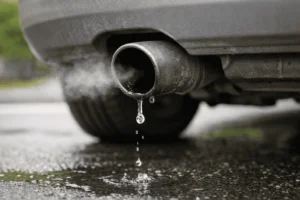
You park the car overnight, start it the next morning, and notice clear water dripping from the tailpipe — or you see little puddles after a short trip. It looks alarming, but in most cases it’s an ordinary byproduct of how engines and exhaust systems work.
Internal combustion converts fuel into gases — and one of the main chemical byproducts is water vapor. That vapor condenses inside cold metal pipes and eventually runs out as liquid.
Still, water from the exhaust can sometimes be a sign of trouble: leaking coolant that gets burned in the cylinders, a cracked head, or a damaged catalytic converter.
This guide walks through the common causes, how to tell “normal” condensation from serious faults, what tests you can run, what a mechanic will check, likely repair paths and costs, and how to avoid being misled by myths.
I’ll include clear red flags so you know when to act fast and cite reputable technical sources so you can check the details yourself.
Short note on sources
We go through from established, reputable automotive references and technical materials to explain both chemistry and mechanical failure modes.
Key references used for factual checks and explanations include HowStuffWorks’ explanation of catalytic converter chemistry, technical summaries of catalytic converter function and emissions chemistry, manufacturer and technical guidance on condensation and coolant-burning symptoms, and repair and roadside advice summaries.
These sources informed the chemistry of combustion, the normality of condensation, and the red-flag symptoms that indicate coolant is being burned inside the engine.
The simple chemistry: why engines make water
When gasoline burns, its chemical reaction with oxygen mainly produces carbon dioxide (CO₂) and water (H₂O). Modern catalytic converters also assist in oxidizing leftover hydrocarbons and carbon monoxide into CO₂ and water.
That means water vapor is always present in exhaust gases; when these hot gases cool inside the exhaust system, the vapor condenses into liquid water that can drip from the tailpipe. This is a normal physical result of combustion and emissions control working correctly.
Because of that chemistry, you’ll most often notice water:
- After short trips when the exhaust never fully heats up enough to evaporate condensation,
- In cold or humid weather when pipes are cooler and condensation forms more readily,
- After heavy condensation inside the catalytic converter or muffler that built up while the car sat.
So — clear water dripping from the exhaust is frequently benign. But it’s also true that some forms of moisture or vapor point to serious engine issues. The rest of this guide shows you how to separate the two.
Normal condensation — what it looks and smells like
Typical condensation-related water is:
- Clear and odorless (sometimes slightly metallic),
- Present in small amounts or occasional drips, especially right after startup,
- Associated with little or no visible white vapor once the engine warms up.
If you see a few drops after a cold start or a short run and the car otherwise behaves normally, this is almost always the reason. The catalytic converter and muffler are common places for condensation to collect; they warm up slower than the engine and can hold water until exhaust flow pushes it out.
Large passenger-vehicle tests and manufacturer notes confirm this is expected behavior, particularly in winter or after long idle periods.
When to relax: small amounts of clear water that appear only during the first minutes of running, or puddles after a long idle on a cold day, are normal. Don’t worry unless other symptoms appear.
When water is more than condensation: coolant in the exhaust
Not all water from the tailpipe is harmless. If the water is coming from coolant leaking into the cylinders, that’s serious.
Coolant entering the combustion chamber produces thicker white smoke (steam) on startup or continuous white smoke under load, a sweet or antifreeze-like smell from the exhaust, low coolant level without visible external leaks, and — if the problem is advanced — creamy/milky oil (coolant mixed into engine oil).
Those are classic signs of a blown head gasket, cracked head, or cracked engine block. Edmunds and other reliable repair guides say persistent white smoke and coolant loss are strong indicators that coolant is being burned and you should stop driving to prevent catastrophic engine damage.
Red flags for coolant burning:
- Continuous thick white smoke (not just brief steam) from the tailpipe.
- Sweet/chemical smell in exhaust or cabin.
- Falling coolant level without visible external leaks.
- Overheating and bubbling in the coolant overflow or radiator with engine running.
- Oil that looks milky or foamy (coolant in oil).
If you observe any of these, don’t ignore them — have the car inspected promptly.
How to tell the difference — quick checks you can do
Start with the obvious, safe, and inexpensive checks before worrying:
- Check the liquid itself. Catch a sample in a white paper cup (careful near hot exhaust). Clear, odorless drops point to condensation. Cloudy, oily, or sweet-smelling liquid suggests coolant or oil contamination.
- Look at the smoke. A brief white vapor puff on a cold start is normal (condensation steam). Persistent, dense white smoke that continues as you drive is likely coolant burning. Blue smoke points to oil burning; black smoke indicates rich fuel or injector problems. Edmunds and technical guides emphasize smoke color and persistence as key clues.
- Check coolant level. With a cold engine, look at the coolant overflow bottle. If levels drop noticeably over a few days with no visible external leak, suspect internal consumption (burning) or a hidden leak. A head gasket leak often shows coolant loss without puddles under the car.
- Inspect engine oil. Remove the dipstick: if oil looks milky, tan, or frothy, coolant may have mixed into oil — a sign of serious internal failure.
- Pressure and bubble test. A quick (and common) mechanic test is a cooling system pressure check and watching for bubbles in the radiator or overflow while the engine runs — exhaust gas entering the cooling system indicates head gasket failure. This is a professional test but straightforward for mechanics.
These checks let you decide whether the issue is likely harmless or needs fast repair.
Other possible causes of water from the exhaust (beyond condensation and coolant)
Internal condensation in the catalytic converter and muffler
Catalytic converters are chemical devices that encourage oxidation of CO and hydrocarbons into CO₂ and H₂O. They can act like small condensers: when the car is cold or after many starts and stops, condensed water can puddle inside the converter and then drain out.
If the muffler or converter has internal rust or holes, larger amounts of water can leak out. This is mostly a maintenance/age issue rather than an engine mechanical failure.
Exhaust leaks and flange seals
Older exhaust systems develop rust and seam corrosion. A broken joint or deteriorated gasket near the tailpipe can let condensation puddles escape at a specific spot and appear to be “dripping from the pipe” when in fact they’re exiting at a joint.
Mechanic forums commonly report single-spot dripping corresponding with an exhaust flange failure. If you see localized dripping near a seam, inspect for rust holes or leaking joints.
Water from washing or puddles
If the underside of the car was recently washed or the vehicle drove through deep water, water trapped in heat shields, mufflers, or around the exhaust can find a path out as you drive. That water is harmless but explains sudden drips after driving through standing water.
Diesel engine specific notes
Diesel engines often produce more visible exhaust condensation because of the higher water content of diesel combustion products and aftertreatment systems (like DPFs).
Modern diesel filters also perform regenerations that involve moisture — diesel owners may see puddles beneath the tailpipe after regenerations. This behavior is often fine but consult diesel-specific service guidance if unusual.
When the catalytic converter or exhaust hardware is the problem
Catalytic converters produce water as part of the oxidation process, but if the converter is physically damaged, or if internal substrates crack or melt (from engine misfires or contamination), it can trap water and then leak unexpectedly.
A rattling converter, lousy performance, or a check-engine light for catalyst efficiency (P0420 or P0430) suggests converter problems. Research and technical summaries describe the converter’s role in generating water — its normal byproduct status — but show that mechanical failure can worsen or enlarge any leakage.
If a muffler or converter is rusted through, the repair is straightforward: replacing the damaged section or the whole assembly. Parts and labor costs vary with vehicle model; for many cars, a catalytic converter is more expensive than a muffler due to precious metal content.
Real-world testing and diagnostics a mechanic will do
A competent technician will typically:
- Perform a visual inspection of the exhaust system for rust, holes, or loose joints.
- Check for coolant loss and inspect oil for milky contamination.
- Scan the ECU for codes related to misfires, catalytic efficiency, or exhaust sensors.
- Pressure-test the cooling system and watch for exhaust gas in the coolant (smoke or bubbles). Pressure leaks often reveal head gasket or cracked head/block problems.
- Test drive and observe exhaust appearance under different loads and temperatures.
- Measure exhaust temperature around the converter to spot blockages or substrate issues.
These diagnostics identify whether water is simply condensed exhaust vapor, or a symptom of coolant entering the combustion process — a critical difference.
Costs and likely repairs (practical ranges)
Repair costs depend on the cause:
- Normal condensation/no repair needed. Cost: $0.
- Exhaust seam or muffler rust/replacement. Typical: $100–$600 depending on part and labor.
- Gasket or flange replacement. Typical: $50–$300.
- Catalytic converter replacement. Typical: $400–$2,500+, depending on vehicle and OEM vs aftermarket; theft-deterrent design and precious-metal content drive price.
- Head gasket replacement or cylinder head repair. Serious and costly: $1,000–$3,000+ in many cars (labor-intensive). Cracked blocks or heads can cost still more or require engine replacement.
If you suspect burning coolant, budget for a thorough diagnosis and do not delay — running an engine that’s burning coolant can ruin bearings and catalytic converters.
Preventive tips and healthy habits
- Drive longer on short-trip cars. Short trips let exhaust and catalysts stay cool and trap moisture — a regular longer run gets the system hot enough to evaporate condensation.
- Keep the cooling system maintained. Check coolant level and change intervals per the manufacturer. A well-serviced cooling system reduces the chance of leaks and overheating.
- Inspect exhaust periodically. On older cars, check muffler and pipe health, especially in winter regions where salt accelerates corrosion.
- Pay attention to smoke and smells. A one-time steam puff on a cold morning is normal; continuous white smoke or sweet smells are not. Act on those quickly.
Routine maintenance and attention to symptoms save money and prevent unexpected breakdowns.
Common myths — debunked
- Myth: Water from the tailpipe always means the head gasket is blown.
Reality: Most of the time it’s harmless condensation. Only persistent white smoke, coolant loss, or milky oil point to a head gasket or cracked component. - Myth: If no coolant leaks externally, coolant can’t be burning.
Reality: Internal coolant leaks burn in the combustion chamber and leave little external trace except falling coolant level, white smoke, and sometimes oil contamination. - Myth: A catalytic converter that produces water is defective because it makes water.
Reality: Producing water is part of its job — it’s how hydrocarbons become less harmful. Excessive or puddling water may be a maintenance issue but not an intrinsic defect.
When to get professional help — the quick checklist
Call a mechanic right away if you see any of the following:
- Thick, continuous white smoke from the exhaust.
- A noticeable sweet smell in the exhaust or cabin.
- Rapid coolant level drop or overheating.
- Oil that looks milky or foamy on the dipstick.
- Engine misfires, losing power, or a flashing check-engine light.
For small, clear drips only on cold starts in cold weather, you can usually wait for a scheduled inspection. For anything else, prompt action avoids expensive damage.
Final words
Clear water from your tailpipe after a cold start: usually nothing to fret about. Thick white smoke, sweet smells, milky oil, or falling coolant: urgent.
Start with the simple checks — look at the liquid, check coolant and oil, note smoke color and persistence — and use this guide to communicate efficiently with a technician. If the verdict is benign condensation, enjoy the reassurance that your emissions system is doing its job.
If the verdict is a failing gasket or cracked head, early diagnosis can limit damage and control repair costs. Either way, a little attention now prevents bigger surprises on the road later.