Oil plays a quiet but critical role inside every engine. It flows through narrow passages, coats moving parts, reduces friction, and carries heat away from areas that would otherwise fail within minutes.
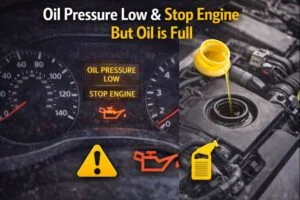
Because of this, modern vehicles closely monitor oil pressure, not just oil level. When a dashboard message appears stating Oil Pressure Low Stop Engine, panic often follows, especially after checking the dipstick and seeing the oil level sitting exactly where it should be.
That contrast creates confusion and uncertainty. A full oil level does not automatically mean the engine is receiving proper lubrication. Pressure depends on flow, clearances, pump performance, and sensor accuracy.
Vehicles are designed to shut down or warn aggressively when pressure drops because damage can occur extremely fast. This situation demands attention, not assumptions.
Exploring why this warning appears despite the correct oil level helps prevent costly mistakes, unnecessary engine damage, and unsafe driving decisions.
A calm, methodical look at how oil pressure works and what can interrupt it makes the next steps clearer and far more manageable.
How Oil Pressure Works Inside An Engine
Difference Between Oil Level And Oil Pressure
Oil level simply indicates how much oil is present in the engine. Oil pressure reflects how effectively that oil is being circulated through the engine under force. Pressure is created when the oil pump pushes oil through tight spaces between bearings, journals, and passages.
An engine can be full of oil yet still fail to generate enough pressure.
Role Of The Oil Pump
The oil pump is responsible for moving oil from the oil pan into the engine. It operates mechanically, usually driven by the crankshaft or timing components. If the pump cannot move oil efficiently, pressure drops regardless of oil quantity.
Pump wear directly affects pressure.
Oil Passages And Engine Clearances
Oil travels through narrow channels cast into the engine block and cylinder head. As engines age, internal clearances can widen due to wear. Larger gaps allow oil to escape pressure faster than the pump can supply it.
Wear reduces effective pressure.
Pressure Regulation System
Engines include a pressure relief valve designed to prevent excessive pressure. If this valve sticks open, oil pressure drops even though oil flow continues.
Small components can cause major warnings.
Common Reasons Oil Pressure Drops With Full Oil
Faulty Oil Pressure Sensor Or Switch
One of the most common causes is a failing oil pressure sensor. Sensors can send incorrect readings due to electrical failure, internal contamination, or wiring issues.
A false warning can look identical to a real emergency.
Worn Or Failing Oil Pump
Oil pumps wear over time, especially in high-mileage engines. Internal gears or rotors lose efficiency, reducing the pump’s ability to build pressure.
Low pressure often appears at idle first.
Clogged Oil Pickup Screen
The oil pickup tube draws oil from the pan through a fine screen. Sludge, debris, or broken engine parts can block this screen, starving the pump.
Restricted flow reduces pressure quickly.
Incorrect Oil Viscosity
Using oil that is too thin can reduce pressure, especially in warm conditions. Oil that does not match manufacturer specifications may flow too easily through clearances.
Viscosity matters as much as quantity.
Oil Filter Problems
A collapsed, clogged, or incorrect oil filter can restrict oil flow. Some filters include bypass valves that may fail or stick.
Filter quality affects circulation.
Excessive Engine Wear
Worn crankshaft bearings, camshaft journals, or lifters allow oil to escape before pressure can build. This often occurs in older engines or engines with poor maintenance history.
Internal wear lowers system resistance.
Diluted Or Contaminated Oil
Fuel dilution, coolant contamination, or sludge buildup can thin or thicken oil abnormally. Either condition interferes with proper pressure generation.
Oil condition affects performance.
Why The Warning Says Stop Engine
Rapid Damage Risk
Engines rely on a pressurized oil film to prevent metal-to-metal contact. Without pressure, bearings overheat and fail quickly.
Damage can occur within seconds.
Bearing Failure Consequences
Rod and main bearings are especially vulnerable. Once damaged, they create knocking noises and metal debris that spreads through the engine.
Repairs become extensive and costly.
Camshaft And Valve Train Damage
Low oil pressure affects camshafts, lifters, and timing components. These parts depend on steady oil flow for lubrication and cooling.
Valve train noise often follows pressure loss.
Turbocharger Risk In Turbo Engines
Turbochargers rely heavily on oil pressure. Low pressure can destroy a turbo rapidly, even if the engine itself survives.
Turbo damage escalates repair costs.
How To Diagnose The Problem Correctly
Step One Check Oil Level And Condition
Confirm the oil level on level ground with the engine off. Inspect oil color and smell. Milky oil suggests coolant contamination, while fuel smell indicates dilution.
Condition matters as much as level.
Step Two Listen For Engine Noise
Knocking, ticking, or grinding sounds suggest real pressure loss rather than a sensor fault. Silence does not guarantee safety, but noise confirms danger.
Sounds guide urgency.
Step Three Check For Oil Leaks
External leaks reduce oil volume during operation, even if the dipstick reads full after shutdown.
Leaks can lower pressure under load.
Step Four Scan For Diagnostic Trouble Codes
Modern vehicles store codes related to oil pressure sensors, circuits, and engine performance. Scanning helps narrow the issue.
Codes provide direction.
Step Five Verify Pressure With Mechanical Gauge
A mechanical oil pressure gauge provides accurate readings. This test confirms whether pressure is genuinely low or falsely reported.
Mechanical verification is critical.
Driving Risks And What To Do Immediately
Should You Drive With This Warning
Driving with a confirmed low oil pressure warning is extremely risky. Even short distances can cause irreversible engine damage.
Stopping immediately is safest.
When It Might Be A Sensor Issue
If pressure tests normal with a mechanical gauge, driving may be possible until sensor repair. However, confirmation must come first.
Assumptions can be costly.
Towing Versus Driving
If pressure cannot be verified quickly, towing the vehicle prevents potential engine failure.
Towing costs less than engine replacement.
Restarting The Engine Repeatedly
Repeated starts without pressure worsen damage. Each start increases friction and heat.
Avoid repeated cranking.
Repair Options And Typical Costs
Oil Pressure Sensor Replacement
Sensor replacement is often inexpensive compared to engine repairs. Parts are usually affordable, and labor is minimal.
This is the best-case scenario.
Oil Pump Replacement
Replacing an oil pump is labor-intensive, often requiring removal of the oil pan or timing components. Costs vary by vehicle design.
Labor dominates the expense.
Engine Cleaning And Sludge Removal
Severe sludge may require engine cleaning or component replacement. Chemical flushes carry risk in heavily sludged engines.
Professional assessment is important.
Bearing Or Engine Rebuild
If internal wear causes pressure loss, repairs may involve bearing replacement or full engine rebuild.
Costs increase significantly.
Oil And Filter Correction
Switching to manufacturer-recommended oil viscosity and a quality filter can sometimes restore pressure.
Simple fixes should not be overlooked.
Preventing Oil Pressure Problems
Regular Oil Changes
Fresh oil maintains proper viscosity and cleanliness. Extended intervals increase sludge and wear.
Consistency protects pressure.
Using Correct Oil Specifications
Always follow manufacturer oil grade recommendations. Engines are designed around specific viscosities.
Wrong oil causes long-term harm.
Monitoring Warning Signs Early
Flickering oil lights, ticking noises, or delayed pressure buildup indicate developing issues.
Early action prevents failure.
Avoiding Cheap Filters
Low-quality filters may collapse or restrict flow. Trusted brands offer better internal construction.
Filter choice matters.
Differences Between Cold And Hot Oil Pressure
Cold Start Pressure Behavior
Oil pressure is higher during cold starts due to thicker oil. Extremely high pressure can stress components but usually normalizes quickly.
Cold readings differ from warm.
Hot Idle Pressure Drop
Low pressure at hot idle often indicates wear or thin oil. This symptom frequently appears before full pressure failure.
Idle behavior reveals condition.
Temperature Related Sensor Errors
Some sensors fail when hot, triggering warnings only after driving.
Heat affects electronics.
Oil Pressure Warning Versus Oil Level Warning
Separate Systems With Different Meanings
Oil level warnings indicate quantity. Oil pressure warnings indicate circulation strength.
Confusing the two leads to mistakes.
Why Adding Oil Does Not Fix Pressure
Adding oil does not repair worn pumps, blocked passages, or failing sensors.
Pressure problems require diagnosis.
Dashboard Messages And Symbols
Some vehicles display text warnings, while others use symbols. Both signal serious concerns.
Always treat pressure warnings seriously.
Common Myths About Oil Pressure Warnings
Many believe that a full dipstick guarantees safety. Others assume the warning always means a bad sensor. Both assumptions can lead to engine damage.
Verification replaces guesswork.
Final Thoughts
An Oil Pressure Low Stop Engine warning should never be ignored, even when the oil level appears normal. Oil pressure depends on far more than quantity alone. Pump performance, oil condition, engine wear, and sensor accuracy all play roles in maintaining proper lubrication. When pressure drops, damage can occur quickly and silently, turning a manageable repair into a major engine failure.
Responding calmly and methodically makes all the difference. Verifying pressure with proper tools, avoiding unnecessary driving, and addressing the root cause early protects both the engine and the wallet. Oil pressure warnings exist to prevent catastrophic outcomes. Taking them seriously ensures the engine continues to operate smoothly, reliably, and safely for many miles ahead.