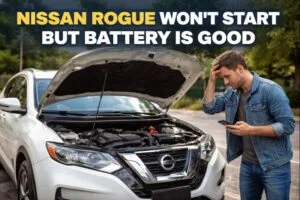
The Nissan Rogue is known for being practical, comfortable, and dependable, which is why a no-start problem can feel especially frustrating when everything appears normal at first glance.
The dashboard lights come on, the radio works, and the battery tests healthy, yet the engine refuses to come to life. This type of problem often leaves owners guessing, because it does not follow the usual pattern of a weak or dead battery.
In reality, a good battery is only one part of a much larger starting system. Modern vehicles like the Nissan Rogue rely on electronic communication, sensors, security systems, and precise mechanical timing.
A fault in any one of these areas can prevent the engine from starting, even when electrical power is available. This article breaks down the most common reasons a Nissan Rogue will not start despite a good battery, how each issue presents itself, and what steps usually lead to a reliable fix. The focus is on real-world causes and practical solutions, not guesswork.
What “Battery Is Good But Won’t Start” Really Means
Power Is Present But Cranking Or Ignition Is Missing
When a battery is healthy, interior lights, displays, and accessories usually work without dimming. That confirms voltage is available, but it does not guarantee power is reaching the starter motor or ignition system. Starting an engine requires high current flow, proper signals, and system authorization.
Two Different No-Start Scenarios
A Nissan Rogue that will not start typically falls into one of two categories. The first is no crank, where the engine does not turn over at all. The second is crank but no start, where the engine turns but does not fire. Each points toward different systems and helps narrow the cause quickly.
Common Reasons A Nissan Rogue Won’t Start With A Good Battery
Starter System Problems
Worn Or Failed Starter Motor
The starter motor is one of the most common failure points. Even with a strong battery, a worn starter may click, hesitate, or remain silent. In many cases, the starter works intermittently before failing completely, which makes the problem confusing.
Starter Relay Or Fuse Issues
The starter relay acts as a switch between the ignition system and the starter motor. A faulty relay or blown fuse interrupts that signal. Because relays are small and inexpensive, they are often checked early during diagnosis.
Poor Electrical Connections
Loose or corroded connections at the starter or ground points can prevent sufficient current flow. This problem often appears after years of exposure to heat, moisture, and vibration.
Ignition And Push-Button Start Issues
Push-Button Start Signal Failure
Many Nissan Rogue models use push-button start systems. If the signal from the button does not reach the control module, the engine will not start. This can happen due to internal button failure or wiring issues.
Brake Pedal Switch Problems
The push-button system requires confirmation that the brake pedal is pressed. A faulty brake light switch may prevent the vehicle from recognizing this input, blocking the start process.
Key Fob And Immobilizer System Concerns
Weak Or Unrecognized Key Fob
Even when the vehicle unlocks and accessories turn on, a weak key fob battery may prevent proper authentication. Holding the key fob close to the start button sometimes allows the vehicle to recognize it.
Immobilizer Lockout
The immobilizer system is designed to prevent unauthorized starting. If the system does not recognize the key, fuel and ignition are disabled. This can happen due to key programming issues or control module faults.
Fuel Delivery Problems
Fuel Pump Failure
If the engine cranks but does not start, fuel delivery is a prime suspect. A failed fuel pump or pump relay prevents fuel from reaching the engine. Often, the pump will stop making its usual priming sound before complete failure.
Fuel Pump Relay Or Fuse
Like the starter system, the fuel system relies on relays and fuses. A single failed component can stop fuel delivery entirely.
Clogged Fuel Filter Or Restricted Flow
Restricted fuel flow reduces pressure to the injectors, preventing proper combustion. While less common in newer vehicles, it can occur with poor fuel quality or high mileage.
Ignition System And Engine Sensors
Crankshaft Position Sensor Failure
The crankshaft position sensor tells the engine when to fire fuel and spark. If this sensor fails, the engine may crank normally but never start. This is a common cause of sudden no-start conditions.
Camshaft Position Sensor Issues
Similar to the crank sensor, the camshaft sensor helps control timing. Incorrect data causes the engine control module to shut down ignition or fuel delivery as a safety measure.
Ignition Coil Or Control Module Problems
Although less common than sensor issues, ignition coils or control modules can fail and prevent spark, especially on higher-mileage vehicles.
Transmission And Safety Interlocks
Neutral Safety Switch Or Park Recognition
The Rogue will not start unless it detects the transmission is in Park or Neutral. If the system does not recognize the gear position correctly, starting is blocked. Trying to start in Neutral sometimes reveals this issue.
Shift Lever Or Cable Issues
Mechanical wear or misalignment in the shift mechanism can confuse the transmission position signal.
Battery Voltage Versus Battery Health
Why A “Good” Battery Can Still Cause Problems
A battery may test well at rest but fail under load. Voltage drop during cranking can disrupt sensitive electronics, causing the engine control module to shut down starting.
Ground And Charging System Influence
Weak ground connections or charging system issues can mimic more serious problems. Voltage stability matters just as much as battery capacity.
When The Engine Cranks But Will Not Fire
Lack Of Fuel Or Spark
Cranking without starting usually means the engine is missing fuel, spark, or proper timing. Identifying which one is missing is the key to diagnosis.
Flooded Engine Conditions
Repeated start attempts can flood the engine, especially if sensors are sending incorrect data. This can temporarily prevent starting even after the original issue is resolved.
How To Narrow Down The Cause Step By Step
Listening And Observing First
Sounds That Provide Clues
A single click often points to starter issues. Rapid clicking suggests electrical resistance. Silent no-crank situations often involve relays, switches, or immobilizer problems.
Dashboard Indicators And Warning Lights
Security lights, check engine lights, or unusual warning messages often point toward electronic or immobilizer-related issues.
Visual And Basic Electrical Checks
Inspecting Fuses And Relays
Checking fuses and swapping relays with identical ones is a quick way to eliminate simple causes.
Checking Grounds And Cables
Inspect battery terminals, ground straps, and visible wiring for corrosion or looseness.
Diagnostic Scanning Matters
Why Scan Tools Save Time
A proper scan tool can read stored fault codes even if the check engine light is off. These codes often point directly to sensors, modules, or communication issues.
Live Data Helps Confirm Suspects
Viewing live sensor data during cranking shows whether the engine control module is receiving critical signals like RPM and throttle position.
ABS And Stability System Interaction
Why Other Systems Can Affect Starting
Modern vehicles share data across multiple control modules. Faults in one system can affect others, including starting authorization.
When Recent Repairs Trigger No-Start Problems
Battery Replacement Or Electrical Work
Battery replacement can reset modules or expose weak connections. Improper reconnection may lead to starting issues.
Brake Or Suspension Repairs
Work near wheel speed sensors or wiring can disturb related systems and cause unexpected faults.
Repair Paths And What Usually Fixes The Problem
Common And Affordable Fixes
Replacing A Starter Relay Or Brake Switch
These parts are relatively inexpensive and often solve no-start problems when symptoms match.
Key Fob Battery Replacement
A simple fix that resolves many push-button start issues.
Moderate Repairs
Starter Motor Replacement
When confirmed faulty, replacing the starter restores normal operation and reliability.
Fuel Pump Or Sensor Replacement
These repairs require more labor but are common causes of crank-but-no-start conditions.
More Involved Repairs
Immobilizer Or Control Module Work
These issues often require dealer-level tools for programming and calibration.
When Driving Or Further Testing Is Not Safe
Repeated No-Start Attempts
Repeated attempts can drain the battery or flood the engine, complicating diagnosis.
Electrical Smell Or Smoke
Any signs of overheating wiring require immediate attention and should not be ignored.
Preventing Future No-Start Problems
Keep Electrical Connections Clean
Routine inspection prevents corrosion-related failures.
Replace Key Fob Batteries Regularly
Annual replacement avoids unexpected recognition issues.
Address Warning Lights Promptly
Early attention prevents small faults from becoming major failures.
Common Misunderstandings About No-Start Issues
“If The Battery Is Good, It Can’t Be Electrical”
Modern vehicles rely heavily on electronics. Electrical faults remain a top cause of no-start problems.
“Resetting The Battery Fixes Everything”
Disconnecting the battery may clear symptoms temporarily but does not fix the underlying issue.
Final Thoughts
A Nissan Rogue that will not start despite a good battery is rarely dealing with a simple power issue. More often, the problem lies in the starter system, fuel delivery, sensors, or security controls that govern when the engine is allowed to run.
Careful observation, logical testing, and proper diagnostics make all the difference between guessing and fixing the problem correctly.
Addressing no-start issues early prevents further damage and saves time and money. With the right approach, most of these problems are manageable and well understood, restoring confidence and reliability to a vehicle that is otherwise known for everyday dependability.