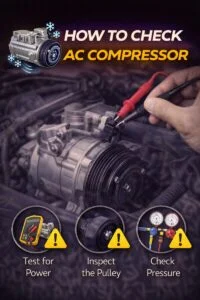
A car’s air conditioning system usually gets attention only when it stops doing its job. One day the air feels weaker, another day it turns warm, or strange noises start coming from under the hood when the AC is switched on.
In many of these cases, the AC compressor becomes the main suspect. That makes sense, because the compressor is the heart of the system. Without it, refrigerant cannot circulate and cooling simply does not happen.
Checking an AC compressor does not always mean expensive tools or immediate replacement. Many problems linked to the compressor are caused by electrical issues, low refrigerant, worn clutches, or surrounding components rather than the compressor itself.
Knowing how to check it step by step helps you understand what is actually wrong before jumping to conclusions. This guide walks through practical, real-world ways to evaluate an AC compressor, from basic visual checks to functional tests, using clear language and realistic expectations.
What The AC Compressor Actually Does
The AC compressor’s job is to pressurize and move refrigerant through the air conditioning system. It pulls in low-pressure refrigerant gas and compresses it into a high-pressure state.
That pressurized refrigerant then flows through the condenser, expansion device, and evaporator, where heat is removed from the cabin air.
Because the compressor is driven by the engine through a belt, it operates only when commanded by the AC system. It does not run constantly. Instead, it cycles on and off based on cooling demand, pressure readings, and safety conditions.
When the compressor cannot engage or operate properly, cooling performance drops immediately.
Early Signs That Point Toward Compressor Trouble
Before checking anything under the hood, pay attention to how the AC behaves.
Weak cooling is one of the most common symptoms. Air may still blow, but it never gets properly cold.
Unusual noises are another clue. Grinding, squealing, rattling, or clicking sounds when the AC is turned on often come from the compressor or its clutch.
AC that works intermittently can also point toward compressor-related issues, especially when cooling stops during idle or returns only while driving.
In some cases, turning on the AC causes the engine to strain, idle rough, or stall briefly. This may indicate a compressor that is seizing or dragging.
Safety Steps Before You Start Checking
Working around the AC system requires caution.
Never disconnect refrigerant lines unless the system has been properly evacuated. Refrigerant is under high pressure and can cause injury.
Always keep hands, clothing, and tools away from belts and pulleys when the engine is running.
If you are unsure about any step involving pressure or electrical testing, stop and reassess. Basic checks are safe, but deeper testing should be done carefully.
Visual Inspection Under The Hood
A visual inspection often reveals more than expected.
Start by locating the AC compressor. It is usually mounted near the front of the engine and connected to the serpentine belt.
Check the compressor body for signs of oil residue. Refrigerant oil leaks often leave greasy marks around seals or hose connections. Oil residue usually means refrigerant has escaped as well.
Look at the electrical connector on the compressor. Loose, damaged, or corroded connectors can prevent the compressor clutch from engaging.
Inspect nearby hoses for cracks, rubbing, or signs of leakage. A compressor cannot operate properly if the system has lost refrigerant.
Finally, check the belt that drives the compressor. A worn, loose, or slipping belt can prevent proper operation even if the compressor itself is fine.
Checking The Compressor Clutch Operation
The compressor clutch is the most visible moving part during AC operation.
With the engine off, look at the front of the compressor pulley. The outer pulley usually spins freely with the belt, while the center hub engages only when the AC is on.
Start the engine and turn the AC on to its coldest setting. Watch the clutch carefully.
When the system is working, the center portion of the pulley should pull in and spin along with the outer pulley. This engagement usually happens with a noticeable click.
If the pulley spins but the center hub never engages, the compressor is not being activated. This does not always mean the compressor is bad. Electrical signals, pressure switches, or refrigerant levels may be preventing engagement.
If the clutch engages briefly and then disengages repeatedly, it may indicate low refrigerant or pressure-related issues.
Listening For Compressor-Related Noises
Sound provides valuable clues.
A healthy compressor produces a soft, steady sound when running. It should not grind, screech, or rattle loudly.
Grinding or growling noises often point to internal compressor wear. These sounds usually get louder when the AC is switched on.
Squealing noises may come from the clutch slipping or the belt struggling under load.
A sharp clicking sound that repeats rapidly can indicate electrical cycling or pressure imbalance rather than mechanical failure.
If noise disappears when the AC is turned off, the compressor or clutch is strongly involved.
Checking AC Performance Inside The Cabin
Compressor checks are not limited to the engine bay.
With the AC running, feel the air coming from the vents. It should cool steadily, not pulse between warm and cold.
Notice how quickly the air cools after startup. Slow cooling may indicate weak compressor output.
Pay attention to how the system behaves at idle versus while driving. Cooling that improves significantly at higher speeds may point toward airflow or pressure issues affecting compressor operation.
Inconsistent cooling often means the compressor is cycling incorrectly rather than being completely failed.
Basic Electrical Checks Without Advanced Tools
Many compressor problems are electrical.
Check AC-related fuses and relays. A blown fuse or failed relay can prevent clutch engagement entirely.
Relays can fail internally even if they look fine. Swapping with an identical relay from another circuit can be a simple test.
Verify that the AC button or climate control system is responding correctly. A faulty control head can prevent the compressor from receiving a signal.
Listen for a click from the relay area when the AC is turned on. No click often means the system is not commanding the compressor.
Pressure Switches And Their Role
AC systems use pressure switches to protect components.
If refrigerant pressure is too low or too high, the system will disable the compressor to prevent damage.
This means a compressor may appear bad when it is actually being shut off for safety.
Low refrigerant is a very common reason the compressor clutch will not engage. Even a small leak can drop pressure below the minimum threshold.
High pressure caused by restricted airflow or condenser issues can also prevent engagement.
Pressure switches usually do their job silently, without triggering warning lights.
Checking Refrigerant Lines For Temperature Differences
A simple touch test can provide insight.
With the AC running, carefully feel the refrigerant lines near the compressor.
One line should feel noticeably colder than the other. This temperature difference indicates refrigerant is moving and changing state.
If both lines feel similar in temperature, the compressor may not be compressing refrigerant effectively.
Be cautious, as some lines can become very cold or very hot.
Compressor Cycling Behavior Explained
Short cycling is a common complaint.
This happens when the compressor turns on and off rapidly. Causes include low refrigerant, faulty pressure switches, or electrical instability.
Long cycles followed by sudden shutdowns may point toward overheating or internal resistance.
Understanding cycling behavior helps avoid misdiagnosing a compressor that is responding to system conditions rather than failing mechanically.
Signs Of Internal Compressor Failure
Some symptoms strongly suggest internal damage.
Metallic debris in the system often comes from a failing compressor. This usually requires full system cleaning and component replacement.
A compressor that locks up and stalls the engine when engaged is likely seized internally.
Burnt smells, heavy grinding noises, or visible smoke are serious signs and require immediate attention.
Internal failures rarely improve and usually worsen quickly.
Why Low Refrigerant Mimics Compressor Failure
Low refrigerant is often mistaken for a bad compressor.
Without enough refrigerant, pressure stays too low for safe operation. The system disables the compressor clutch automatically.
Adding refrigerant without finding the leak is not a long-term fix, but confirming low refrigerant explains many no-engagement situations.
This is why checking refrigerant pressure is important before condemning the compressor.
Common Mistakes When Checking An AC Compressor
One of the biggest mistakes is assuming no cold air means a bad compressor.
Another mistake is ignoring electrical causes and replacing mechanical parts unnecessarily.
Some people replace the compressor without addressing contaminated oil or debris, leading to repeat failure.
Skipping visual and basic checks often leads to wasted money and frustration.
When Professional Testing Becomes Necessary
Some tests require specialized equipment.
Measuring high and low side pressures accurately provides clear insight into compressor performance.
Electrical signal testing confirms whether the clutch is receiving proper voltage.
Leak detection tools help find slow refrigerant leaks that affect compressor operation.
Professional testing does not always mean immediate replacement. Often it confirms simpler fixes.
How Compressor Issues Usually Develop Over Time
Compressor problems often start quietly.
Cooling weakens gradually, cycling becomes more frequent, or noises appear occasionally.
Ignoring early signs allows damage to spread through the system.
Early diagnosis often saves the compressor. Late diagnosis usually does not.
Preventing Compressor Problems In The Future
Running the AC regularly keeps seals lubricated.
Replacing worn belts and tensioners prevents clutch strain.
Addressing refrigerant leaks early protects internal components.
Keeping the condenser clean improves pressure balance and compressor life.
Preventive care matters more than many people realize.
Final Thoughts
Checking an AC compressor does not have to be intimidating or rushed. Many symptoms that point toward compressor failure are actually caused by electrical issues, low refrigerant, or system safeguards doing their job.
A careful, step-by-step approach reveals whether the compressor is truly at fault or simply reacting to another problem. The most important thing is not guessing. Visual checks, clutch observation, sound evaluation, and basic electrical inspection often provide clear direction.
When deeper testing is needed, it confirms decisions rather than creating doubt. A properly working compressor brings consistent cooling, quiet operation, and confidence every time the AC is switched on.