
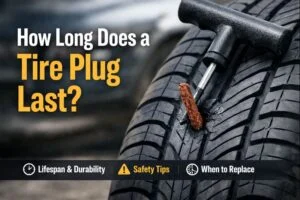
A compact silver hatchback — nimble, city-friendly, and honest about its limitations — is the perfect vehicle to test how well simple repairs hold up.
When that hatchback picks up a stray nail on a busy commute, the options are straightforward: slow crawl to a shop, change the wheel, or perform a quick repair and keep going.
One of the quickest fixes technicians (and even many drivers) reach for is a tire plug. But how long can you expect that plug to hold?
This article explains, in clear, practical terms, what a plug does, how plug repairs compare to patch repairs, what affects longevity, and when a plug is only a temporary solution.
You’ll get actionable guidance on inspection, maintenance, and safety — written like a seasoned shop tech explaining things to a friend — so you can make the right choice for your car and your peace of mind.
Key References (Short)
Reference websites used to compile this article include the U.S. Tire Manufacturers Association (consumer safety/tire repair guidance), NHTSA tire repair materials and technical bulletins, Michelin tire repair advice, and manufacturer/industry technical documents (Goodyear, Toyota service bulletins), as well as well-regarded industry training guides.
What A Tire Plug Is And What It Actually Does
A tire plug is a rubbery stem or strip inserted into a puncture from the outside of the tire to slow or stop air loss. Plugs are commonly used for punctures in the tread (not the sidewall) and are popular because they are fast and inexpensive.
A plug fills the physical hole left by a foreign object and can often get you back on the road without removing the wheel.
However, a plug — by itself — does not repair the inner liner of the tire, which is the layer that holds air.
Because the inner liner remains unrestored with plug-only repairs, industry guidance generally treats on-the-wheel plug repairs as temporary or emergency fixes rather than permanent solutions.
Plug Versus Patch: The Important Difference
A patch is installed from the inside of the tire and bonds to the inner liner, sealing the puncture’s interior and preventing air and moisture from traveling into the tire structure. A plug fills the hole from the outside.
The safest, long-term approach favored by tire manufacturers and industry bodies is a combined patch-and-plug (sometimes a single unit) that seals both the inside and outside of the injury. That combined repair addresses both the hole and the inner liner.
How Long Can A Properly Installed Plug Last?
There’s no single guaranteed number for plug lifespan because longevity depends on many factors. Reasonable estimates offered by shops and aftermarket sources often say a properly installed plug can last several years — some claim up to the life of the tire — while authoritative industry guidance treats plugs alone as temporary. For practical planning:
- A temporary plug installed on the wheel can hold for weeks to months under normal driving if the puncture is small and the plug is seated.
- Many service shops and aftermarket articles share that a professional plug-and-patch can last many years and potentially the remainder of the tire’s service life when properly done.
Some retailers and repair services commonly cite ranges like 7–10 years or ~25,000 miles for well-executed combination repairs — but those figures assume correct location, size, and professional workmanship.
In short: a plug-only on-the-wheel repair may get you home or to the shop for months, but it should be inspected and often replaced with a patch-and-plug for a long-term fix.
What Determines How Long A Plug Will Last?
Size And Location Of The Puncture
Small punctures in the central tread area are the most repairable. Punctures larger than about 1/4 inch (6.4 mm) or punctures on the shoulder or sidewall are usually considered non-repairable; the tire should be replaced.
Location matters because shoulder and sidewall areas flex a lot and a plug (or patch) may not remain sealed there.
Quality Of The Repair (Tools, Adhesives, Technique)
A plug pulled into place without removing the tire or without cleaning and inspecting the injury channel is more likely to leak or fail. Proper internal inspection, buffing, and use of a combined patch-and-plug are what the tire manufacturers and technical bulletins recommend.
The difference between a rush, roadside plug and a shop-installed patch-and-plug is significant for longevity.
Driving Habits And Loads
Hard cornering, heavy loads, high speeds, and rough roads increase flex and heat, all of which stress repairs. A plug in a commuter car driven gently on highways will have a different lifespan than the same plug in a loaded crossover that frequently hits potholes.
Temperature And Climate
Heat speeds up rubber fatigue. Repeated hot-cold cycles and moisture exposure can degrade a plug and the surrounding rubber. Plug seals are susceptible to water getting into the injury channel if the inner liner hasn’t been properly sealed.
Tire Age And Condition
Older tires with internal damage, dry rot, or previous repairs have weaker structure. A plug on a tire already showing aging signs may not be a good long-term solution.
Industry Guidance And Safety Standards
Major tire industry organizations and vehicle safety authorities recommend removing the tire from the wheel to fully inspect and properly repair punctures.
The U.S. Tire Manufacturers Association (USTMA) and similar groups emphasize that plug-only repairs are not approved as permanent fixes and that inspection of the inner liner is essential.
The National Highway Traffic Safety Administration (NHTSA) also supports repair methods that include sealing both the inside and outside of the puncture to prevent air and moisture intrusion.
Practical takeaway: if a tire is repairable, a patch or a patch-with-plug installed by a trained technician is the recommended route.
Lifespan Examples And Claims
Repair shops and aftermarket retailers sometimes report that professionally applied patch-and-plug repairs can last the life of the tire. Retail articles and technical posts note typical ranges such as 25,000 miles or longer for good repairs, while some claim 7–10 years in ideal conditions.
These are empirical claims based on shop experience and customer follow-ups, not guarantees — and they assume punctures are within the repair zone and repairs are done to industry standards.
Contrast that with roadside or quick plug kits: those can last just long enough to get driving to a repair facility or can stretch to months depending on conditions. Treat these as temporary.
When Is A Plug An Acceptable Long-Term Solution?
There are only a few scenarios where a plug alone might perform acceptably long-term — and even then, many technicians will still recommend a patch-and-plug:
- The puncture is small (< 1/4 inch), centered in the tread, and the tire has no internal damage.
- The plug was installed as part of a combined repair (plug integrated with a patch or patch-and-plug unit) performed by a trained technician after removing the tire.
- The vehicle is low-stress (light loads, no towing) and the owner commits to periodic inspections.
If those boxes are checked and the repair is done correctly, a plug as part of a combined repair can effectively be permanent for practical purposes. If the plug was installed on-the-wheel without internal inspection, it should be considered temporary.
How To Tell If A Plug Is Failing
Look for these warning signs:
- Pressure Loss: The tire loses air consistently or needs frequent topping up.
- Vibration Or Thumping: Feeling odd feedback at speed could indicate internal damage or a bad repair.
- Bulges Or Deformation: Any visible distortions at the repair site or nearby area.
- Visible Corrosion Or Moisture At The Injury Channel: Moisture or rust around the plug can mean the inner liner is compromised.
- Second Or Nearby Punctures: Multiple repairs close together weaken the structure.
If any of these appear, stop driving at speed and have the tire inspected by a professional.
Step-By-Step: What A Proper Repair Looks Like
A high-quality repair follows these steps:
- Remove Tire From Wheel: Allows internal inspection for liner damage.
- Inspect Inside For Damage: Look for cord cuts, inner liner splits, or other injuries.
- Buff And Prepare The Injury Channel: Remove debris and create a proper bonding surface.
- Apply Patch-And-Plug Or Patch With Plug Stem: The inner liner is sealed with a patch; a stem or plug fills the channel and provides external sealing. Industry charts show a combined unit is preferred.
- Seat The Patch Properly And Cure: Ensure bonding and set the repair per recommended procedures.
- Rebalance And Inspect Wheel Assembly: Rebalance wheel and check for other wheel or rim issues.
Following these procedures significantly extends the useful lifetime of the repair compared with a quick external plug.
Can You Plug A Tire Yourself? Kits, Pros And Cons
DIY plug kits are inexpensive and simple: reamer tool, plug strips, insertion tool. They can save you time and get you to a shop. But cautions:
- DIY plugging often skips internal inspection. That increases the risk that unseen internal damage will be missed.
- Improper reaming, incorrect plug sizing, or not seating the plug correctly can lead to leaks or sudden failure.
- Many shops will inspect even a DIY-plugged tire and suggest a professional patch-and-plug.
Use DIY plugs as temporary fixes to reach a qualified technician. If you prefer long-term reliability, budget a professional repair.
How To Maintain A Plugged Or Repaired Tire
- Check Pressure Regularly: Verify tire pressure weekly for the first month after repair, then monthly.
- Visual Inspections: Look for signs of damage or rubber deformation.
- Avoid High-Speed Runs Immediately After Repair: Give the repair time and avoid heavy loads for a short break-in period.
- Rotate Tires Per Schedule: This spreads wear and gives additional inspection opportunities.
- Replace If In Doubt: If the tire shows internal damage, multiple repairs nearby, or repeated pressure loss, replace the tire.
When To Replace The Tire Instead Of Repairing
Replace the tire if any of the following apply:
- Puncture > 1/4 inch (6.4 mm) in diameter.
- Puncture In Shoulder Or Sidewall. Flexing in these areas makes repairs unsafe.
- Multiple Overlapping Repairs. Repairs too close to each other weaken the structure.
- Internal Cord Or Belt Damage. Visible on internal inspection.
- Tire Age And Condition: Advanced dry rot, excessive wear, or several years of service may warrant replacement.
When safety is at stake, replacing the tire is often the best decision.
Practical Scenarios: What Would I Do?
- Commuter Car With Small Tread Puncture: Get to a shop; if the tech removes the tire, inspects, and installs a patch-and-plug, that’s a long-term fix.
- Roadside Plug After A Nail Hit On A Trip: Use the plug to reach the next service station; get a professional inspection promptly.
- Older Tire With Multiple Repairs: Replace the tire.
- Puncture On Sidewall: Don’t repair — replace the tire.
Frequently Asked Questions
Q: Will a plugged tire pass inspection?
A properly done patch-and-plug completed by a reputable shop should meet safety expectations. Simple external plugs done at the roadside may not be acceptable for long-term inspection standards — local regulations vary.
Q: Can I patch a tire more than once?
A tire can be repaired more than once only if repairs don’t overlap and are within safe limits. Industry guidance indicates avoiding repairs that would overlap previous ones.
Q: Is a plug safer than driving on a spare?
A repair restores normal drivability. A properly patched and plugged tire, if done to standards, is generally safer than prolonged use of a compact spare (donut) at highway speeds.
Our Recommendations (Straightforward)
- Treat on-the-wheel plugs as temporary. Get a professional inspection.
- When repairable, request a patch-and-plug (combination repair) done per manufacturer/industry guidelines.
- If you want longevity and peace of mind, prefer a professional repair rather than DIY external plugs.
- Replace tires when puncture location or age makes repairs unsafe.
Final Thoughts
A plug can be a lifesaver: quick, cheap, and often effective as an emergency measure. But remember the difference between a temporary external plug and a permanent internal patch-and-plug.
If you want a repair that lasts, insist on the industry-recommended method: remove the tire, inspect the interior, and apply a properly bonded patch with a plug/stem where needed.
That approach gives you the best chance that the repair will last as long as the rest of the tire — and more importantly, keeps you safer on the road.