
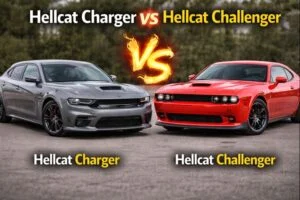
American muscle cars have always carried a certain attitude. Loud engines, bold styling, and straight-line performance define their identity. Among modern muscle cars, the Hellcat name stands in a category of its own.
Both the Hellcat Charger and Hellcat Challenger deliver extreme power, unmistakable sound, and road presence that demands attention. At first glance, the choice between them may seem simple since they share the same supercharged engine. In reality, they serve very different personalities and lifestyles.
One leans toward practicality without sacrificing brutality, while the other stays loyal to classic muscle roots with a retro-focused design and raw feel. The difference is not just about doors or body shape.
It shows up in handling, comfort, daily usability, interior space, and even how each car feels during aggressive driving. Comparing these two cars side by side helps reveal which one fits better depending on how and where it will be used. This comparison breaks down their strengths, weaknesses, and real-world character in a clear and honest way.
Powertrain And Performance Characteristics
Engine And Output
Both the Hellcat Charger and Hellcat Challenger are powered by the same supercharged V8 engine. Horsepower and torque figures are nearly identical, delivering massive acceleration and unmistakable exhaust sound. Pressing the throttle in either car results in instant response and overwhelming force.
Straight-line acceleration is brutal in both models, especially from a rolling start.
Acceleration And Speed
Despite similar power, slight differences in weight and tuning affect acceleration feel. The Challenger often feels more dramatic due to its coupe layout and lower seating position. The Charger, while just as fast, delivers power in a more controlled and planted manner.
Quarter-mile times are very close, with driver skill playing a bigger role than vehicle difference.
Transmission Behavior
Both models use the same automatic transmission with performance-oriented programming. Gear shifts are quick and aggressive under heavy throttle. Manual shifting through paddles offers more control for spirited driving.
Transmission tuning favors performance rather than comfort in both cases.
Design Philosophy And Exterior Presence
Overall Styling Direction
The Hellcat Challenger follows classic muscle car proportions. Long hood, short rear deck, wide stance, and retro-inspired lines dominate its look. It closely resembles older muscle cars while integrating modern touches.
The Hellcat Charger takes a more modern performance sedan approach. It blends aggressive styling with sleek lines and four-door practicality.
Road Presence And Visual Impact
The Challenger looks wider and more imposing when parked. Its coupe shape emphasizes muscle heritage and raw attitude. Many enthusiasts find it visually more dramatic.
The Charger appears more refined but still intimidating. Its four-door layout does not reduce its aggressive presence, especially with wide tires and functional hood scoops.
Practical Design Differences
Four doors give the Charger a clear advantage for everyday use. Rear-seat access is easy, and the overall shape supports family or group travel.
The Challenger’s two-door layout prioritizes style over convenience.
Handling, Ride, And Driving Feel
Steering And Control
The Charger generally feels more stable and balanced during high-speed driving. Its longer wheelbase and sedan architecture help maintain composure through sweeping turns.
The Challenger feels heavier and more deliberate. Steering inputs feel solid but less agile compared to the Charger.
Cornering Confidence
Neither car is designed primarily for tight corner carving, but differences exist. The Charger handles corners with more confidence due to its chassis tuning and weight distribution.
The Challenger prefers straight-line dominance and wide, flowing roads rather than tight curves.
Ride Comfort
On normal roads, the Charger offers a smoother ride. Suspension tuning absorbs bumps better, especially when not pushed aggressively.
The Challenger rides firmer, transmitting more road feedback to the cabin.
Interior Space, Comfort, And Usability
Front Seat Comfort
Both cars offer supportive front seats designed to hold occupants during hard acceleration. The seating position differs noticeably.
The Charger provides a more upright, sedan-like driving position. The Challenger sits lower, creating a more immersive muscle car feel.
Rear Seat Space
This is where the Charger clearly wins. Rear passengers enjoy usable legroom and easier entry. It functions as a real four-passenger vehicle.
The Challenger’s rear seat is usable but tighter, especially for adults on longer trips.
Cargo Capacity
The Charger’s trunk is larger and more practical for daily use, groceries, or luggage.
The Challenger’s trunk is adequate but limited by its coupe shape.
Daily Driving And Ownership Experience
Practicality In Everyday Use
The Hellcat Charger can realistically serve as a daily vehicle if fuel consumption and insurance costs are acceptable. Its doors, seating, and storage make it versatile.
The Hellcat Challenger feels more like a weekend or enthusiast car. Daily use is possible but less convenient.
Fuel Consumption Expectations
Both vehicles consume fuel aggressively, especially under heavy throttle. City driving results in frequent fuel stops.
Highway cruising improves efficiency slightly, but economy is not a strong point for either model.
Insurance And Maintenance Considerations
Insurance costs are high for both due to performance potential. Maintenance costs are similar since engines and drivetrains are shared.
Tires wear quickly under spirited use in both models.
Personality And Driver Appeal
Who The Hellcat Challenger Suits Best
The Challenger appeals to drivers who want classic muscle car character. It emphasizes emotion, presence, and raw power over practicality.
It suits those who value style, nostalgia, and dramatic driving moments.
Who The Hellcat Charger Suits Best
The Charger appeals to drivers who want extreme performance without giving up usability. It blends muscle car aggression with real-world functionality.
It works well for those who want one vehicle to do everything.
Emotional Versus Logical Choice
Choosing the Challenger often comes from emotional preference. Choosing the Charger often comes from balancing emotion with logic.
Neither choice is wrong; they simply serve different priorities.
Long-Term Ownership And Value Perspective
Reliability Expectations
Both cars share proven mechanical components. Reliability largely depends on maintenance habits and driving behavior.
Hard driving accelerates wear regardless of model choice.
Resale And Market Demand
Both models maintain strong demand due to limited production and enthusiast interest. The Challenger often attracts collectors, while the Charger appeals to a broader audience.
Market trends favor well-maintained examples.
Longevity Of Appeal
The Challenger’s retro design may age more gracefully for enthusiasts. The Charger’s modern styling appeals to those who prefer contemporary performance sedans.
Design preference influences long-term satisfaction.
Common Misconceptions About Both Models
Many believe the Charger is less of a muscle car due to its four doors. In reality, its performance matches the Challenger closely.
Another misconception is that the Challenger handles poorly. While not a sports car, it performs well within its intended purpose.
Assumptions often overlook real-world differences.
Which One Should You Choose
Choosing between the Hellcat Charger and Hellcat Challenger depends on how the car will be used. If maximum style, nostalgia, and emotional appeal matter most, the Challenger delivers that experience. If extreme power combined with everyday usability is the goal, the Charger makes more sense.
Driving environment, passenger needs, and lifestyle should guide the decision more than numbers alone.
Test driving both models often clarifies preferences instantly.
Final Thoughts
The Hellcat Charger and Hellcat Challenger share the same heart but express it in different ways. One is a modern muscle sedan that blends outrageous power with surprising practicality. The other stays true to classic muscle roots, prioritizing presence, sound, and emotion above all else. Performance numbers tell only part of the story.
The real difference lies in how each car fits into daily life and personal taste. Both deliver unforgettable acceleration and unmistakable character. Choosing between them is less about which one is better and more about which one matches the way you want to live with that power every day.