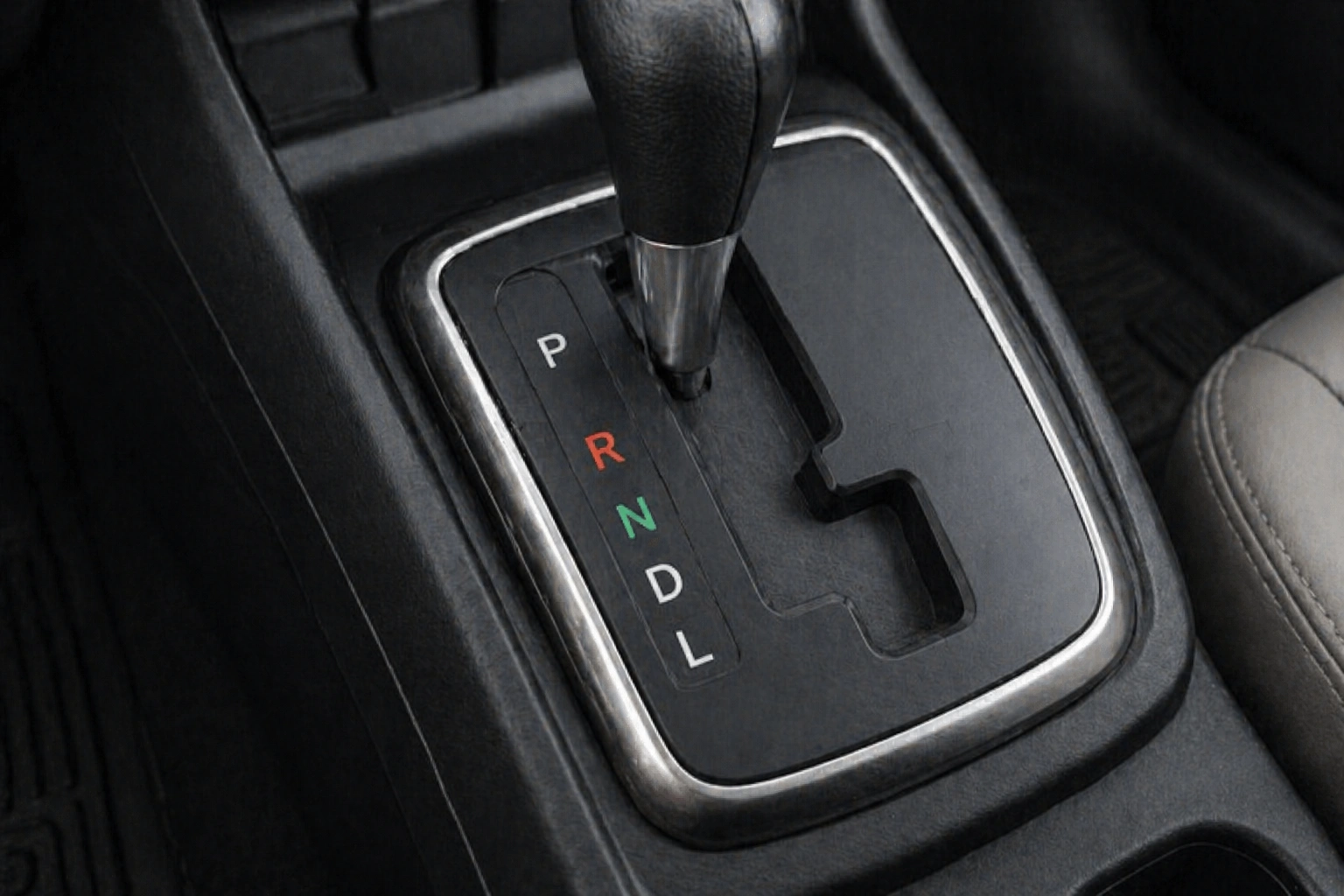
Modern automatic cars are designed to make driving simple, but the gear selector still includes options that many drivers rarely use. Among these, the “L” marking often raises questions. It appears alongside familiar positions like Park, Reverse, Neutral, and Drive, yet its purpose is not always obvious. Despite being less commonly used in everyday driving, it plays an important role in certain conditions.
The “L” gear is connected to control, stability, and engine behavior rather than speed. It changes how the transmission responds and allows the engine to operate within a lower gear range. This can be useful in situations where extra power or better control is needed.
Many drivers ignore this option entirely, while others use it without fully knowing its purpose. Learning how and when to use it correctly helps improve safety, reduces strain on the vehicle, and makes driving more controlled in challenging conditions.
Meaning Of L In Automatic Cars
Definition Of Low Gear In Transmission
The “L” in a car stands for “Low,” referring to low gear in an automatic transmission. When selected, the transmission stays in a lower gear instead of shifting up as it normally would in Drive mode. This keeps the engine running at higher revolutions, which increases torque and control.
Low gear is commonly associated with manual transmissions, where drivers select gears themselves. In automatic vehicles, the “L” option provides a similar level of control without requiring manual shifting. It limits the transmission to lower gear ratios, preventing it from moving into higher gears.
This setting is particularly useful when the vehicle needs more pulling power or when maintaining a slower, controlled speed is important. It ensures that the engine delivers consistent force rather than focusing on speed.
Using low gear changes the behavior of the vehicle, making it more responsive in specific conditions where standard Drive mode may not be ideal.
How Low Gear Works Internally
Inside an automatic transmission, gears are controlled by hydraulic pressure and electronic systems. In Drive mode, the system shifts through gears automatically based on speed and load. When “L” is selected, the system restricts these shifts and keeps the transmission in a lower gear range.
This means the engine works harder and stays at higher RPM levels. While this may sound stressful, it is actually designed for situations where extra torque is required. The transmission and engine are built to handle this type of operation for short periods.
The lower gear ratio allows more power to be delivered to the wheels, which improves traction and control. This is especially helpful on steep inclines or uneven surfaces.
By limiting gear changes, the vehicle maintains a steady output of power, making it easier to manage speed and stability.
Difference Between L And Drive Mode
Drive mode is designed for general use, allowing the transmission to shift smoothly through all available gears. It prioritizes fuel efficiency and comfort, making it suitable for most driving conditions.
The “L” gear, on the other hand, focuses on control rather than efficiency. It prevents the transmission from shifting into higher gears, keeping the engine in a more active state. This results in higher fuel consumption but provides better control.
In Drive mode, the car adapts automatically to speed and load. In “L,” the driver takes partial control over gear selection, ensuring that the vehicle stays within a specific range.
Understanding this difference helps in choosing the right mode for different driving situations, ensuring both performance and safety.
When To Use L Gear In A Car
Driving On Steep Hills And Inclines
Low gear is especially useful when driving on steep hills. Climbing uphill requires more torque, and using “L” ensures that the engine delivers consistent power without frequent gear changes.
In Drive mode, the transmission may shift up too early, reducing power and making the climb more difficult. This can cause the vehicle to struggle or lose momentum. Using “L” prevents this by keeping the engine in a lower gear.
The steady power output makes it easier to maintain speed and control. It also reduces strain on the transmission, as it avoids unnecessary shifting under load.
This approach is particularly helpful when carrying heavy loads or driving in mountainous areas.
Descending Slopes With Better Control
Low gear is equally important when driving downhill. It provides engine braking, which helps slow the vehicle without relying heavily on the brakes. This reduces wear on brake components and improves safety.
When descending steep slopes in Drive mode, the car may gain speed quickly. Continuous braking can lead to overheating, which reduces braking efficiency. Using “L” helps control speed naturally.
The engine absorbs some of the energy, keeping the vehicle stable and preventing sudden acceleration. This makes downhill driving smoother and more controlled.
Using low gear in such situations improves safety and reduces the risk of brake failure.
Driving In Heavy Traffic Or Towing
In heavy traffic, especially at low speeds, “L” can help maintain better control. It prevents the car from shifting up and down frequently, which can make driving smoother in stop-and-go conditions.
Towing heavy loads is another situation where low gear is beneficial. The extra torque helps move the vehicle more easily and reduces strain on the engine and transmission.
Using “L” ensures that the vehicle maintains steady power, making it easier to handle additional weight. It also improves control when starting from a stop or moving slowly.
These benefits make low gear a practical choice in specific driving scenarios.
Benefits Of Using Low Gear Properly
Improved Control And Stability
Low gear provides better control over the vehicle, especially in challenging conditions. By limiting gear shifts, it allows the driver to maintain a steady speed and avoid sudden changes.
This stability is important when driving on uneven roads, steep inclines, or slippery surfaces. It helps keep the vehicle balanced and reduces the risk of losing control.
The consistent power delivery makes the car more predictable, which improves confidence behind the wheel. This is particularly useful in situations where precise control is required.
Using low gear correctly enhances overall driving safety and performance.
Reduced Brake Wear And Overheating
Engine braking is one of the key advantages of low gear. It reduces the need for constant braking, especially on downhill roads. This helps prevent brake overheating and extends the life of brake components.
Overusing brakes can lead to reduced efficiency and increased maintenance costs. Low gear provides an alternative way to control speed, reducing reliance on the braking system.
This approach not only improves safety but also lowers long-term maintenance expenses. It ensures that brakes remain effective when they are needed most.
Combining engine braking with proper driving habits creates a more efficient and reliable system.
Better Performance In Challenging Conditions
Low gear enhances performance in situations where standard Drive mode may not be sufficient. It provides the extra power needed for climbing hills, towing loads, or navigating rough terrain.
The increased torque helps the vehicle handle difficult conditions more effectively. It also improves traction, especially on loose or slippery surfaces.
This makes low gear a valuable tool for drivers who frequently encounter demanding environments. It ensures that the vehicle performs reliably under pressure.
Using it at the right time can make a significant difference in how the car handles various challenges.
Common Mistakes While Using L Gear
Using Low Gear At High Speeds
One of the most common mistakes is using low gear at high speeds. This causes the engine to run at very high RPM levels, which can lead to unnecessary strain and increased fuel consumption.
Low gear is designed for low-speed situations where control and torque are needed. Using it at high speeds defeats its purpose and can affect engine performance.
Drivers should switch back to Drive mode once normal conditions are restored. This ensures efficient operation and prevents unnecessary wear.
Using low gear appropriately helps maintain the health of the engine and transmission.
Ignoring Fuel Efficiency Impact
Low gear increases fuel consumption because the engine operates at higher RPM levels. While this is necessary in certain situations, using it unnecessarily can reduce efficiency.
Drivers should be aware of when low gear is needed and avoid using it for regular driving. This helps maintain better fuel economy and reduces operating costs.
Balancing performance and efficiency ensures that the vehicle operates optimally in all conditions.
Proper use of low gear minimizes its impact on fuel consumption.
Not Switching Back To Drive Mode
Forgetting to switch back to Drive mode after using low gear is another common issue. This can lead to unnecessary engine strain and reduced efficiency during normal driving.
Once the challenging condition is over, returning to Drive mode allows the transmission to function normally. This ensures smooth operation and better fuel economy.
Being mindful of gear selection helps maintain the overall performance of the vehicle.
Simple awareness can prevent unnecessary wear and improve long-term reliability.
Final Thoughts
The “L” gear in a car is a practical feature designed to provide better control and performance in specific situations. It allows the transmission to stay in a lower gear, delivering more torque and improving stability.
Using it correctly helps manage steep hills, control speed during descents, and handle heavy loads more effectively. While it is not needed for everyday driving, it becomes essential in certain conditions.
Avoiding common mistakes and understanding its purpose ensures that the vehicle operates efficiently and safely. With proper use, low gear becomes a valuable tool that enhances control and protects key components.
A clear approach to gear selection makes driving more controlled, efficient, and reliable across different environments.