
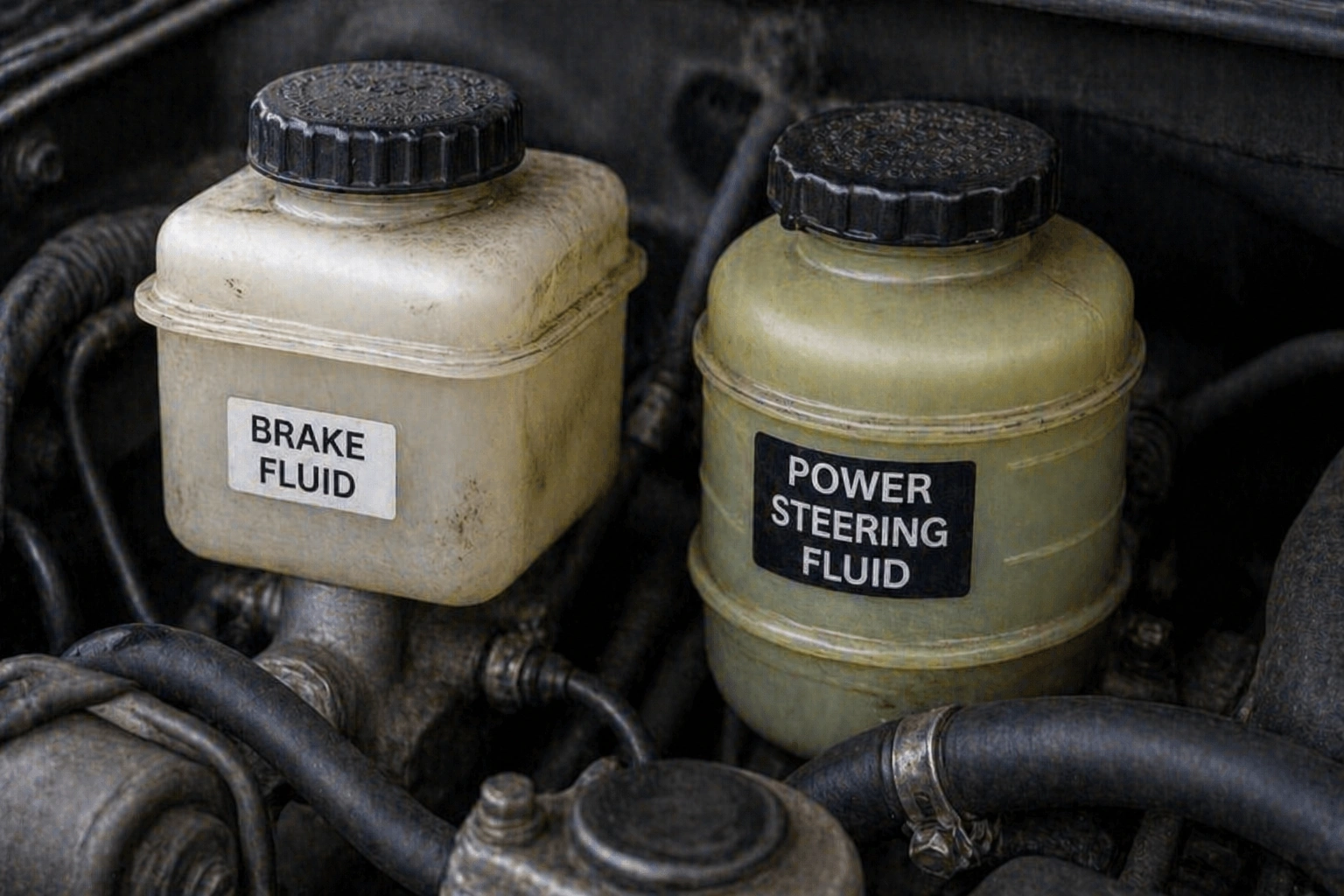
Vehicle fluids may look similar at a glance, but each one is designed with a specific purpose in mind. Brake fluid and power steering fluid are often confused because both are used in hydraulic systems. Despite that similarity, they are completely different in composition and function. Using one in place of the other can lead to serious mechanical problems.
Brake fluid is built to handle extreme heat and maintain pressure in the braking system. Power steering fluid, on the other hand, is formulated to provide lubrication and assist smooth steering movement. These differences are not minor—they directly affect how each system operates.
Mixing these fluids or using the wrong one can damage seals, hoses, and internal components. The result can be expensive repairs and reduced vehicle safety. Knowing the correct usage and consequences helps avoid mistakes and keeps your vehicle running properly.
Key Differences Between Brake Fluid And Power Steering Fluid
Chemical Composition And Performance Behavior
Brake fluid is typically glycol-based and designed to resist high temperatures. It absorbs moisture over time, which helps prevent internal corrosion in the braking system. Its main function is to transfer pressure efficiently from the brake pedal to the braking components.
Power steering fluid is oil-based or synthetic and focuses on lubrication. It reduces friction inside the steering system and ensures smooth hydraulic movement. It also protects components such as the pump and steering rack from wear.
These two fluids behave differently under pressure and temperature. Brake fluid is not designed to lubricate, and power steering fluid is not designed to maintain braking pressure. Because of these differences, they cannot be used interchangeably.
Using the wrong fluid disrupts the system’s intended function, which leads to performance issues and potential damage.
System Function And Operating Requirements
The braking system depends on precise hydraulic pressure to stop the vehicle effectively. Brake fluid must remain stable even under extreme heat generated during braking. Any change in its properties can affect stopping ability.
The power steering system relies on fluid to assist in turning the wheels. It requires smooth flow and proper lubrication to reduce effort and protect internal parts. The system operates under different pressure and temperature conditions compared to brakes.
Each system is engineered with specific fluid requirements. Using brake fluid in the steering system removes necessary lubrication. Using steering fluid in brakes reduces pressure stability and safety.
Matching the correct fluid to the correct system ensures proper operation and prevents unnecessary risks.
Compatibility With Seals And Internal Parts
Seals and hoses in automotive systems are made from materials that are compatible with specific fluids. Brake fluid can cause swelling and damage to seals used in power steering systems. This leads to leaks and loss of hydraulic pressure.
Power steering fluid lacks the chemical properties required for brake system components. It cannot withstand the heat and pressure needed for braking performance.
When incompatible fluids are used, internal parts begin to deteriorate. This damage may not be visible immediately but becomes serious over time.
Using the correct fluid protects all components and ensures long-term system reliability.
What Happens If Brake Fluid Is Used In Power Steering
Immediate Changes In Steering Behavior
Using brake fluid in the power steering system often causes noticeable changes right away. The steering may feel heavier or less responsive. This happens because brake fluid does not provide the lubrication required for smooth operation.
You may also hear unusual noises such as whining or grinding. These sounds come from increased friction within the system. The pump struggles to function properly without the correct fluid.
Even if the system still works initially, performance will decline quickly. Addressing the issue early helps prevent further complications.
Ignoring these early signs allows damage to spread to other components.
Damage To Seals, Hoses, And Pump
Brake fluid can break down rubber seals and hoses in the steering system. Over time, these parts begin to crack or swell, leading to leaks. Once leaks develop, the system loses pressure and efficiency.
The steering pump is also at risk. Without proper lubrication, internal parts wear out faster. This can lead to pump failure, which is often expensive to repair.
Damage may not happen instantly, but it progresses steadily. The longer the wrong fluid remains in the system, the more severe the impact becomes.
Replacing damaged components increases repair costs and downtime.
Risk Of Complete Steering Failure
In extreme cases, using brake fluid can lead to total power steering failure. When the system loses pressure, steering becomes very difficult, especially at low speeds.
This situation can affect vehicle control and safety. Maneuvering the vehicle becomes harder, particularly in tight spaces or emergency situations.
A complete system failure often requires replacing multiple parts, including hoses, seals, and the pump. This significantly increases repair expenses.
Preventing such damage starts with using the correct fluid and correcting mistakes immediately.
Correct Fluid For Power Steering System
Types Of Fluids Used In Steering Systems
Power steering systems use specific fluids designed for lubrication and hydraulic function. Some vehicles require dedicated power steering fluid, while others use automatic transmission fluid depending on the design.
Synthetic options provide better performance under extreme conditions and last longer. Conventional fluids are more affordable and suitable for standard use.
Each type is formulated to meet specific requirements. Using the correct type ensures smooth operation and protects internal components.
Checking the owner’s manual helps identify the exact fluid required for your vehicle.
Importance Of Following Manufacturer Guidelines
Manufacturers specify the correct fluid based on system design and testing. These recommendations ensure compatibility with all components and optimal performance.
Using the recommended fluid maintains proper pressure and lubrication. It also prevents damage to seals and internal parts.
Ignoring these guidelines can lead to reduced performance and increased maintenance costs. Following them ensures reliability and long-term durability.
Consistency in fluid selection keeps the system functioning as intended.
Signs Of Incorrect Fluid Usage
Using the wrong fluid often leads to noticeable symptoms. Steering may feel stiff or inconsistent, especially during turns. Unusual noises from the pump can indicate internal friction.
You may also notice fluid discoloration or foaming in the reservoir. Leaks can develop as seals begin to degrade.
These warning signs should not be ignored. Addressing them early helps prevent further damage and restores proper function.
Regular inspection of fluid condition helps detect problems before they worsen.
What To Do If Wrong Fluid Was Added
Immediate Steps To Reduce Damage
If brake fluid is added by mistake, avoid driving the vehicle. Circulating the wrong fluid increases the risk of damage.
The system should be drained as soon as possible. Removing contaminated fluid prevents it from affecting additional components.
Acting quickly can significantly reduce repair costs and limit damage. Delaying action allows the fluid to spread throughout the system.
Professional help may be required for proper handling and inspection.
Flushing The System Properly
Flushing involves removing all contaminated fluid and replacing it with the correct type. This process may need to be repeated to ensure complete cleaning.
All parts of the system, including hoses and the pump, should be cleared of residue. Any remaining brake fluid can continue to cause damage.
Using fresh fluid during the process helps restore proper lubrication and performance. This step is essential for returning the system to normal condition.
Thorough flushing prevents long-term issues and ensures smooth operation.
Replacing Damaged Components If Needed
If seals or hoses are already damaged, they must be replaced. Ignoring worn parts can lead to leaks and reduced performance.
The pump and steering rack should also be inspected. If they show signs of wear, replacement may be necessary.
Replacing affected components ensures reliability and prevents repeated problems. Although it adds to the cost, it protects the system from further damage.
A proper inspection helps determine the extent of repairs required.
Preventing Fluid Mix Up In Future
Identifying Reservoirs Clearly
Brake and power steering reservoirs can look similar, but they are labeled. Taking a moment to confirm before adding fluid prevents mistakes.
Familiarizing yourself with the engine bay layout makes maintenance easier. Clear identification reduces confusion and errors.
Using proper lighting and checking labels carefully ensures accuracy. This simple habit can prevent costly repairs.
Attention to detail plays a major role in vehicle care.
Proper Storage And Handling Of Fluids
Keeping fluids in their original containers helps avoid mix-ups. Unlabeled containers increase the risk of using the wrong fluid.
Using separate tools for each fluid prevents contamination. Clean funnels and containers ensure that fluids remain pure.
Organizing your workspace improves efficiency and reduces mistakes. Proper handling habits contribute to better maintenance practices.
Consistency in storage and usage keeps everything clear and safe.
Staying Aware During Maintenance
Awareness and careful handling are key to avoiding errors. Taking time to verify each step ensures that the correct fluid is used.
If there is any doubt, checking the manual or consulting a professional is always a safe option. Small precautions prevent major problems.
Regular maintenance checks also help identify issues early. Staying informed and attentive ensures reliable vehicle operation.
Preventive care is always more effective than fixing damage later.
Final Thoughts On Using Brake Fluid In Power Steering
Brake fluid and power steering fluid serve completely different purposes and should never be used interchangeably. Using the wrong fluid can lead to immediate performance issues and long-term damage.
Quick action can reduce the impact of a mistake, but prevention remains the best approach. Following manufacturer recommendations and maintaining proper habits ensures reliable operation.
Using the correct fluid protects critical components and keeps systems functioning as intended. Careful maintenance helps avoid unnecessary repairs and ensures long-term vehicle performance.