A vehicle’s air conditioning system works quietly in the background, turning hot cabin air into a cool and comfortable environment. Its operation depends on precise pressure levels within a sealed system filled with refrigerant. When those pressure levels shift out of range, cooling performance drops, and one of the most common signs is low high-side pressure.
This condition often points to an imbalance in how refrigerant is circulating through the system. While it may seem like a small technical detail, it can quickly lead to poor cooling, unusual compressor behavior, or even long-term damage if ignored. Many drivers notice warm air from vents or inconsistent cooling without realizing the root cause lies in pressure levels.
Identifying why high-side pressure is low requires a closer look at system components, refrigerant flow, and possible leaks. With the right approach, the issue can be diagnosed and corrected effectively, restoring proper cooling and preventing further complications.
How Car AC Pressure System Works
Role Of High Side And Low Side Pressure
Automotive air conditioning systems operate on two main pressure zones: the high-pressure side and the low-pressure side. These zones are created by the compressor, which circulates refrigerant through the system. The high side begins at the compressor outlet and continues through the condenser, while the low side runs from the expansion device to the compressor inlet.
The high-pressure side is responsible for releasing heat. As refrigerant is compressed, its temperature and pressure increase, allowing it to transfer heat to the outside air through the condenser. Proper pressure levels ensure efficient heat exchange and consistent cooling.
When high-side pressure drops below normal levels, the system struggles to remove heat effectively. This results in reduced cooling performance and can affect the entire cycle. Maintaining balanced pressure is essential for smooth operation and long-term reliability.
Components Involved In Pressure Regulation
Several components work together to maintain proper pressure within the AC system. The compressor acts as the heart of the system, creating the pressure difference needed for refrigerant flow. The condenser dissipates heat, while the expansion valve or orifice tube controls refrigerant flow into the evaporator.
The evaporator absorbs heat from the cabin, completing the cooling cycle. Sensors and switches monitor pressure levels and ensure safe operation. Each component plays a specific role, and any malfunction can disrupt pressure balance.
A problem in one part often affects the entire system. For example, a weak compressor may fail to generate sufficient pressure, while a blockage in the expansion valve can restrict flow. Understanding how these components interact helps in identifying the cause of low high-side pressure.
Normal Pressure Range And Behavior
Under typical conditions, high-side pressure varies depending on ambient temperature and system design. On a warm day, it usually ranges between 150 to 250 psi, though this can differ slightly between vehicles.
Pressure increases as temperature rises, allowing the system to handle higher heat loads. When the AC is running properly, both high and low sides maintain a stable balance, ensuring efficient cooling.
Low high-side pressure indicates that the system is not building enough pressure to release heat effectively. This imbalance often points to issues such as low refrigerant levels, compressor inefficiency, or flow restrictions.
Monitoring pressure readings using proper tools provides valuable insight into system health and helps pinpoint the source of the problem.
Causes Of Low High Side Pressure
Low Refrigerant Level Due To Leaks
One of the most common causes of low high-side pressure is insufficient refrigerant. The AC system relies on a precise amount of refrigerant to maintain proper pressure levels. When there is a leak, the amount of refrigerant decreases, leading to reduced pressure on both sides.
Leaks can occur in hoses, seals, or connections. Over time, these components may wear out, allowing refrigerant to escape. Even small leaks can gradually lower pressure and affect performance.
Detecting leaks often requires specialized tools such as UV dye or electronic leak detectors. Once identified, the damaged component must be repaired or replaced before recharging the system.
Simply adding refrigerant without fixing the leak provides only a temporary solution. Addressing the root cause ensures long-term reliability and proper system function.
Weak Or Failing Compressor
The compressor plays a critical role in maintaining pressure. If it becomes weak or fails, it cannot generate the required pressure difference. This results in low high-side pressure and poor cooling performance.
Compressor issues may be caused by internal wear, lack of lubrication, or electrical faults. Symptoms often include unusual noises, reduced cooling, or inconsistent operation.
A failing compressor may still operate but at reduced efficiency, making diagnosis more challenging. In some cases, it may cycle on and off frequently due to pressure imbalances.
Replacing a faulty compressor is often necessary to restore proper function. Ensuring that the system is clean and properly lubricated helps prevent future issues.
Faulty Expansion Valve Or Orifice Tube
The expansion valve or orifice tube controls the flow of refrigerant into the evaporator. If this component malfunctions, it can restrict or mismanage refrigerant flow, leading to pressure imbalances.
A stuck or partially blocked valve may reduce the amount of refrigerant reaching the evaporator. This affects both cooling performance and pressure levels on the high side.
Debris or contamination within the system can also cause blockages. These contaminants may originate from compressor wear or improper servicing.
Replacing or cleaning the expansion device often resolves the issue. Ensuring that the system is free from contamination is essential for maintaining proper operation.
How To Diagnose Low High Side Pressure
Using Manifold Gauge Set Properly
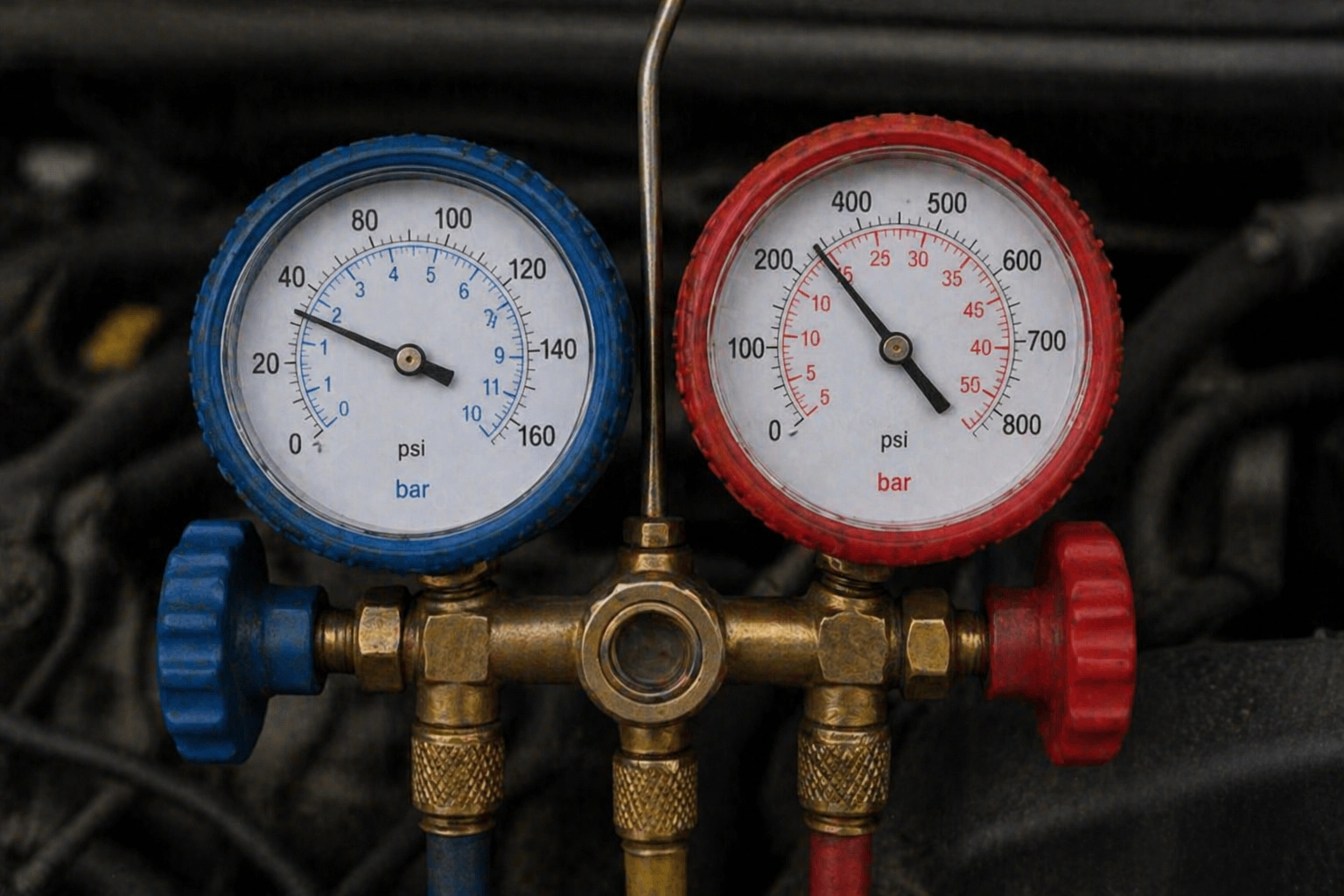
A manifold gauge set is the primary tool for diagnosing AC pressure issues. It connects to both the high and low sides of the system, providing real-time pressure readings.
Proper connection and operation are essential for accurate results. The engine should be running, and the AC should be set to maximum cooling during testing. This allows the system to operate under normal conditions.
Comparing the readings to standard pressure ranges helps identify abnormalities. Low high-side pressure combined with low low-side pressure often indicates low refrigerant levels. Different combinations of readings can point to other issues.
Using the gauge set correctly provides valuable insight into system performance and helps narrow down potential causes.
Inspecting System For Visible Issues
Visual inspection is an important step in diagnosis. Checking for oil residue around hoses and connections can indicate refrigerant leaks. Damaged components or loose fittings should be addressed immediately.
The condenser should be inspected for blockages or damage. Dirt, debris, or bent fins can reduce airflow and affect heat dissipation. Cleaning or repairing the condenser improves performance.
Electrical connections to the compressor and sensors should also be checked. Faulty wiring can affect compressor operation and pressure regulation.
A thorough inspection helps identify obvious issues before moving on to more complex diagnostics.
Identifying Hidden Problems Through Testing
Some issues are not visible and require advanced testing methods. Leak detection tools can identify small leaks that are not apparent during visual inspection.
Pressure testing and vacuum testing help determine system integrity. These tests reveal whether the system can hold pressure and operate efficiently.
Temperature measurements at different locations in the system provide additional clues. Differences in temperature can indicate flow restrictions or component failures.
Combining multiple diagnostic methods ensures a comprehensive evaluation and accurate identification of the problem.
Fixing Low High Side Pressure Issue
Repairing Leaks And Recharging System
Fixing leaks is the first step in restoring proper pressure. Once the leak is identified, the affected component must be repaired or replaced. This may involve changing hoses, seals, or additional parts.
After repairs, the system should be evacuated to remove air and moisture. This step is crucial for maintaining efficiency and preventing damage.
The system is then recharged with the correct amount of refrigerant. Using the specified type and quantity ensures proper operation and pressure balance.
Proper repair and recharge restore cooling performance and prevent recurring issues.
Replacing Faulty Components
When components such as the compressor or expansion valve fail, replacement is often necessary. Using high-quality parts ensures reliability and compatibility with the system.
Installation should be performed carefully, following proper procedures. This includes adding the correct type of oil and ensuring all connections are secure.
Replacing faulty components addresses the root cause of pressure imbalance and restores normal operation.
Professional assistance may be required for complex repairs, ensuring that the job is done correctly.
Preventive Maintenance And Best Practices
Regular maintenance helps prevent pressure issues from developing. Checking refrigerant levels, inspecting components, and cleaning the condenser improve system performance.
Using the AC system regularly, even in cooler weather, helps keep components lubricated and functioning properly.
Avoiding overcharging or undercharging the system is essential. Both conditions can lead to pressure imbalances and reduced efficiency.
A proactive approach to maintenance ensures consistent cooling and extends the lifespan of the AC system.
Final Thoughts
Low high-side pressure is a clear sign that the air conditioning system is not operating as intended. While the issue may seem complex, it often stems from common causes such as low refrigerant, compressor problems, or flow restrictions.
Accurate diagnosis and timely repairs are essential for restoring proper function. Ignoring the issue can lead to reduced cooling and potential damage to system components.
With proper care, regular maintenance, and attention to detail, the AC system can continue to perform efficiently. Addressing problems early ensures reliable cooling and long-term performance.