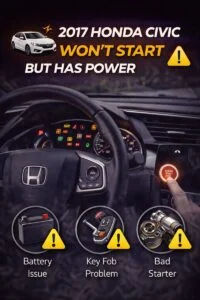
The 2017 Honda Civic is widely known for reliability, so when it refuses to start while everything electrical seems fine, it feels confusing and out of character. The dashboard lights come on, the radio works, the screen lights up, and sometimes you even hear a click or faint sound.
Yet the engine does not turn over, or it cranks but never fires. Because the car clearly has power, many owners are left unsure where to look next.
This type of problem is more common than it seems, especially in modern vehicles that rely heavily on electronics, sensors, and security systems. Starting an engine today involves far more than just a battery and a starter.
The Civic’s computer systems must agree on several conditions before fuel and spark are allowed. When one piece of that chain fails, the car can appear fully powered but still refuse to start. Knowing how this happens makes the problem far less mysterious and helps narrow down the real cause instead of guessing.
What “Has Power But Won’t Start” Really Tells You
When a car has power, it means the battery can still supply low-current electrical systems. Interior lights, infotainment screens, and dashboard indicators require very little power compared to starting the engine.
Starting, however, demands a large surge of current and precise electronic authorization. The starter motor, fuel system, ignition system, and engine computer must all work together in the correct order. A failure anywhere in that process can stop the engine from starting while everything else appears normal.
In the 2017 Civic, this usually points to a control, signal, or high-current delivery issue rather than a completely dead battery.
No Crank Versus Crank But No Start
Before digging into causes, it helps to identify which type of no-start you’re experiencing.
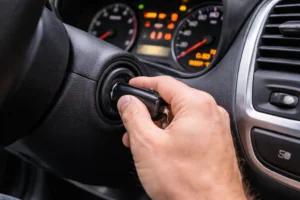
A no-crank condition means the engine does not turn over at all. You may hear a click or nothing at all when pressing the start button or turning the key.
A crank-but-no-start condition means the engine turns over normally but never fires. The starter works, but combustion does not happen.
These two situations involve different systems, and separating them early saves time.
Battery Health Still Matters More Than It Seems
Even when the battery shows signs of life, it may not be healthy enough to start the engine.
Modern Civics are sensitive to voltage drop. A battery can power lights and screens but fail under the heavy load required by the starter. Weak internal battery cells often cause this exact scenario.
Corroded battery terminals create similar symptoms. Power reaches accessories, but resistance limits current flow during starting.
Ground connections are equally important. A loose or corroded ground cable can interrupt starter current while leaving electronics unaffected.
Battery issues are often overlooked because the car “has power,” but they remain one of the most common causes.
Starter System Problems In The 2017 Civic
The starter motor is responsible for turning the engine over. If it fails, the engine will not crank.
Common signs of starter issues include a single click, repeated clicking, or silence when attempting to start. In some cases, the starter works intermittently, starting the car one moment and failing the next.
The starter relay and associated fuses also play a role. A failed relay interrupts the signal from the ignition system to the starter motor.
Because the Civic uses electronic start authorization, starter issues can sometimes feel inconsistent, especially when temperature or electrical load changes.
Push Button Start And Brake Switch Issues
Many 2017 Civic models use a push-button start system. This system requires confirmation that the brake pedal is pressed before allowing the engine to start.
A faulty brake pedal switch can prevent the car from recognizing brake input. When this happens, the engine will not start even though everything else powers on.
This issue often appears without warning and may not trigger a dashboard alert. Replacing the switch usually resolves the problem quickly.
Key Fob And Immobilizer Problems
The Civic’s security system must recognize the key before allowing the engine to start.
A weak key fob battery can cause starting issues even when the car unlocks normally. The fob may not transmit a strong enough signal to authorize starting.
Interference, damaged fobs, or programming issues can also trigger immobilizer lockout. In this state, fuel and ignition are disabled as a security measure.
Some Civics allow emergency starting by holding the key fob close to the start button. If this works, the fob battery is often the real issue.
Fuel System Issues That Prevent Starting
If the engine cranks but does not start, fuel delivery becomes a major suspect.
The fuel pump must prime and build pressure before the engine can fire. A failing pump may still run intermittently or quietly fail without obvious noise.
Fuel pump relays and fuses can also interrupt delivery. These electrical components are inexpensive but critical.
Clogged fuel injectors or contaminated fuel can prevent proper combustion, especially after long periods of sitting.
Fuel issues often do not affect electrical accessories, which is why the car appears powered but won’t start.
Ignition System And Sensor Failures
The ignition system provides spark, and several sensors control when that spark occurs.
Crankshaft position sensors are especially important. If the engine computer does not receive crankshaft position data, it will not allow fuel or spark. The engine may crank endlessly without starting.
Camshaft sensors serve a similar purpose and can also cause no-start conditions.
Ignition coil failures are less common for full no-start situations but can still prevent combustion if multiple coils fail or if the control signal is lost.
These sensor issues often store fault codes, even if the check engine light is not illuminated.
Engine Control Module And Software Factors
The engine control module manages all starting conditions.
Software glitches, low-voltage events, or communication errors can temporarily disable starting. Battery replacement or jump-starting sometimes triggers these issues.
In rare cases, module failure itself can prevent starting, though this is far less common than sensor or power-related problems.
Reprogramming or resetting the system may be required after certain repairs.
Transmission And Neutral Safety Conditions
The Civic will only start when it detects the transmission is in Park or Neutral.
A faulty transmission range sensor may send incorrect information, preventing starting even when the gear selector appears correct.
Trying to start the car in Neutral instead of Park can sometimes reveal this issue.
Electrical Load And Charging System Influence
Low alternator output does not usually cause immediate no-start issues, but voltage instability can confuse control systems.
If the battery was recently drained or the alternator is failing, system voltage may drop too low during starting attempts.
This affects computers and sensors more than basic accessories, again creating the illusion that power is present when it is not sufficient.
Why Restart Attempts Sometimes Work
Some owners report that the Civic starts after several attempts.
Each attempt resets certain electronic conditions. Voltage stabilizes briefly, sensors reinitialize, or security systems recheck authorization.
While this may get the car running temporarily, it does not fix the underlying issue.
Repeated attempts also risk draining the battery further.
How The Problem Usually Develops Over Time
Most “won’t start but has power” issues begin intermittently.
The car may fail to start once, then behave normally for days or weeks. Over time, failures become more frequent.
Ignoring early symptoms often leads to complete no-start situations at inconvenient times.
Addressing the issue early usually limits repair cost and complexity.
Practical Steps To Narrow Down The Cause
Start by observing carefully. Does the engine crank or stay silent? Are there clicking sounds? Do warning lights behave normally?
Check the brake lights when pressing the pedal. If they don’t illuminate, suspect the brake switch.
Try starting with the key fob close to the start button.
Listen for the fuel pump priming sound.
Scan the car for stored fault codes, even if no warning lights are on.
Inspect battery terminals and ground connections closely.
These steps often point directly to the problem area.
Repairs That Commonly Solve The Issue
Battery replacement or terminal cleaning resolves many no-start cases.
Starter motor or relay replacement fixes no-crank conditions.
Brake switch replacement restores push-button start functionality.
Key fob battery replacement resolves immobilizer-related issues.
Fuel pump or relay repair addresses crank-but-no-start problems.
Sensor replacement restores proper engine timing signals.
Why Random Part Replacement Is A Bad Idea
Many starting components interact with each other.
Replacing parts without confirming the fault often leads to frustration and unnecessary expense.
Accurate diagnosis focuses on symptoms, electrical signals, and stored data rather than guesswork.
When The Car Should Not Be Driven Further
Repeated no-start attempts risk draining the battery and damaging the starter.
If warning lights appear related to the immobilizer or engine systems, further attempts may worsen the issue.
If the car stalls shortly after starting, driving should be avoided until resolved.
Preventing Future Starting Problems
Keep the battery in good condition and replace it before failure.
Replace key fob batteries regularly.
Address warning lights promptly.
Avoid repeated jump-starts, which stress electronics.
Ensure software updates are performed when recommended.
Final Thoughts
A 2017 Honda Civic that won’t start but still has power is usually dealing with a control, signal, or high-current delivery problem rather than a simple electrical failure. The presence of lights and screens can be misleading, masking issues with the starter system, fuel delivery, sensors, or security authorization.
The encouraging part is that these problems are well understood and often fixable without major repairs when addressed early. Careful observation, basic testing, and proper diagnosis prevent unnecessary part replacement and restore reliability. When the Civic starts confidently again, it confirms that every part of the starting chain is working together the way it was designed to.