An engine is the heart of a vehicle, built to handle thousands of controlled explosions every minute without falling apart. When it fails in a dramatic way, the experience can feel shocking, confusing, and even frightening.
The phrase “engine blows” is often used casually, but in reality, it describes one of the most serious mechanical failures a vehicle can suffer. Many drivers hear the term without fully understanding what it actually means or what happens inside the engine when it occurs.
This guide explains the reality behind an engine blowing while driving, using clear and simple language. It covers what physically happens inside the engine, how the car behaves in that moment, the risks involved, and what steps you should take immediately.
It also explains long-term consequences, repair options, and how such failures can sometimes be prevented. The goal is clarity, not fear, so you can understand the situation with confidence and make informed decisions if it ever happens.
What The Term Engine Blows Really Means
When people say an engine has blown, they are usually referring to catastrophic internal damage. This is not a minor issue like a misfire or oil leak. It means that critical internal components have failed to the point where normal engine operation is no longer possible.
In many cases, this involves broken pistons, damaged connecting rods, cracked engine blocks, or seized internal parts. Sometimes the damage is sudden and dramatic. Other times, it is the final result of a problem that has been building over time.
An engine can “blow” in different ways, but the common factor is severe mechanical failure that requires major repair or complete replacement.
What Happens Inside The Engine At The Moment Of Failure
Inside a running engine, pistons move up and down at high speed while valves open and close with precise timing. Oil flows continuously to reduce friction and heat. When something goes wrong at this level, the consequences are immediate.
If a connecting rod breaks, it can punch through the engine block. If a piston overheats or cracks, it can seize inside the cylinder. If lubrication fails, metal parts grind against each other until they lock up.
These events disrupt the engine’s internal balance instantly. The engine may lose compression, oil pressure, or the ability to rotate. Once this happens, normal operation stops, often within seconds.
How The Car Feels When The Engine Blows
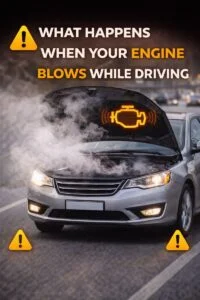
The way a blown engine feels can vary, but it is rarely subtle. Many drivers report a loud bang, knocking sound, or sudden loss of power. In some cases, there may be smoke coming from under the hood or the exhaust.
The vehicle may jerk, stall, or shut off completely. Steering and braking usually remain functional for a short time, but power-assisted systems may feel heavier.
Dashboard warning lights often illuminate immediately, but the failure itself is usually impossible to ignore due to noise, vibration, or loss of acceleration.
Immediate Safety Risks While Driving
An engine blowing while driving can create real safety concerns, especially at higher speeds. Sudden power loss can make it difficult to keep up with traffic or move to a safe location.
If oil spills onto hot engine parts, smoke or even fire can occur. In extreme cases, engine components can lock up the drivetrain, causing sudden deceleration.
Staying calm and focused is critical. Gradually steering to the side of the road, using hazard lights, and avoiding sudden movements can help reduce risk.
What To Do Immediately After It Happens
Once you realize the engine has failed, the first priority is safety. Ease off the accelerator and guide the vehicle to a safe stopping point. Turn on hazard lights to alert other drivers.
Do not attempt to restart the engine. Doing so can worsen internal damage and increase repair costs. If smoke or unusual smells are present, stay clear of the engine compartment.
After stopping, arrange for towing rather than driving further. Continuing to drive with severe engine damage can turn a bad situation into a much worse one.
Common Causes Of A Blown Engine
Engines rarely fail without reason. One of the most common causes is oil starvation. Low oil levels or oil pump failure prevent proper lubrication, leading to overheating and metal damage.
Overheating is another major cause. Cooling system failures, such as a broken radiator or stuck thermostat, can cause temperatures to rise beyond safe limits.
Other causes include detonation from poor fuel quality, timing issues, manufacturing defects, or long-term neglect of maintenance. In many cases, warning signs appear before complete failure.
Warning Signs Often Ignored Before Failure
Before an engine blows, there are often clues. Knocking or tapping noises, excessive oil consumption, frequent overheating, and warning lights are common signals.
Loss of power, rough running, or unusual vibrations may also indicate internal problems. Ignoring these signs allows damage to progress until failure becomes unavoidable.
Regular attention to changes in sound, performance, and warning indicators can make the difference between a repairable issue and total engine failure.
Can An Engine Blow Without Warning
While many failures show warning signs, some occur suddenly. A defective component, sudden oil loss, or extreme stress can cause immediate failure without noticeable buildup.
High-speed driving under heavy load, towing beyond capacity, or running an engine low on oil can accelerate damage rapidly.
Even in these cases, the root cause often traces back to an underlying weakness or missed maintenance issue.
Damage Extent And Why Repairs Are Expensive
When an engine blows, damage is rarely limited to one part. Broken components can damage surrounding parts, contaminate oil passages, and compromise the engine block itself.
This is why repairs are expensive. Labor involves removing and disassembling the engine, and parts costs add up quickly. In many cases, replacing the entire engine is more practical than rebuilding it.
The decision depends on the vehicle’s age, condition, and value, as well as the extent of the damage.
Repair Options After An Engine Blows
There are generally three paths forward. One option is rebuilding the existing engine, which involves replacing damaged internal components. This can be effective but is labor-intensive.
Another option is installing a used or remanufactured engine. This often costs less and reduces downtime, though quality depends on the source.
The final option is replacing the vehicle. For older cars with high mileage, repair costs may exceed the vehicle’s value, making replacement the more sensible choice.
Insurance And Warranty Considerations
Standard auto insurance usually does not cover engine failure unless it results from a covered event like an accident or flood. Mechanical breakdowns are typically excluded.
Extended warranties or mechanical breakdown coverage may help, depending on the policy and cause of failure. Documentation of maintenance can play an important role in claim approval.
Understanding coverage terms before a failure occurs can prevent surprises later.
Emotional And Financial Impact On Drivers
An engine blowing is not just a mechanical issue. It can disrupt daily routines, work schedules, and finances. The sudden nature of the failure adds to stress and uncertainty.
Taking time to understand options and avoid rushed decisions can help manage the situation more effectively. Clear information reduces anxiety and leads to better outcomes.
Support from a trusted mechanic or advisor can also make the process easier.
Can A Blown Engine Be Prevented
While not all failures are preventable, many are. Regular oil changes, cooling system maintenance, and attention to warning signs significantly reduce risk.
Using the correct oil type, monitoring fluid levels, and addressing small issues early helps maintain engine health.
Preventive care costs far less than engine replacement and extends the vehicle’s usable life.
Long-Term Lessons From Engine Failure
Experiencing an engine blow often changes how drivers view maintenance. It highlights the importance of listening to the vehicle and respecting service intervals.
It also reinforces that engines are complex systems where small problems can escalate quickly if ignored.
Knowledge gained from such experiences can prevent future failures and improve decision-making with any vehicle.
Final Thoughts
When an engine blows while driving, it marks a serious turning point for both the vehicle and the driver. The event is sudden, disruptive, and often costly, but understanding what happens reduces confusion and panic.
Knowing how to respond immediately, recognizing warning signs, and understanding repair options empowers you to handle the situation calmly and safely. While engine failure is never ideal, informed decisions can limit damage, control costs, and help you move forward with confidence.