Automatic transmissions have evolved far beyond simple gear changes. What once involved only Park, Reverse, Neutral, and Drive now includes additional modes designed to adapt the vehicle to different road conditions and driving preferences.
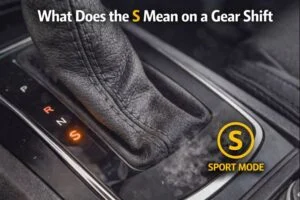
One of the most common additions is the letter S on the gear selector. Drivers notice it on sedans, SUVs, hatchbacks, and even some hybrids, yet its purpose is often unclear. Some assume it stands for speed, others think it is meant only for aggressive driving, and many never use it at all.
The presence of the S mode is not decorative. It exists to alter how the transmission and engine respond to driver input. When used correctly, it can improve control, responsiveness, and confidence in certain situations.
When misunderstood, it may seem unnecessary or even harmful. Knowing what the S mode does, how it changes gear behavior, and when it makes sense to use it helps drivers get the most out of their vehicle without confusion or unintended side effects.
What The S Mode Represents In Modern Transmissions
Meaning Of The Letter S
In most vehicles, the S on a gear shift stands for Sport. Sport mode is a transmission setting that prioritizes performance over comfort or efficiency. It does not turn the car into a race vehicle, but it does change how power is delivered.
The goal of Sport mode is to keep the engine in a higher power range for quicker response.
How Sport Mode Differs From Drive
In regular Drive mode, the transmission shifts gears early to save fuel and provide smooth operation. Sport mode delays upshifts and downshifts more aggressively.
This behavior allows the engine to stay at higher revolutions, where more power is available.
Not The Same In Every Vehicle
Although the letter S usually means Sport, its behavior varies by manufacturer. Some vehicles adjust only shift timing, while others also change throttle response, steering weight, and suspension settings.
The basic purpose remains the same: sharper response.
How S Mode Changes Gear Shifting Behavior
Higher Shift Points
In Sport mode, the transmission allows the engine to rev higher before shifting to the next gear. This keeps the engine closer to its peak power output.
Higher shift points improve acceleration and responsiveness.
Faster Downshifts
Sport mode downshifts more quickly when the accelerator is pressed. This reduces hesitation and provides immediate power.
The vehicle feels more alert when merging or passing.
Reduced Gear Hunting
In hilly or winding areas, Drive mode may shift frequently between gears. Sport mode often holds a gear longer, reducing constant shifting.
This creates smoother power delivery in demanding terrain.
Engine Braking Effect
Sport mode may use engine braking more aggressively when slowing down. This helps maintain control during descents.
Engine braking reduces reliance on the brake pedal.
Situations Where Using S Mode Makes Sense
Highway Merging And Overtaking
Sport mode is useful when quick acceleration is needed. Holding lower gears allows the engine to respond instantly.
This improves confidence during passing maneuvers.
Driving On Hills Or Mountains
In hilly regions, Sport mode prevents the transmission from shifting too often. The engine stays in a gear that provides steady power.
This results in better control and smoother progress uphill or downhill.
Towing Or Carrying Heavy Loads
Some vehicles benefit from Sport mode when towing. Holding gears longer helps maintain torque and reduces strain on the transmission.
However, towing guidelines should always be followed.
Spirited Or Dynamic Driving
On winding roads, Sport mode offers improved throttle response and predictable power delivery.
It enhances driver control without requiring manual shifting.
Situations Where S Mode Is Not Ideal
City Stop-And-Go Traffic
In slow urban traffic, Sport mode can feel jerky. Higher revs and delayed shifts reduce smoothness.
Drive mode is usually more comfortable in these conditions.
Fuel-Conscious Driving
Sport mode increases engine speed and fuel usage. It is not designed for efficiency.
Using it constantly will reduce fuel economy.
Slippery Or Low-Traction Conditions
On snow, ice, or wet roads, aggressive throttle response can reduce traction.
Drive mode or dedicated traction modes are safer choices.
Relationship Between S Mode And Manual Shifting
S Mode With Paddle Shifters
In many vehicles, selecting S mode activates manual shifting through paddles or the gear lever. The driver can choose gears directly.
The transmission may still prevent shifts that could damage the engine.
Automatic Sport Mode Versus Manual Control
Some cars use S mode purely as an automatic performance setting. Others combine it with manual gear selection.
Both approaches aim to provide better control.
Difference Between S And L Or M Modes
L or Low mode focuses on keeping the transmission in lower gears for traction or engine braking. M or Manual mode gives direct gear control.
S mode sits between these, offering sportier behavior without full manual operation.
How S Mode Affects Fuel Consumption And Engine Wear
Increased Fuel Usage
Higher engine speeds require more fuel. Sport mode naturally consumes more fuel than Drive mode.
The difference is noticeable during long trips.
Engine Stress Considerations
Running at higher revolutions increases engine activity, but modern engines are designed to handle this safely.
Occasional use does not harm the engine when the vehicle is properly maintained.
Transmission Health
Sport mode does not damage the transmission when used correctly. It operates within programmed limits.
Problems usually arise from aggressive driving habits, not the mode itself.
Common Myths About S Mode
Many drivers believe Sport mode should only be used at high speed. In reality, it can be useful at moderate speeds when extra control is needed.
Another misconception is that Sport mode shortens engine life. Normal use within manufacturer limits does not cause premature wear.
Some also think S mode locks the car into one gear. It does not. The transmission still shifts automatically unless manual control is engaged.
How To Use S Mode Correctly
Switching Between Modes
Most vehicles allow switching between Drive and S mode at any speed. The transition is handled smoothly by the transmission.
Sudden throttle input during switching should be avoided.
Listening To The Engine
Higher revs are normal in Sport mode. Drivers should become familiar with how the engine sounds and responds.
Unusual noises are not related to mode selection.
Using It When Needed
Sport mode works best when used intentionally rather than constantly. Selecting it for specific situations provides benefits without unnecessary fuel loss.
Balanced use offers the best results.
Differences Between Manufacturers
Some brands integrate S mode into a broader drive mode system that includes Eco, Normal, and Sport. Others keep it as a standalone option.
Luxury vehicles may adjust steering feel and throttle mapping along with shifting behavior.
Economy-focused cars may only change shift timing.
The exact behavior depends on vehicle design.
Does Every S Mode Feel The Same
No two vehicles behave identically in Sport mode. Engine size, transmission type, and tuning philosophy influence how noticeable the change feels.
A small engine may feel only slightly more responsive, while a powerful engine may feel dramatically different.
Driver perception also plays a role.
Long-Term Use Considerations
Using Sport mode occasionally does not create long-term issues. Regular maintenance, oil changes, and proper driving habits matter far more.
Ignoring maintenance causes damage, not mode selection.
Balanced use preserves comfort and efficiency.
Final Thoughts
The S on a gear shift usually represents Sport mode, a setting designed to change how the transmission and engine respond. By holding gears longer, downshifting more quickly, and keeping the engine in a higher power range, Sport mode delivers sharper response and better control when conditions demand it. It is not meant for constant use, nor is it harmful when used appropriately.
Knowing when to use S mode makes driving more adaptable. Whether merging onto highways, navigating hills, or seeking more responsive handling, Sport mode offers a practical option built into many modern vehicles. Used with intention, it enhances control without sacrificing reliability or safety.