
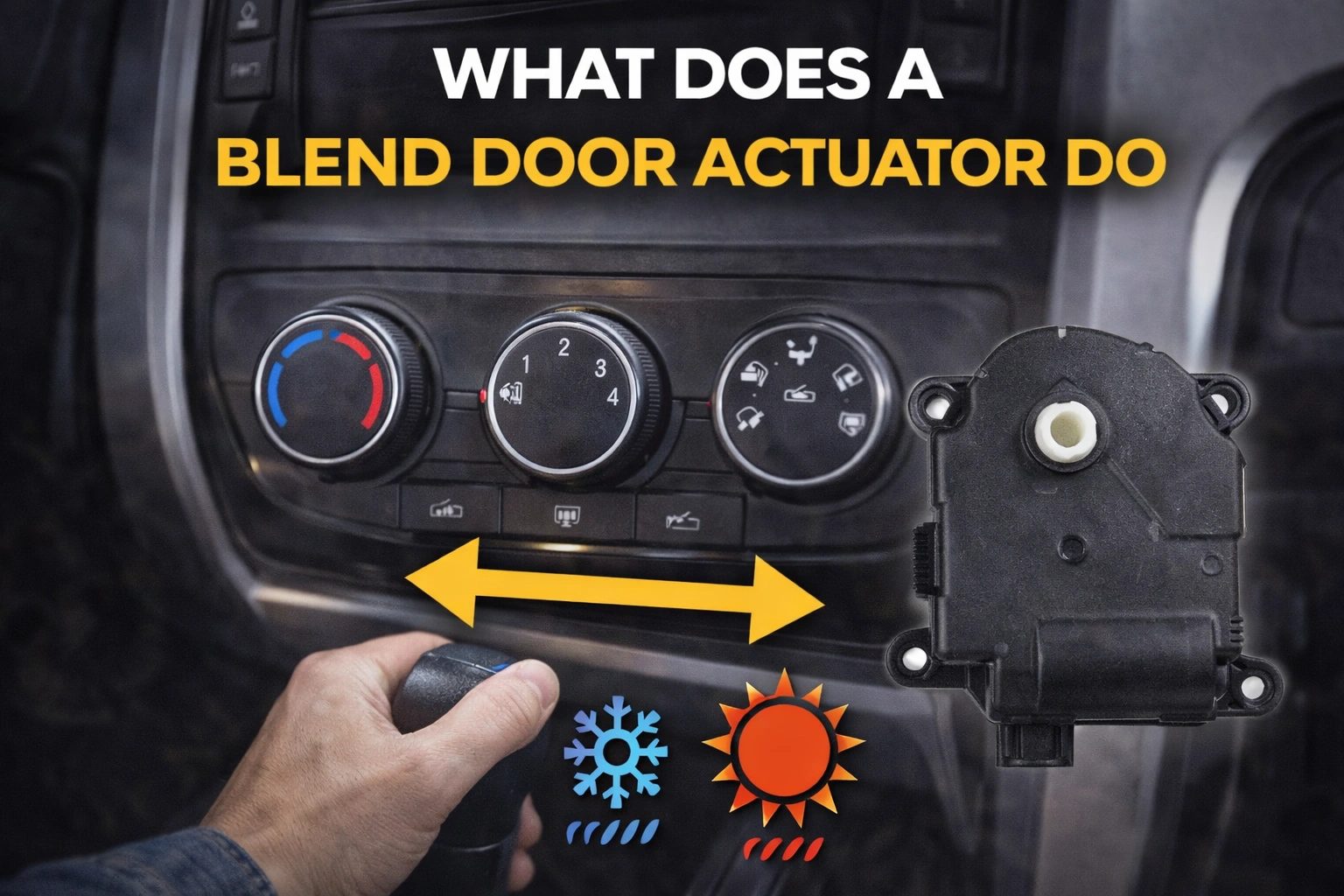
Modern vehicles are built to keep the cabin comfortable in every season. Whether it is a freezing winter morning or a hot summer afternoon, the heating and air conditioning system adjusts airflow and temperature with the turn of a dial or push of a button. Hidden behind the dashboard is a small electric motor that plays a major role in making that possible. That component is the blend door actuator.
Many drivers never hear about it until something goes wrong. Suddenly, one side of the cabin blows cold while the other side blows warm. A clicking sound begins behind the dash. Temperature settings stop responding correctly. These symptoms often trace back to this compact motorized unit.
Although small in size, the blend door actuator manages how heated and cooled air mix before entering the cabin. Its function directly affects comfort, defrosting performance, and airflow consistency. A closer look reveals how important this part truly is.
How The Climate Control System Directs Air Inside The Cabin
The Role Of The Blend Door Within The HVAC Housing
Inside the dashboard sits the HVAC housing, a plastic enclosure that contains the heater core, evaporator, and several internal doors. The blend door is one of these internal flaps. It controls how much air passes through the heater core versus bypassing it.
When the temperature control is set to cold, the blend door shifts to allow air to flow primarily through the evaporator, which cools the air. When heat is selected, the door redirects air across the heater core, warming it before it enters the vents.
The blend door does not generate heat or cooling itself. It simply determines the proportion of hot and cold air mixing together. This balance creates the temperature selected on the dashboard controls.
How The Actuator Moves The Blend Door
The blend door actuator is a small electric motor with internal gears. When the temperature setting changes, the vehicle’s control module sends an electrical signal to the actuator. The motor rotates and moves the attached door to the appropriate position.
The gears inside the actuator provide precise positioning. This allows small adjustments rather than full open or full close movements. In vehicles with automatic climate control, sensors measure cabin temperature and adjust the actuator automatically to maintain the selected setting.
Without the actuator, the blend door would remain stuck in one position, preventing accurate temperature control.
What Happens When A Blend Door Actuator Fails
Clicking Noises Behind The Dashboard
One of the most common signs of failure is a repetitive clicking sound coming from behind the dash. This noise typically occurs when the actuator’s internal plastic gears wear down or strip.
When the gears cannot engage properly, they skip teeth while attempting to move the door. The motor continues trying to adjust, creating a rhythmic clicking. This sound often appears when starting the vehicle or changing temperature settings.
Although the noise itself does not immediately damage other components, it signals that the actuator can no longer position the blend door correctly.
Inconsistent Cabin Temperature
Another common symptom is uneven or incorrect temperature output. The driver may set the system to warm air, yet cool air continues flowing from the vents. In dual-zone systems, one side of the cabin may function normally while the other side remains stuck at a different temperature.
This happens because the door no longer responds to control inputs. It may be stuck halfway between positions or completely fixed at one extreme.
When temperature fails to change despite adjusting controls, the actuator often becomes the primary suspect.
Airflow Issues And Defrost Problems
The blend door plays a role in defrosting performance. If it cannot direct warm air properly toward the windshield, clearing frost or fog becomes difficult.
In some cases, drivers may notice airflow strength seems inconsistent even though the blower motor works properly. While mode door actuators handle vent direction, blend door malfunctions can affect airflow temperature and perceived strength.
A properly functioning actuator ensures that defrost and heating systems operate effectively during cold weather.
Diagnosing And Accessing The Blend Door Actuator
Locating The Actuator Within The Dashboard
The blend door actuator is typically mounted on the HVAC housing under the dashboard. Depending on the vehicle, it may sit behind the glove box, near the center console, or on the driver’s side footwell area.
Access varies widely by model. Some vehicles allow relatively easy access by removing a trim panel. Others require partial dash disassembly.
Consulting a service manual helps identify the exact location and mounting bolts before beginning removal.
Electrical Testing And Calibration
Testing begins by checking whether the actuator receives electrical signals. A multimeter can confirm power and ground connections. If power is present but the actuator does not move, internal failure is likely.
Some vehicles allow recalibration procedures. Disconnecting the battery briefly or performing a control module reset may temporarily resolve minor positioning errors. However, worn gears generally require replacement rather than recalibration.
Verifying electrical supply before replacement prevents unnecessary parts replacement.
Replacement Process And Cost Considerations
Labor Differences Based On Vehicle Design
Repair expenses depend on how accessible the actuator is within the dashboard. In some vehicles, replacing the actuator takes less than an hour. In others, extensive dashboard removal increases labor time significantly.
Parts themselves are usually moderately priced. However, labor can vary depending on interior layout complexity. Vehicles with dual-zone climate control often have multiple actuators, each controlling separate temperature zones.
Replacing only the failed actuator resolves the temperature issue without affecting other HVAC components.
Importance Of Proper Installation And Calibration
After installation, the actuator must align correctly with the blend door shaft. Incorrect positioning may cause limited movement or continued clicking.
Some vehicles require recalibration using diagnostic equipment to allow the control module to recognize the new actuator’s range of motion.
Ensuring proper alignment prevents premature wear and restores full temperature adjustment accuracy.
Long Term Maintenance And Prevention
Reducing Strain On Climate Control Components
Frequent temperature changes between full hot and full cold are normal but can increase actuator wear over time. Gradual adjustments reduce strain on internal gears.
Keeping the cabin air filter clean also helps maintain proper airflow and reduces system load. Restricted airflow may cause the actuator to work harder to compensate for perceived temperature imbalance.
Routine maintenance supports the longevity of HVAC components.
Recognizing Early Warning Signs
Addressing clicking noises promptly prevents complete failure during extreme weather. If temperature adjustments become inconsistent, scheduling inspection early avoids discomfort during seasonal changes.
Replacing a failing actuator before winter or summer extremes ensures reliable heating and cooling performance when needed most.
Early intervention keeps repair complexity lower and prevents added strain on the HVAC system.
Bottom Line
The blend door actuator is a small yet essential part of the climate control system. It moves the internal door that regulates how much heated or cooled air enters the cabin. When functioning properly, it allows precise temperature adjustments and consistent airflow.
Failure often presents as clicking sounds behind the dashboard or uneven temperature output. While the part itself is not large or expensive, access and labor can vary depending on vehicle design.
Replacing a worn actuator restores accurate temperature control and prevents continued noise. Regular attention to early symptoms ensures cabin comfort remains reliable throughout changing seasons.