
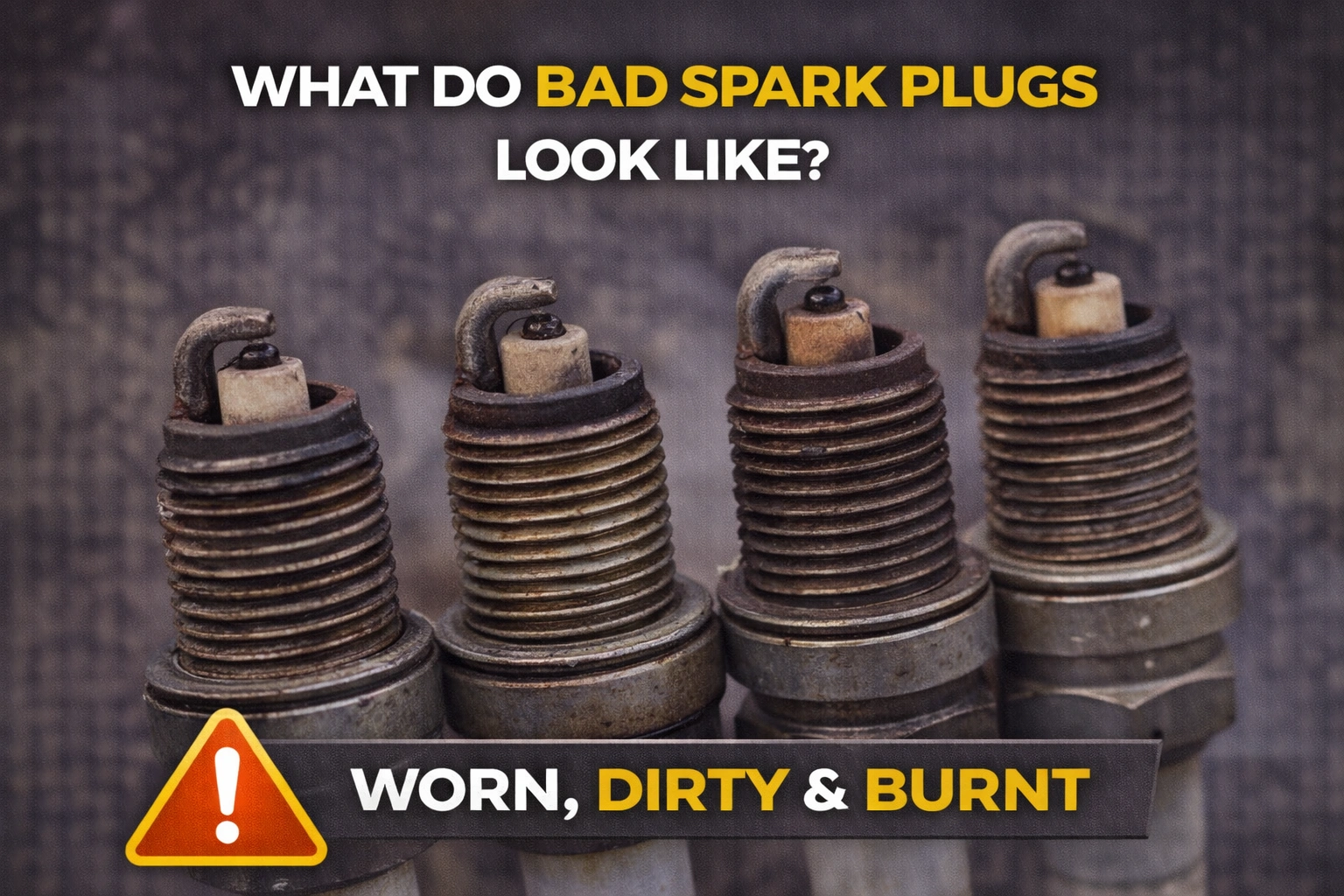
Spark plugs are small parts with a massive responsibility. They ignite the air-fuel mixture inside the combustion chamber, creating the controlled explosion that powers your engine. Every time you turn the key or press the start button, spark plugs begin firing thousands of times per minute. Over time, heat, fuel residue, and carbon deposits change their appearance. When that happens, performance often suffers long before a complete failure occurs.
A worn spark plug does not always stop the engine immediately. Instead, it gives subtle visual clues and performance hints that something is not right. Learning to recognize what bad spark plugs look like can prevent rough running, poor fuel economy, and expensive engine damage. Examining the condition of a removed plug tells a detailed story about combustion health. Color, texture, deposits, and electrode wear all provide valuable information about what is happening inside the engine.
Normal Spark Plug Appearance Versus Problem Signs
What A Healthy Spark Plug Should Look Like
A properly functioning spark plug typically shows a light tan or grayish color on the electrode and insulator tip. This color indicates balanced combustion and correct air-fuel mixture. The metal surfaces should appear clean with minimal residue. Electrodes should have sharp, well-defined edges without excessive rounding or erosion.
In engines such as the Toyota Camry or Honda Civic, routine maintenance often reveals spark plugs with evenly worn electrodes after many miles. Minor discoloration is normal, but heavy buildup or oil residue is not.
The ceramic insulator should remain intact and free of cracks. Small surface stains are common, but thick deposits suggest combustion irregularities. Comparing all plugs from a multi-cylinder engine helps identify whether a single cylinder has issues or if the entire engine is running improperly.
Signs Of Carbon Fouling
Carbon fouling is one of the most common spark plug problems. A carbon-fouled plug appears dry and black with a sooty coating on the electrode and insulator. This condition often results from a rich air-fuel mixture, clogged air filters, or frequent short trips where the engine never reaches full operating temperature.
Excess fuel prevents complete combustion, leaving carbon residue behind. Over time, the buildup can weaken spark strength and cause misfires. Drivers may notice rough idle, hesitation, or difficulty starting.
Cleaning may provide temporary relief, but identifying the root cause is important. Inspecting air intake systems, fuel injectors, and sensor readings ensures the engine operates within proper parameters. Ignoring carbon buildup can reduce efficiency and accelerate further wear.
Oil Fouled And Fuel Soaked Spark Plugs
What Oil Fouling Looks Like
Oil-fouled spark plugs appear wet or glossy with dark, thick deposits. This condition occurs when engine oil enters the combustion chamber. Worn piston rings, valve seals, or damaged cylinder walls are common causes.
The presence of oil on spark plugs often accompanies blue exhaust smoke and increased oil consumption. Performance may decline, especially under load. Unlike carbon fouling, oil deposits tend to be heavier and more persistent.
Replacing spark plugs without addressing oil entry will only provide short-term improvement. Mechanical inspection becomes necessary to prevent further engine damage. Prolonged oil contamination can affect catalytic converter performance as well.
Recognizing Fuel Soaked Plugs
Fuel-soaked spark plugs appear wet with gasoline and may smell strongly of fuel. This often happens when an engine fails to start repeatedly, allowing unburned fuel to saturate the plugs.
A faulty ignition coil, weak battery, or sensor malfunction can contribute to this issue. Wet plugs struggle to produce consistent sparks, leading to hard starting or misfires.
Drying or replacing the plugs may restore function temporarily. However, diagnosing ignition or fuel system problems ensures reliable long-term operation.
Overheating And Electrode Damage
Burned Or Blistered Electrodes
Spark plugs exposed to excessive heat may show blistered or melted electrodes. The insulator may appear white and chalky, sometimes with cracks. Overheating can result from lean fuel mixtures, improper heat range plugs, or cooling system problems.
Lean mixtures raise combustion temperatures, increasing stress on spark plugs. Prolonged exposure to high heat may cause pre-ignition or engine knocking.
Installing the correct spark plug type for the engine is critical. Using plugs outside manufacturer specifications can lead to overheating or fouling issues.
Worn Or Rounded Electrodes
Over time, the sharp edges of spark plug electrodes wear down. Rounded or eroded tips reduce spark efficiency. The gap between electrodes may widen beyond recommended limits, weakening ignition performance.
Worn plugs often cause rough acceleration and reduced fuel economy. Modern engines with iridium or platinum plugs last longer than traditional copper types, but they still require periodic inspection.
Checking and adjusting the spark plug gap according to specifications ensures proper ignition timing and combustion efficiency.
Cracks, Deposits, And Mechanical Damage
Cracked Insulators And Physical Damage
A cracked ceramic insulator indicates physical stress or improper installation. Dropping a plug before installation can cause hidden fractures. Over-tightening may also damage the insulator.
Cracks disrupt spark containment and can cause misfires. Replacing damaged plugs promptly prevents further ignition problems.
Inspecting torque settings during installation reduces the risk of damage. Using proper tools ensures correct tightening without excessive force.
Ash Deposits And Additive Buildup
Ash deposits appear as light brown or grayish crusts on the electrode. These deposits often result from fuel or oil additives. While small amounts may not cause immediate issues, heavy buildup can interfere with spark delivery.
Vehicles with high oil consumption or frequent use of additive treatments may show increased ash accumulation. Reducing additive use and maintaining proper engine health helps minimize deposits.
Regular inspection during service intervals allows early detection before performance declines.
Spark plugs offer a window into engine condition. Their appearance reveals whether combustion is balanced or compromised. Carbon buildup, oil fouling, overheating, and physical damage each point to specific underlying causes.
Routine inspection ensures early detection of potential issues. Replacing worn plugs at recommended intervals supports reliable ignition and consistent performance. Careful attention to spark plug condition contributes to long-term engine health and efficient operation.