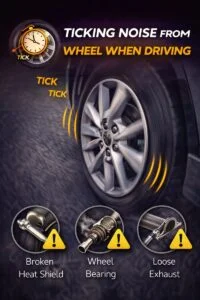
A ticking noise coming from a wheel is one of those sounds that immediately pulls your attention away from the road. It may start faintly, almost like something stuck in the tire, then become more noticeable as speed increases.
Some drivers hear it only while moving slowly, others notice it at all speeds, and many find that the sound changes when turning. Because the engine may sound perfectly normal and the car still drives fine, the noise is often brushed off as minor.
Wheel-related ticking noises are rarely random. Wheels, brakes, and suspension components are in constant motion, and even a small issue can create a repetitive sound that follows the rotation of the wheel.
The challenge is that many different parts can create a similar ticking pattern. Some causes are simple and inexpensive, while others point to wear that worsens if ignored. Understanding what creates a ticking noise from a wheel, how the sound behaves, and what usually fixes it helps prevent minor problems from turning into safety concerns.
Why Wheel Noises Are Often Rhythmic
Most wheel-related noises repeat at a steady pace because they follow wheel rotation. Every time the wheel turns, the same point passes a fixed area, creating a predictable sound pattern.
As speed increases, the ticking usually becomes faster. As speed decreases, the ticking slows down. This relationship between speed and sound is one of the strongest clues that the noise is coming from the wheel area rather than the engine.
Load and direction also influence the noise. Turning, braking, or accelerating slightly changes how components sit against each other, which can make the sound louder, quieter, or disappear temporarily.
Simple External Causes That Are Easy To Miss
One of the most common and overlooked causes of a ticking noise is a small object stuck in the tire tread. Screws, nails, stones, or debris can create a steady ticking as the tire rotates. The sound often changes on smooth pavement versus rough roads.
Wheel covers and hubcaps can also tick if they are loose or cracked. At certain speeds, vibration causes them to tap against the wheel or lug nuts. This noise may stop briefly when turning or hitting a bump.
Wheel weights used for balancing are another source. If a weight becomes loose, it can strike the wheel with each rotation, producing a clear ticking or tapping sound.
Brake Components That Create Ticking Sounds
Brakes are one of the most common sources of wheel-area ticking noises.
Brake dust shields are thin metal plates behind the brake rotor. If they bend slightly due to road debris or corrosion, they can rub against the rotor. This often creates a light, rhythmic ticking that changes with speed and may stop when braking.
Brake pads themselves can also tick. If pads are worn unevenly or hardware clips are missing, the pads can move slightly within the caliper. Each wheel rotation may cause a small tap or click.
A stone or debris lodged between the brake rotor and backing plate can create a ticking noise that sounds serious but is often easy to fix once identified.
Brake-related ticking often changes when the brakes are applied lightly. If the sound fades or changes during braking, the brake system deserves close inspection.
CV Joints And Axle-Related Ticking
Constant velocity joints, commonly called CV joints, are a frequent cause of ticking or clicking noises from the wheel area, especially on front-wheel-drive and all-wheel-drive vehicles.
A worn outer CV joint typically creates a clicking or ticking sound that becomes louder when turning. The sound is often most noticeable during slow turns or when accelerating through a corner.
As CV joints wear further, the noise may appear even while driving straight. The ticking often speeds up with vehicle speed and becomes more pronounced under load.
CV joint noises are not just annoying. Continued driving with a failing joint can lead to complete joint failure, which can leave the vehicle unable to move.
Wheel Bearing Problems That Start Quietly
Wheel bearings usually produce humming or growling noises, but in early stages, they can create a light ticking or clicking sound.
This noise often changes when shifting weight from one side of the car to the other, such as during lane changes or curves. The ticking may disappear briefly when turning in one direction and return when turning the other way.
As bearing wear progresses, the ticking often turns into a steady growl. Catching bearing issues early can prevent more serious damage to hubs and suspension components.
Suspension And Steering Components That Tick Under Motion
Suspension parts move constantly as the wheel travels over the road. When joints wear or fasteners loosen, ticking noises can appear.
Ball joints, tie rod ends, and sway bar links can all produce ticking or clicking sounds, especially when driving slowly over uneven surfaces.
Loose suspension bolts or worn bushings allow small movements that create repetitive noise. This type of ticking often feels like it comes from the wheel area but may be slightly higher in the chassis.
Steering-related ticking sometimes changes when turning the steering wheel slightly, even while driving straight.
Lug Nuts And Wheel Mounting Issues
Improperly torqued lug nuts can cause ticking or clicking noises as the wheel shifts slightly under load.
This is more common after tire changes or wheel service. The noise may appear immediately or after some driving as the wheel settles.
Loose lug nuts are a serious safety issue. Any ticking suspected to come from the wheel mounting should be checked immediately.
Drivetrain And Differential Noises That Travel To The Wheel
In some cases, the noise does not originate at the wheel but travels there.
Axles, differentials, and driveshaft components can produce ticking or clicking noises that seem wheel-related.
These noises often change with acceleration rather than road speed alone. Listening closely to when the noise appears helps separate wheel-based causes from drivetrain sources.
Why The Noise Changes When Turning
Many drivers notice that ticking noises change or disappear when turning.
Turning shifts weight from one side of the car to the other. Components under load may quiet down, while others become louder.
This behavior is especially common with wheel bearings, CV joints, and suspension joints. Paying attention to which direction affects the noise provides valuable diagnostic clues.
How Ticking Problems Usually Progress
Ticking noises rarely stay the same. What starts as a light, occasional sound often becomes louder and more frequent.
External debris may fall out on its own, but worn components continue to deteriorate.
CV joints that click lightly at first often progress to loud snapping sounds. Bearings that tick quietly often turn into grinding noise.
Ignoring ticking noises allows wear to spread, increasing repair cost and risk.
Practical Steps To Narrow Down The Source
Start with a visual inspection. Look for objects stuck in the tire tread, loose wheel weights, or damaged hubcaps.
Check behind the wheel for bent dust shields or signs of rubbing.
Listen while driving at low speed with windows down. Note whether the sound changes when turning, braking, or accelerating.
Jack up the car safely and rotate the wheel by hand. Listen and feel for resistance, roughness, or clicking.
Lightly shaking the wheel can reveal looseness in bearings or suspension joints.
Repairs That Commonly Eliminate Wheel Ticking
Removing debris from the tire or brake area often solves the problem immediately.
Adjusting or replacing brake hardware eliminates many ticking sounds.
Replacing worn CV joints or axles resolves clicking during turns.
Wheel bearing replacement restores smooth, quiet rotation.
Tightening or replacing suspension components stops movement-related ticking.
Properly torquing lug nuts ensures wheel stability and safety.
Why Guessing The Cause Is Risky
Many ticking noises sound similar but come from very different components.
Replacing parts based on assumption often leads to wasted time and money.
Some ticking causes are harmless, while others indicate parts nearing failure. Identifying the correct source matters.
When A Ticking Noise Becomes A Safety Issue
Ticking accompanied by vibration, pulling, or steering instability should never be ignored.
Loose wheels, failing CV joints, and worn bearings can lead to loss of control.
If the noise suddenly becomes much louder or changes character, driving should be limited until inspected.
Preventing Wheel-Related Ticking Noises
Regular brake inspections prevent hardware-related noises.
Timely CV joint boot replacement keeps joints lubricated and quiet.
Proper wheel torque after service avoids mounting issues.
Addressing suspension wear early reduces noise and improves stability.
Final Thoughts
A ticking noise from the wheel when driving is more than just an annoyance. It is a sign that something is moving, rubbing, or wearing where it should not. While some causes are simple, others signal developing mechanical problems that deserve attention.
The most important step is observation. How the noise behaves with speed, turning, and braking often points directly to the source. Addressed early, most wheel-related ticking issues are straightforward to fix and prevent more serious damage. Restoring quiet operation is not only about comfort—it is about maintaining safety, reliability, and confidence every time the car is on the road.