
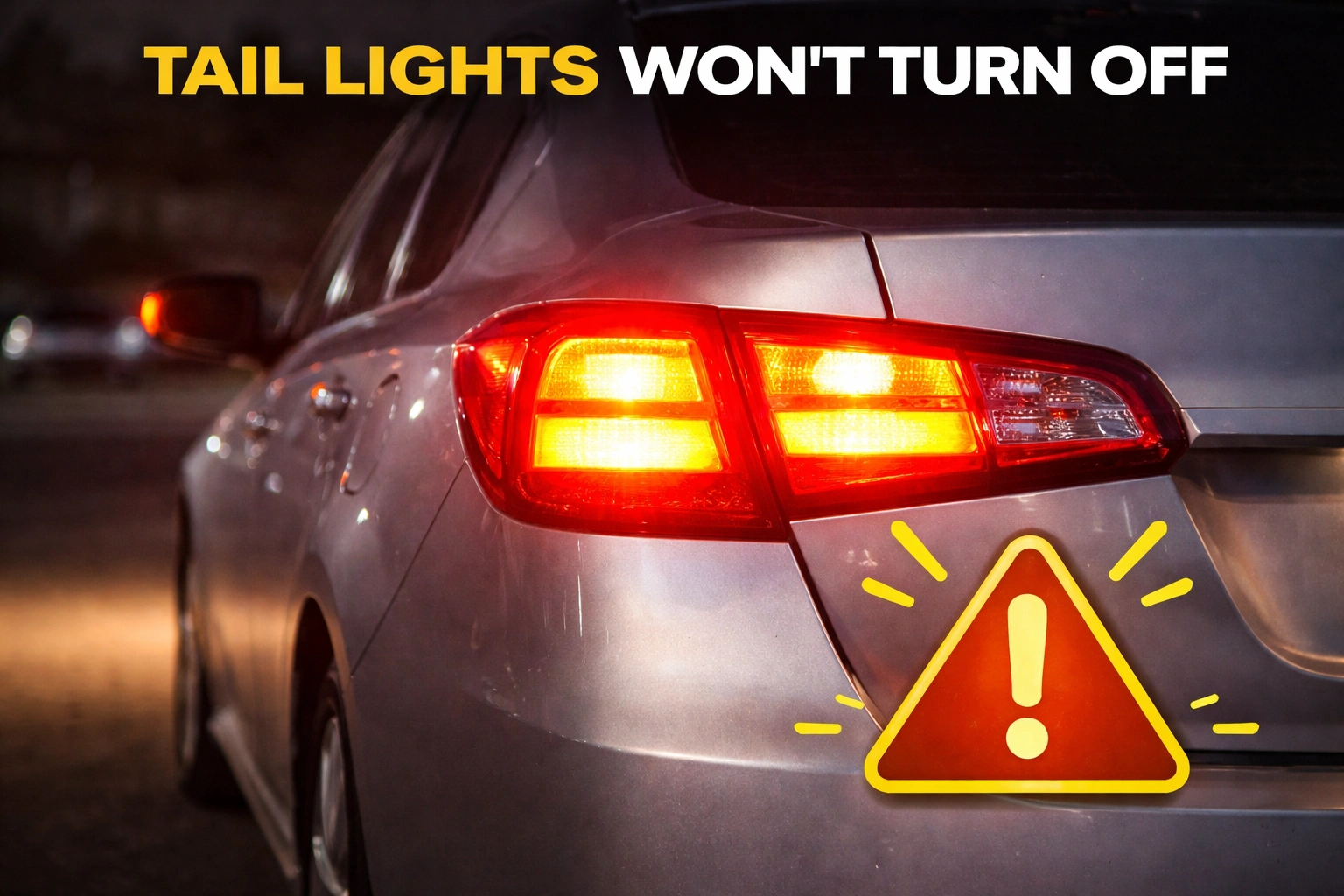
Vehicle lighting systems are designed to operate with precision. When the ignition turns off and the doors close, exterior lights should shut down unless a timed feature keeps them active briefly. That is why it becomes concerning when tail lights remain illuminated long after the vehicle has been parked.
At first, the issue may appear minor. The lights are on, so the system still has power. However, leaving tail lights on for hours can drain the battery completely. A vehicle that started fine in the evening may refuse to crank the next morning.
Tail light systems involve multiple electrical pathways, including relays, switches, sensors, and body control modules. When something within that chain malfunctions, the lights may stay powered even without input. Pinpointing the cause requires methodical inspection rather than guessing. A closer look at how the system operates helps explain why this issue happens and how to resolve it properly.
How Tail Light Circuits Operate Within The Electrical System
Power Distribution Through The Lighting Circuit
Tail lights receive power through a controlled electrical circuit that connects the battery to the lighting switch and body control module. In modern vehicles, lighting functions are often regulated by a central control unit rather than a simple mechanical switch.
When the headlight switch is activated, it signals the module to send power through relays to the tail light bulbs or LED assemblies. Once the ignition is off and the lighting switch is returned to the off position, the module cuts power to the circuit.
If any component within this pathway sticks, fails, or sends incorrect signals, the lights may remain on. Because the system involves multiple layers, diagnosing requires understanding each stage of power flow.
Automatic Lighting And Delay Features
Many vehicles include automatic headlight functions. These systems detect ambient light and activate exterior lights when conditions are dark. Additionally, some vehicles feature a “follow-me-home” delay, keeping lights on briefly after the car is shut off.
While these features are helpful, they can create confusion. Drivers may assume the lights are stuck when they are simply operating under a programmed delay. However, if tail lights remain on beyond the intended timer, a malfunction is likely present.
Recognizing the difference between normal delay operation and electrical failure prevents unnecessary repairs.
Common Causes Of Tail Lights Remaining On
Faulty Brake Light Switch
One frequent cause involves the brake light switch located near the brake pedal. This switch activates brake lights when the pedal is pressed.
If the switch sticks or fails to return fully, it may continuously signal that the brakes are applied. As a result, brake lights remain illuminated even when the pedal is not engaged.
The brake light switch is relatively inexpensive, and replacement is often straightforward. Testing involves checking whether brake lights respond when the pedal is gently pulled upward by hand. If they turn off, the switch may be misaligned or worn.
Headlight Switch Malfunction
In vehicles with manual lighting controls, the headlight switch can wear internally. Electrical contacts inside the switch may stick, continuing to send power to the tail light circuit.
Over time, frequent use causes minor contact wear. Dust, moisture, or corrosion can worsen internal sticking.
If adjusting the switch position does not affect the lights, the switch itself may require replacement. Verifying voltage output at the switch helps confirm diagnosis.
Stuck Relay Within The Fuse Box
Lighting circuits rely on relays to manage higher current flow safely. A relay acts as an electronically controlled switch. When energized, it allows power to pass through.
If a relay becomes stuck in the closed position, it may continue delivering power even after the control signal stops.
Relays are typically located in the fuse box. Swapping the suspected relay with an identical known-working relay provides a simple diagnostic test. If the problem resolves after swapping, the relay likely needs replacement.
Body Control Module Issues
Modern vehicles use a body control module to manage lighting, locks, and various electrical functions. If this module develops internal faults or software errors, it may fail to cut power to the tail lights.
Body control module issues are less common than switch or relay failures but more complex to diagnose. They often require scanning for stored diagnostic codes.
Repair may involve software updates or module replacement depending on severity.
Diagnosing The Problem Without Causing Further Damage
Checking For Parasitic Battery Drain
When tail lights remain on, the battery slowly discharges. Even if the lights appear dim, they consume power continuously.
A parasitic drain test measures current draw while the vehicle is off. Using a multimeter in series with the battery terminal identifies excessive current.
Normal parasitic draw is minimal. If the reading is significantly higher, isolating the tail light circuit helps confirm the source.
Addressing the issue quickly prevents repeated battery depletion and extends battery lifespan.
Inspecting Wiring And Ground Connections
Electrical faults are not always caused by switches or modules. Damaged wiring or corroded grounds can create unintended current paths.
Inspecting wiring harnesses near the trunk area, tail light assemblies, and under the dashboard may reveal exposed wires or loose connectors.
Corrosion around ground points can cause irregular voltage behavior, leading to lighting anomalies. Cleaning and tightening connections often resolves minor electrical issues.
Repair Costs And Practical Solutions
Repair expenses depend on the specific component involved. Replacing a brake light switch typically costs less than diagnosing and replacing a body control module. Headlight switch replacement falls within moderate pricing depending on vehicle design. Relay replacement is generally affordable due to simple installation.
Electrical diagnostics may require professional equipment, especially when control modules are involved. Labor charges vary depending on access complexity and testing time.
Addressing minor faults early prevents larger battery-related expenses. Repeatedly jump-starting a vehicle strains the charging system and shortens battery life. Resolving the root cause protects both the electrical system and long-term reliability.
Preventing Future Lighting Electrical Issues
Routine Electrical System Inspection
Regularly inspecting exterior lighting ensures early detection of unusual behavior. Observing whether lights shut off completely after locking the vehicle helps identify issues before battery drain occurs.
Battery terminals should remain clean and secure. Loose terminals can create voltage fluctuations that confuse electronic modules.
Maintaining a healthy charging system ensures stable voltage supply to all circuits.
Avoiding Water Intrusion In Light Assemblies
Moisture entering tail light housings can cause short circuits. Cracked lenses or faulty seals allow water to accumulate, leading to corrosion and electrical irregularities.
Replacing damaged housings promptly prevents wiring damage. Keeping drain channels clear also reduces water retention around electrical connectors.
Dry and sealed components reduce the risk of unintended current flow.
Bottom Line
Tail lights that refuse to turn off usually indicate a problem within the electrical control system. Common causes include faulty brake light switches, stuck relays, malfunctioning headlight switches, or control module errors.
While some repairs are simple and inexpensive, ignoring the issue can drain the battery and create additional complications. Systematic diagnosis helps identify the exact source rather than replacing parts unnecessarily.
Early inspection, proper electrical maintenance, and timely component replacement ensure that exterior lighting functions correctly and shuts off as intended. Addressing the issue promptly keeps the battery charged and prevents inconvenience.