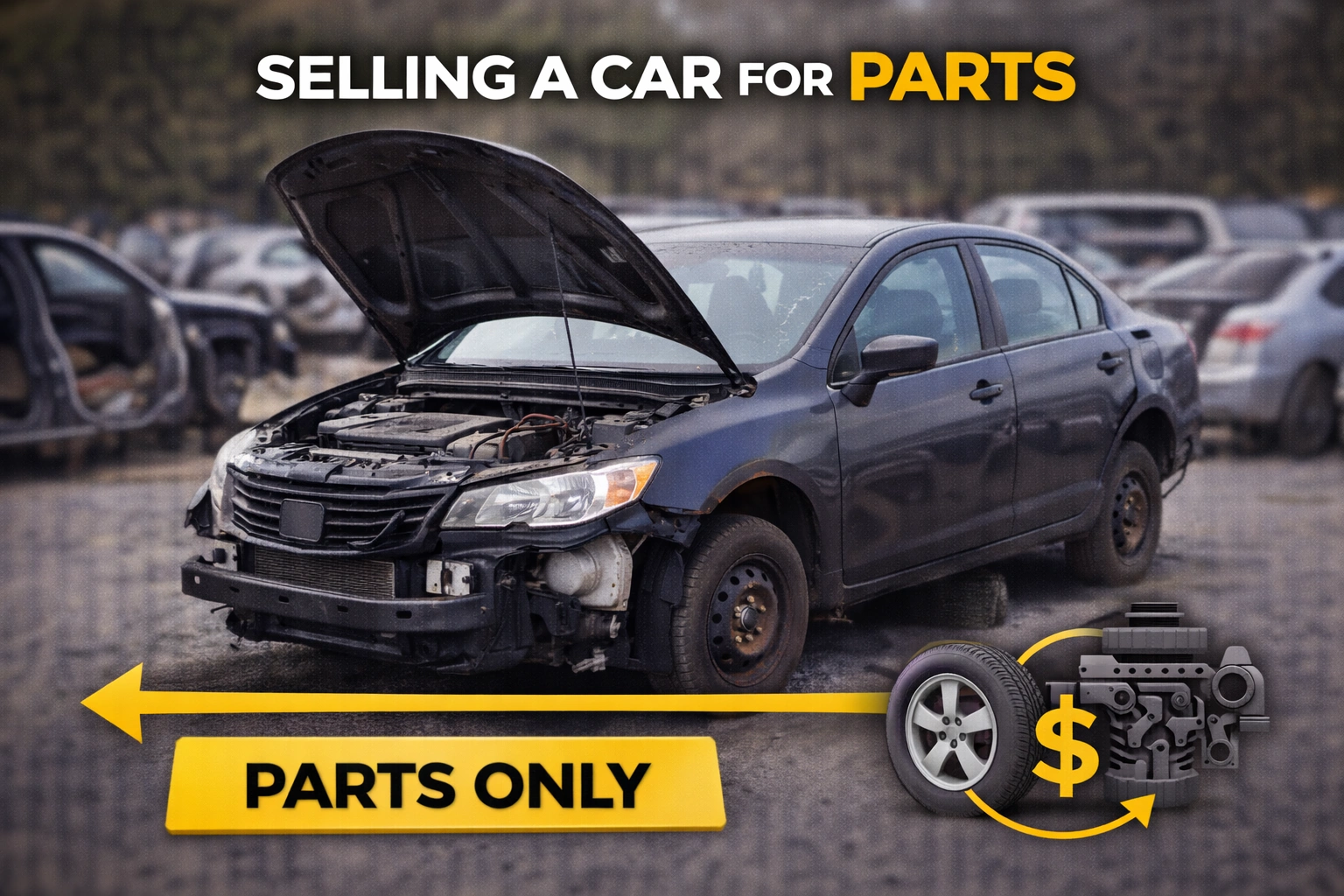
Every vehicle reaches a point where repair costs outweigh its market value. Engines fail, transmissions slip, rust spreads, or accident damage becomes too expensive to fix. When resale as a running vehicle no longer makes sense, selling a car for parts can be a practical and profitable option. Many components still hold value even if the car itself no longer runs reliably.
Modern vehicles are filled with reusable parts. Engines, gearboxes, body panels, electronics, wheels, and interior components often remain in demand long after a car stops operating.
Salvage yards, private buyers, and online marketplaces create opportunities to recover value from what might otherwise be considered scrap. The process requires planning, patience, and awareness of legal requirements.
Done correctly, parting out a vehicle can generate more money than selling it as a whole. It also supports recycling and reduces waste in the automotive industry.
Deciding Whether To Sell Whole Or Part It Out
Evaluating The Vehicle’s Condition And Market Value
Before dismantling anything, assess the vehicle honestly. If the engine and transmission are still functional and the body remains solid, selling it complete may be easier. A running vehicle usually attracts more buyers and requires less effort.
However, if major components have failed, individual parts may be worth more than the entire car. For example, a damaged Honda Civic with a blown engine might still have a valuable transmission, body panels, and interior trim. Popular models with strong aftermarket demand often produce higher part-out returns.
Check online listings for similar vehicles. Compare prices for engines, transmissions, headlights, and wheels. This research provides realistic expectations and prevents underpricing. Consider mileage, maintenance history, and part condition. Vehicles with low mileage engines or rare trim packages often yield higher returns when parted out.
Selling whole is faster and simpler. Parting out is slower but can maximize financial recovery if managed carefully.
Estimating Potential Profit Versus Time Investment
Parting out a vehicle requires time, space, and mechanical knowledge. Each component must be removed safely, cleaned, photographed, listed, sold, and shipped or picked up. This process can take weeks or months depending on demand.
Calculate potential revenue by adding estimated prices of major parts. Subtract costs such as tools, storage, listing fees, and disposal of the remaining shell. If profit margin remains strong after these deductions, parting out may be worthwhile.
Space is another factor. Dismantling requires a secure area to store removed components. Weather exposure can damage parts quickly, reducing their resale value.
Time commitment often determines whether parting out makes sense. Owners seeking quick cash may prefer selling to a salvage yard instead.
Most Valuable Parts To Sell
Engine, Transmission, And Drivetrain Components
Major mechanical components usually generate the highest return. Engines with documented service records attract buyers seeking replacements. Even non-running engines can sell if internal damage is repairable.
Transmissions also hold significant value, especially automatic gearboxes from reliable models. All-wheel-drive components such as transfer cases and differentials can bring strong prices due to higher replacement costs.
Before listing these parts, verify their condition. Compression tests, fluid inspection, and visual checks improve buyer confidence. Providing accurate mileage details increases credibility and reduces disputes.
Buyers often search for parts from specific models such as the Ford F-150 due to high production numbers and widespread demand. Popular vehicles generally have more active parts markets.
Body Panels, Interior Parts, And Electronics
Body panels in good condition can sell well, especially if they match factory paint colors. Doors, bumpers, fenders, and hoods are often expensive when purchased new. Salvage buyers look for straight panels without rust or severe dents.
Interior components such as seats, dashboards, infotainment systems, and steering wheels may also hold value. Modern vehicles contain complex electronics that cost thousands when replaced through dealerships.
Headlights and taillights are frequently sought after. Advanced lighting systems, particularly LED or adaptive units, command high resale prices. Clean and undamaged lighting assemblies often sell quickly.
Wheels and tires remain consistently popular. Factory alloy wheels in good shape attract buyers seeking replacements or upgrades.
Legal And Environmental Considerations
Title Transfer And Documentation Requirements
Selling a car for parts still involves legal responsibility. In most regions, ownership transfer must be completed properly. Even if the car will never return to the road, the title must be signed over to prevent future liability.
Some areas require a salvage title designation before dismantling. Check local regulations regarding vehicle disposal and parts resale. Failing to complete paperwork correctly can create complications if the vehicle identification number remains linked to your name.
Keep records of transactions. Bills of sale for major components protect both seller and buyer. Accurate documentation reduces misunderstandings and ensures transparency.
When selling the remaining shell to a scrap yard, obtain confirmation of destruction. This final step closes ownership officially.
Safe Handling And Environmental Responsibility
Automobiles contain fluids that require proper disposal. Engine oil, transmission fluid, coolant, and brake fluid should be drained carefully and recycled according to environmental guidelines.
Batteries must be removed and disposed of responsibly. Lead-acid batteries contain hazardous materials that should never enter landfills.
Air conditioning systems contain refrigerant that must be handled by certified professionals. Releasing refrigerant into the atmosphere is illegal in many regions.
Recycling usable components reduces demand for new manufacturing and conserves resources. Responsible dismantling supports environmental sustainability while generating income.
Selling Methods And Pricing Strategy
Online Marketplaces And Local Buyers
Online platforms connect sellers with nationwide buyers. Detailed listings with clear photographs improve visibility. Accurate descriptions build trust and minimize negotiation issues.
Local sales eliminate shipping costs and allow buyers to inspect parts before purchase. This approach works well for heavy components like engines and body panels.
Pricing should reflect market research. Listing slightly above expected value allows room for negotiation. Avoid unrealistic pricing that discourages interest.
Responding promptly to inquiries increases sales success. Clear communication builds reputation and encourages repeat buyers.
Working With Salvage Yards And Auto Recyclers
Salvage yards offer convenience. They may purchase the entire vehicle or specific parts. While payouts may be lower than private sales, the process is faster and less labor-intensive.
Auto recyclers dismantle vehicles professionally and handle environmental compliance. This option suits owners lacking tools or space.
Comparing quotes from multiple yards ensures competitive offers. Some companies provide free towing for non-running vehicles.
Balancing effort, time, and financial return helps determine the best selling method.
Completing The Process And Disposing Of The Shell
After selling valuable components, the remaining chassis still holds scrap value. Metal recyclers purchase stripped shells based on weight and material content.
Remove identifying plates if required by law. Confirm that all paperwork reflects transfer or destruction status. Leaving a dismantled shell without documentation can create legal complications.
Clean the workspace and ensure fluids have been handled responsibly. Proper completion prevents environmental issues and finalizes the sale process smoothly.
Selling a car for parts can transform an unusable vehicle into a valuable resource. With research, patience, and proper planning, owners can recover significant value while supporting responsible recycling.