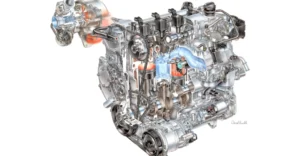
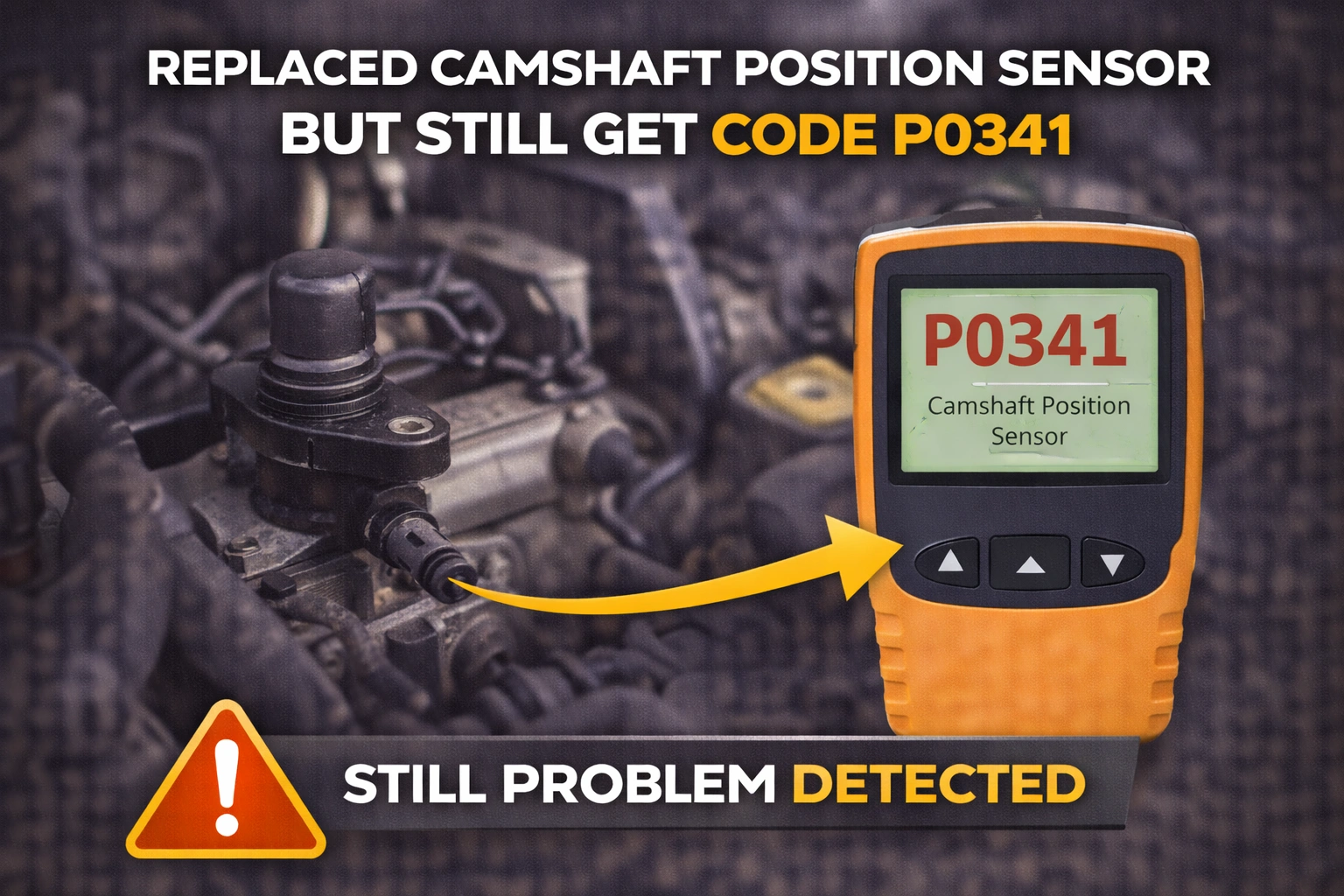
Modern engines rely on precise timing. Spark delivery, fuel injection, and valve operation must stay perfectly synchronized for smooth performance. When the check engine light shows code P0341, it points to a problem in the camshaft position sensor circuit range or performance. Many vehicle owners respond by replacing the camshaft position sensor immediately. Yet in some cases, the warning returns even after installing a new part.
That situation can be frustrating. A fresh sensor should solve the issue, but diagnostic trouble codes do not always point directly to a failed component. P0341 indicates that the engine control module is receiving a signal that does not match expected timing values. The cause may involve wiring faults, timing chain problems, crankshaft sensor issues, or even oil contamination. Solving the problem requires a structured approach that looks beyond the sensor itself.
What Code P0341 Actually Means
Camshaft Signal Range And Performance Explained
Code P0341 refers to a camshaft position sensor circuit range or performance problem. The engine control module monitors the camshaft’s position relative to the crankshaft. These two components must remain in precise alignment to ensure accurate valve timing and fuel injection.
The camshaft position sensor reads a reluctor wheel or tone ring attached to the camshaft. As the engine rotates, the sensor generates electrical signals. The control module compares this signal to the crankshaft position sensor reading. If the pattern falls outside expected timing limits, the system triggers code P0341.
This does not automatically mean the sensor itself is defective. It means the signal being received does not match programmed parameters. A new sensor will not correct issues caused by timing misalignment or wiring defects.
Symptoms Associated With P0341
Vehicles with this code may experience hard starting, rough idle, hesitation, or reduced power. In some cases, the engine may stall or struggle during acceleration. Fuel economy may also decline due to improper timing adjustments.
Certain models, including vehicles like the Chevrolet Malibu or Ford Focus, rely heavily on accurate camshaft signals for variable valve timing systems. If timing data becomes inconsistent, performance suffers.
Sometimes the vehicle runs normally despite the code. Even then, the issue should not be ignored. Long-term operation with incorrect timing signals can lead to further mechanical wear.
Why The Code Returns After Replacing The Sensor
Wiring Harness And Connector Issues
One common reason the code persists is damaged wiring. The camshaft position sensor connects to the engine control module through a wiring harness. Heat, vibration, and oil exposure can degrade insulation or corrode connectors.
A loose or dirty connector may interrupt the signal intermittently. Broken wires inside the insulation can also cause signal drops that are difficult to detect visually.
Testing the wiring with a multimeter or oscilloscope verifies signal continuity. Voltage supply and ground connections should meet manufacturer specifications. If resistance readings fall outside range, repairing or replacing the harness may solve the issue.
Replacing the sensor without checking wiring can leave the original problem untouched.
Timing Chain Or Belt Alignment Problems
Mechanical timing plays a critical role. If the timing chain or belt has stretched, slipped, or been installed incorrectly, camshaft timing can shift slightly. Even minor misalignment may trigger P0341.
Vehicles with high mileage are more susceptible to timing chain stretch. Rattling noises from the timing cover area may indicate wear.
Variable valve timing systems also rely on proper oil pressure and actuator function. A malfunctioning cam phaser can alter camshaft position, creating inconsistent sensor signals.
Verifying mechanical timing alignment requires inspection of timing marks and chain tension. Ignoring this step may result in repeated sensor replacements without resolution.
Other Components That Can Trigger P0341
Crankshaft Position Sensor Malfunction
The camshaft and crankshaft sensors work together. If the crankshaft position sensor sends inaccurate data, the engine control module may misinterpret camshaft readings.
Testing both sensors ensures accurate comparison. In some cases, replacing the crankshaft sensor resolves the camshaft-related code.
Engine computers rely on correlation between these signals. When synchronization appears incorrect, P0341 may appear even if the camshaft sensor functions properly.
Oil Contamination And Internal Engine Issues
Engine oil affects camshaft operation. Low oil levels or contaminated oil can disrupt variable valve timing systems. Sludge buildup may restrict oil flow to timing components.
Oil leaking into the sensor connector can also interfere with signal quality. Inspecting for contamination and performing an oil change if necessary helps eliminate this possibility.
Internal engine wear, such as worn cam lobes or damaged tone rings, can also distort signal patterns. Physical inspection may be required if electrical tests show normal results.
Step By Step Diagnostic Approach
Scanning And Verifying Data
Begin with a scan tool capable of live data monitoring. Observe camshaft and crankshaft correlation values. Compare readings against manufacturer specifications.
Clear the code and monitor whether it returns immediately or after driving. Immediate return often indicates electrical issues. Delayed return may suggest mechanical timing drift.
Freeze frame data stored with the code provides insight into operating conditions when the fault occurred.
Inspecting Mechanical Timing
Remove necessary covers to inspect timing components. Confirm that alignment marks match factory specifications. Check chain tensioners and guides for wear.
If the timing chain appears loose or misaligned, replacement may be necessary. Mechanical repairs often resolve persistent correlation codes.
Testing Electrical Circuits Thoroughly
Measure reference voltage, ground integrity, and signal output. Use proper diagnostic tools rather than guessing. Avoid relying solely on parts replacement.
If wiring checks out and mechanical timing is correct, verify engine control module updates. In rare cases, software updates may address false triggers.
Persistent P0341 after sensor replacement points to deeper causes beyond the sensor itself. Wiring faults, timing chain wear, crankshaft sensor issues, or oil-related problems often contribute. A methodical approach prevents unnecessary spending and ensures accurate repair.
Engine timing systems demand precision. Addressing both electrical and mechanical factors restores synchronization and eliminates recurring fault codes.