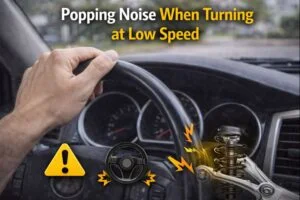
A popping noise when turning at low speed is one of those vehicle issues that feels small at first but quickly becomes hard to ignore. It often shows up in parking lots, during tight U-turns, or when pulling into a driveway.
The sound may be subtle at the beginning, almost like plastic flexing, then grow louder and more frequent over time. Because it happens at low speeds, many drivers assume it is harmless.
In reality, this type of noise is often an early warning that something in the steering, suspension, or drivetrain is no longer moving the way it should.
Modern vehicles rely on multiple joints, bushings, bearings, and shafts that must rotate and flex smoothly during turns. At low speeds, these components experience high steering angles and uneven load, which makes wear more noticeable.
Ignoring the noise can lead to accelerated damage, poor handling, or even loss of control in severe cases. Identifying the source early helps prevent expensive repairs and keeps the vehicle safe and predictable.
Why Popping Noises Happen During Low Speed Turns
Increased Steering Angle Stress
Low speed turns require the wheels to pivot further than they do at highway speeds. This puts extra stress on joints and bearings that may already be worn.
High steering angles expose weak components.
Weight Transfer At Low Speed
As the steering wheel turns, vehicle weight shifts from side to side. Components under load may pop or snap as they move through worn contact points.
Load changes reveal wear.
Reduced Road Noise Masking
At higher speeds, wind and tire noise can hide mechanical sounds. At low speed, popping noises are easier to hear.
Silence makes problems obvious.
Components Moving Instead Of Rolling
Healthy suspension and steering parts rotate or slide smoothly. Worn parts often bind, then release suddenly, creating a popping sound.
Binding leads to noise.
Most Common Mechanical Causes
CV Joints And Axle Issues
Constant velocity joints allow front wheels to turn while receiving power from the transmission. When CV joints wear out, they often produce popping or clicking sounds during turns, especially under light acceleration.
Outer CV joints fail more frequently than inner ones.
A torn CV boot allows grease to escape and dirt to enter, accelerating wear.
Ball Joints Wearing Out
Ball joints connect the control arms to the steering knuckle. They allow vertical movement and steering rotation at the same time. As internal lubrication dries out, the joint can bind and release suddenly.
Popping during slow turns is a classic sign.
Severely worn ball joints are a safety hazard.
Strut Mounts And Bearings
Front strut mounts contain bearings that allow the strut to rotate with the steering wheel. When these bearings seize or wear unevenly, the strut twists instead of rotating smoothly, then snaps into place.
This produces a sharp pop or clunk.
Noise often occurs while the vehicle is stationary or moving slowly.
Sway Bar Links And Bushings
Sway bars reduce body roll by linking both sides of the suspension. Worn sway bar links or bushings can shift under load, creating popping sounds during turns.
The noise may feel like it comes from under the floor.
Cold weather can make worn bushings noisier.
Control Arm Bushings
Control arm bushings absorb movement and vibration. Over time, rubber bushings crack, harden, or separate from their metal sleeves.
As the suspension moves during turning, the arm may snap into a new position.
This often causes a dull pop rather than a sharp click.
Steering System Related Causes
Power Steering Components
Low power steering fluid or internal wear in the steering rack can cause popping or groaning noises when turning at low speed.
Air trapped in the system creates inconsistent pressure.
Fluid leaks worsen the problem.
Steering Rack Mounts
The steering rack is bolted to the frame using rubber or polyurethane mounts. When these mounts loosen or degrade, the rack can shift slightly during turns.
Movement results in popping or knocking sounds.
Tie Rod Ends
Inner and outer tie rod ends connect the steering rack to the wheels. Worn tie rods can pop when changing direction, especially at parking lot speeds.
Loose tie rods also affect alignment.
Steering precision decreases with wear.
Intermediate Steering Shaft Issues
Some vehicles develop popping or clicking from the intermediate steering shaft due to worn splines or joints.
The noise may be felt through the steering wheel.
Lubrication sometimes provides temporary relief.
Other Less Obvious Causes
Loose Wheel Lug Nuts
Loose lug nuts allow the wheel to shift slightly on the hub during turns.
This creates a sharp pop or knock.
Driving with loose lugs is dangerous.
Brake Hardware Movement
Worn brake pads, missing clips, or loose calipers can shift when steering input changes.
The sound may appear to come from suspension components.
Brake inspection helps rule this out.
Tire Sidewall Or Tread Issues
Separated belts or damaged tire sidewalls can pop under load.
Noise may change with tire rotation.
Tire problems should not be ignored.
Body Or Subframe Mount Issues
Loose subframe bolts or worn body mounts allow the vehicle structure to shift slightly.
This movement can create popping sounds during turning.
Structural integrity matters.
How To Narrow Down The Source
Pay Attention To When The Noise Occurs
Note whether the noise happens only while turning left, right, or both. Also observe whether it happens while accelerating, braking, or coasting.
Patterns point to specific components.
Listen For Noise Location
Sounds near the wheels often indicate suspension or axle issues. Sounds near the firewall or steering column suggest steering components.
Location guides inspection.
Check For Vibration Or Steering Wheel Feedback
Popping combined with steering wheel vibration often points to CV joints or tie rods.
Smooth steering suggests other sources.
Visual Inspection At Home
Look for torn CV boots, leaking grease, cracked bushings, or loose hardware.
Obvious damage saves diagnostic time.
Jacking Up The Vehicle Safely
With the wheels off the ground, gently turning the steering wheel and rotating the tires can reveal binding or noise.
Always use proper jack stands.
Why The Noise Should Not Be Ignored
Progressive Wear And Damage
Most popping noises get worse over time. What starts as a minor annoyance can turn into major mechanical failure.
Early repair saves money.
Loss Of Steering Precision
Worn steering and suspension components reduce vehicle control.
Handling becomes unpredictable.
Increased Tire Wear
Loose or binding components cause uneven tire wear.
Tire replacement costs increase.
Safety Risks
Ball joints, tie rods, and CV joints are critical safety components. Failure can result in loss of steering or wheel separation.
Safety should always come first.
Typical Repair Costs And Difficulty
CV Joint Or Axle Replacement
Replacing a CV axle is common and often straightforward. Costs vary by vehicle but are usually moderate.
Ignoring early signs increases damage.
Ball Joint Replacement
Ball joints may be pressed into control arms or sold as part of an assembly. Labor time varies.
Some designs require full control arm replacement.
Strut Mount Replacement
Strut mounts are replaced when struts are removed. Labor is higher due to suspension disassembly.
Often done during strut replacement.
Sway Bar Link Or Bushing Replacement
These repairs are usually affordable and quick.
Worn sway components are common.
Steering Component Repairs
Tie rods, rack mounts, or steering shafts vary in cost and complexity.
Alignment is usually required afterward.
Preventive Measures To Avoid Future Popping Noises
Regular Suspension Inspections
Periodic inspection catches wear early.
Annual checks help prevent surprises.
Addressing Leaks Promptly
Oil or grease leaks accelerate component wear.
Clean components last longer.
Avoiding Aggressive Steering At Full Lock
Repeated full-lock turns stress joints and mounts.
Gentler steering extends lifespan.
Maintaining Proper Tire Pressure
Uneven pressure increases suspension load.
Balanced tires reduce strain.
Common Misconceptions About Popping Noises
Many drivers assume popping noises are harmless or caused by plastic trim. While interior noises exist, mechanical popping during turns usually indicates real wear.
Another misconception is that noise only matters if handling feels bad. In reality, noise often comes before noticeable handling changes.
Sound is an early warning.
When Professional Diagnosis Is Necessary
If multiple components show wear or the noise source remains unclear, professional inspection is recommended. Shops use lift access, pry bars, and chassis microphones to pinpoint sounds accurately.
Complex suspension systems benefit from expert evaluation.
Delaying diagnosis often increases repair cost.
Final Thoughts
A popping noise when turning at low speed is rarely random. It usually signals wear in suspension, steering, or drivetrain components that are under stress during tight maneuvers. While the vehicle may still feel drivable, the noise is an early indicator that something is no longer operating smoothly. Addressing the issue promptly helps preserve handling, protect tires, and maintain overall safety.
Careful observation, basic inspection, and timely repairs go a long way toward preventing more serious problems. Vehicles communicate through sound, and listening closely makes it possible to keep them running quietly, smoothly, and safely for the long term.