A V8 engine has long been associated with power, smoothness, and unmistakable exhaust tone. From classic muscle cars to modern trucks and performance SUVs, the V8 configuration remains one of the most respected engine layouts in automotive history. Beneath the sound and strength lies a precise system of combustion that depends on properly timed ignition in every cylinder.
Each cylinder in a gasoline engine requires a spark to ignite the air-fuel mixture. That spark comes from a spark plug. The number of spark plugs in an engine directly relates to how many cylinders it has. While the answer may seem simple at first glance, there are important variations depending on engine design.
Some V8 engines use one spark plug per cylinder. Others use two spark plugs per cylinder for improved combustion efficiency. Knowing the correct configuration ensures proper maintenance planning, accurate replacement budgeting, and reliable engine performance over time.
Standard Spark Plug Count In A V8 Engine
One Spark Plug Per Cylinder Design
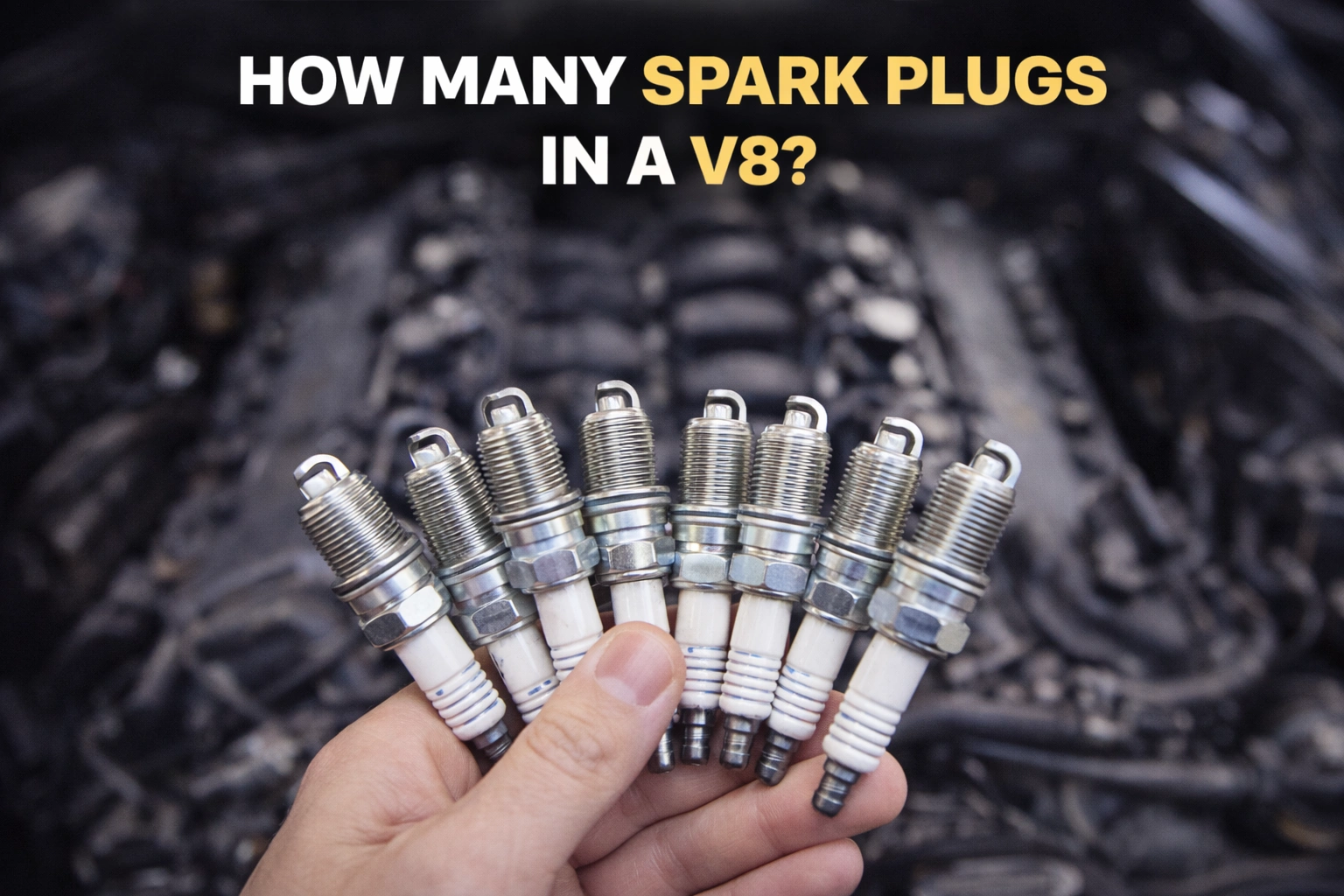
Most traditional V8 gasoline engines use one spark plug for each cylinder. Since a V8 engine has eight cylinders arranged in two banks of four, this configuration results in a total of eight spark plugs.
Each plug is threaded into the cylinder head and connected to an ignition coil or distributor system. When the engine control module triggers ignition, each spark plug fires at the correct moment in the combustion cycle.
This design has been widely used in both older carbureted engines and modern fuel-injected systems. It provides reliable combustion and balanced power delivery.
For routine maintenance, replacing eight spark plugs ensures consistent spark strength across all cylinders.
Cylinder Arrangement And Ignition Timing
In a V8 engine, cylinders are typically arranged in a V-shaped layout. Four cylinders sit on each side of the engine block. Spark plugs are positioned at the top of each cylinder head, angled for optimal combustion chamber access.
The ignition sequence follows a firing order designed to balance engine operation and reduce vibration. Each spark plug fires in precise coordination with piston movement.
Because V8 engines operate at higher loads in many applications, spark plug condition plays a critical role in maintaining smooth operation and fuel efficiency.
Regular inspection prevents uneven firing between cylinders.
V8 Engines With Dual Spark Plug Systems
Why Some V8 Engines Use Two Spark Plugs Per Cylinder
Certain manufacturers have designed V8 engines with two spark plugs per cylinder. This setup results in a total of sixteen spark plugs.
Dual plug systems improve combustion efficiency by igniting the air-fuel mixture from two points simultaneously. This creates a more complete burn, especially in larger combustion chambers.
Improved combustion can enhance fuel efficiency, reduce emissions, and increase power output. Twin plug designs have been used in performance engines and some truck applications to improve throttle response and torque characteristics.
Maintenance costs increase slightly due to the higher number of plugs, but the combustion benefits often justify the design choice.
Examples Of Dual Plug Applications
Several manufacturers have used dual spark plug systems in V8 engines over the years. These systems were particularly common in certain modular engine designs where engineers aimed to improve emissions performance and power delivery.
While not every V8 uses dual plugs, it is important to confirm the specific engine configuration before purchasing replacement parts.
Checking the owner’s manual or service documentation ensures accurate plug count.
Misidentifying plug quantity may lead to incomplete maintenance.
How Spark Plugs Affect V8 Engine Performance
Combustion Efficiency And Power Delivery
Spark plugs play a direct role in engine performance. A strong, consistent spark ensures complete combustion of the air-fuel mixture. In a V8 engine, where eight cylinders operate in sequence, even one weak spark plug can create imbalance.
Symptoms of worn plugs may include rough idle, hesitation under acceleration, reduced power, or misfires. In dual plug engines, issues may be less noticeable initially, but performance still suffers.
Maintaining proper spark plug condition ensures that all eight cylinders contribute evenly to engine output.
Balanced combustion preserves smooth operation.
Fuel Economy And Emissions
Incomplete combustion caused by worn spark plugs increases fuel consumption. When fuel fails to burn efficiently, more fuel is required to maintain performance.
In modern engines equipped with oxygen sensors and catalytic converters, misfires can trigger warning lights and increase emissions.
Replacing spark plugs at recommended intervals helps maintain optimal combustion and compliance with emissions standards.
Small components often influence overall efficiency significantly.
Spark Plug Replacement Considerations For V8 Engines
Access And Labor Factors
In some V8 engines, spark plug replacement is straightforward. In others, tight engine bays and surrounding components make access challenging.
Front-engine vehicles with large engine compartments may provide easier access to plugs. Trucks and rear-wheel-drive platforms often offer more space around cylinder heads.
However, certain modern vehicles require removal of intake components or engine covers before reaching plugs.
Understanding access complexity helps estimate labor time and cost.
Choosing The Correct Spark Plug Type
Spark plugs come in different materials, including copper, platinum, and iridium. Each type offers varying durability and performance characteristics.
Iridium plugs generally last longer and provide consistent spark quality. Platinum plugs offer balanced longevity and cost efficiency.
Selecting the manufacturer-recommended type ensures compatibility with the engine’s ignition system.
Using incorrect plug specifications may lead to misfires or performance issues.
Maintenance Interval And Signs Of Wear
Recommended Replacement Intervals
Replacement intervals vary depending on plug type and engine design. Copper plugs may require replacement around 30,000 miles, while iridium plugs may last 60,000 to 100,000 miles or more.
High-performance or heavy-duty applications may require more frequent inspection.
Consulting the vehicle’s service schedule ensures timely replacement.
Routine maintenance prevents unexpected ignition problems.
Symptoms Of Failing Spark Plugs
Common signs of worn spark plugs include rough idle, reduced acceleration, engine hesitation, and difficulty starting. A check engine light may illuminate if misfires occur.
In V8 engines, misfire codes may indicate a specific cylinder. Addressing issues promptly prevents catalytic converter damage.
Regular inspection of spark plug condition reveals electrode wear, carbon buildup, or oil fouling.
Monitoring these signs protects long-term engine health.
The Practical Summary
A standard V8 engine typically uses eight spark plugs—one per cylinder. However, some V8 engines employ dual spark plug systems, resulting in sixteen plugs. The exact count depends on engine design and manufacturer specifications.
Spark plugs play a central role in combustion efficiency, performance, and fuel economy. Proper maintenance ensures smooth operation across all cylinders.
Confirming the correct configuration before replacement avoids incomplete servicing. Whether the engine uses eight or sixteen plugs, maintaining them in good condition supports reliable power delivery and long-term durability.