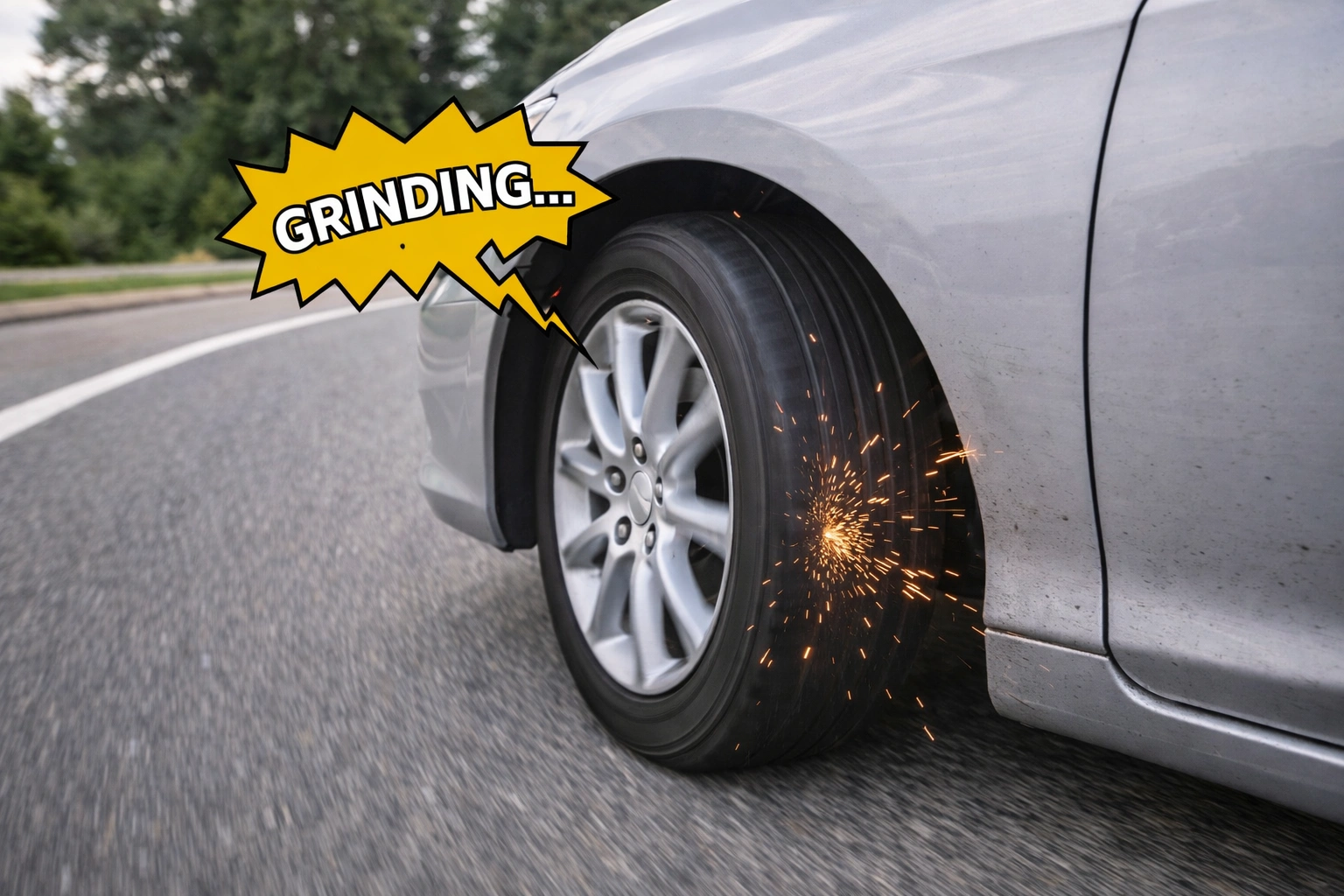
A vehicle is designed to move smoothly through corners, with suspension components, steering systems, and drivetrain parts working together in harmony. When a grinding noise appears only while turning left, it usually points to a mechanical issue that reveals itself under load shift. During a left turn, the vehicle’s weight transfers toward the right side. That change in pressure can expose wear in specific components that remain quiet during straight line travel.
Grinding sounds should never be ignored. They often signal metal to metal contact, which can quickly lead to expensive damage. The source may involve wheel bearings, brake components, constant velocity joints, or suspension parts. Identifying the exact cause requires paying attention to when the sound occurs, how it changes with speed, and whether vibration accompanies it. A systematic inspection helps pinpoint the issue and prevent further wear. Addressing the problem early protects both safety and repair costs.
Wheel Bearing Problems That Appear During Left Turns
How Weight Transfer Reveals Bearing Wear
Wheel bearings allow wheels to rotate smoothly while supporting the vehicle’s weight. When a bearing begins to fail, it may produce a grinding or humming sound that becomes more noticeable under load.
During a left turn, weight shifts toward the right side of the vehicle. If the right front wheel bearing is worn, that additional pressure can intensify the noise. The sound often grows louder as speed increases.
Vehicles such as the Toyota Camry and Honda CR-V commonly exhibit this pattern when bearings wear over time.
Ignoring a failing bearing can lead to uneven tire wear and, in severe cases, wheel instability.
Signs That Confirm A Faulty Wheel Bearing
A grinding or growling noise that changes with speed is a strong indicator. If the noise decreases when turning right and increases when turning left, the right side bearing is likely affected.
Drivers may also feel vibration through the steering wheel. In advanced cases, excessive play can be detected by lifting the vehicle and checking for movement in the wheel.
Replacement of the worn bearing restores smooth rotation and eliminates grinding sounds.
Prompt repair prevents additional strain on suspension components.
Brake Components Causing Grinding While Turning
Worn Brake Pads Or Rotor Contact
Brake systems can also produce grinding sounds, particularly when pads are severely worn. When friction material wears down completely, metal backing plates contact the rotor surface.
While braking usually triggers the sound, turning can also create noise if calipers shift slightly or if rotor shields rub during steering movement.
In vehicles like the Ford F-150, brake components endure heavy use, especially under load.
Inspection of pad thickness and rotor condition quickly reveals whether brake wear is responsible.
Replacing worn pads and resurfacing or replacing rotors resolves the issue.
Bent Dust Shield Or Backing Plate Interference
Behind the brake rotor sits a thin metal shield designed to protect components from debris. If this shield bends due to impact or corrosion, it may contact the rotor during turns.
Turning left changes wheel alignment slightly, allowing contact between the shield and spinning rotor. This creates a scraping or grinding sound.
Adjusting the shield away from the rotor often solves the problem without replacing major components.
Careful inspection ensures the shield maintains proper clearance.
Drivetrain And CV Joint Issues
Constant Velocity Joint Wear On The Right Side
Front wheel drive and all wheel drive vehicles rely on constant velocity joints to transfer power to the wheels during steering movement.
When a CV joint wears out, it may produce clicking or grinding noises during turns. If the sound appears primarily when turning left, the right outer CV joint may be worn.
Rubber boots surrounding the joint protect it from dirt and moisture. If a boot tears, grease escapes and contamination accelerates wear.
Replacing the affected axle assembly typically resolves the noise.
Differential Or Transfer Case Concerns
In all wheel drive vehicles, differentials manage power distribution between wheels. If internal gears wear, grinding noises may occur during turns when torque distribution changes.
Low fluid levels or contaminated lubricant can contribute to internal gear wear.
Although less common than bearing or brake issues, drivetrain problems should not be overlooked.
Professional inspection confirms whether internal components require attention.
Suspension And Steering Components Under Load
Ball Joint And Control Arm Wear
Ball joints connect suspension arms to steering knuckles, allowing smooth pivoting during turns. When these joints wear, they may create grinding or clunking sounds.
Turning left increases pressure on the right suspension components. A worn right ball joint may reveal itself only under this load.
Loose control arm bushings can also shift slightly during turning, causing noise.
Inspection involves checking for play and damaged rubber bushings.
Replacing worn suspension components restores proper alignment and quiet operation.
Power Steering System Concerns
Although power steering systems more commonly produce whining noises, mechanical steering rack issues can sometimes create grinding sensations.
Low power steering fluid may increase resistance, though this usually affects both turning directions.
If grinding occurs only in one direction, steering linkage components should be inspected carefully.
Maintaining proper lubrication and alignment reduces long term wear.
A grinding noise that occurs only while turning left usually points to load related wear on the right side of the vehicle. Common causes include wheel bearings, brake components, CV joints, or suspension parts.
Careful listening, visual inspection, and systematic testing help identify the source accurately. Addressing the issue promptly prevents further damage and ensures safe vehicle operation.