Checking transmission fluid is one of the simplest yet most important maintenance tasks for any vehicle with an automatic or conventional manual gearbox. But a question that confuses many owners is whether to check the fluid when the vehicle is cold or after it has warmed up.
The answer matters because fluid expands with temperature, and reading the level at the wrong time can give misleading results. This guide explains the science behind fluid temperature, the two common checking procedures manufacturers use, step-by-step instructions for each method, how to interpret what you see, and common mistakes to avoid.
I’ll also show you how to check sealed transmissions, how to spot fluid problems by sight and smell, and which official sources recommend checking fluid at operating temperature.
The aim is practical, trustworthy advice you can use today to protect your transmission and avoid unnecessary expense.
Why Temperature Matters When Checking Transmission Fluid
Transmission Fluid Expands When Warm
All fluids expand as they warm. Transmission fluid is no exception: when the gearbox reaches operating temperature, the fluid spreads into the torque converter and cooler lines, and the total system volume at that temperature is greater than when the fluid is cold.
That is why many vehicles have separate markings on dipsticks or instructions for cold and hot readings — the appropriate “full” range depends on temperature.
Checking cold and assuming the hot mark applies can lead to overfilling; checking hot but using cold marks can result in underfilling. This basic physics is the reason temperature matters.
Manufacturer Procedures Differ
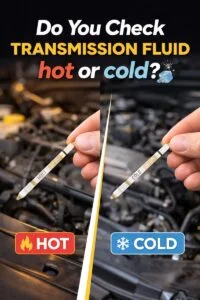
There is no single global rule that applies to every car. Some manufacturers instruct owners to check the automatic transmission fluid with the engine running and the transmission at operating temperature; others provide a cold-level check when the vehicle is off.
Your owner’s manual is the authoritative source for the correct method for your vehicle — many Toyota manuals, for instance, show both “COLD” and “HOT” markings and tell you the expected reading for each condition. Always follow the factory guidance where available.
Quick Answer: Most Automatic Transmissions Should Be Checked Hot
For many automatic transmissions the recommended practice is to check the fluid with the engine idling and the transmission at normal operating temperature.
Organizations such as AAA and many OEM manuals recommend warming the vehicle before checking to get an accurate total-system level, because the torque converter and internal passages fill with fluid only when the transmission is warm.
Checking hot (and with the engine running where required) provides the reading that most closely matches how the transmission actually runs on the road.
Two Common Methods And When Each Applies
Method A — Hot Check With Engine Running (Most Automatics)
- Warm the vehicle by driving for 10–20 minutes or letting it idle until it reaches normal operating temperature.
- Park on a level surface, apply the parking brake, and leave the engine idling in Park (or Neutral on some cars) as the owner’s manual instructs.
- Pull the transmission dipstick, wipe it, reinsert, then remove and read the level against the “HOT” marks.
- Add fluid only in small amounts and recheck until the level sits within the hot range.
This method is common on many modern automatics because it measures the fluid under conditions that match operating state. It avoids underfilling the torque converter and ensures the transmission has the correct charge when it is working.
Method B — Cold Check With Engine Off (Some Vehicles And Manuals)
- Park on level ground and let the car sit until the transmission fluid cools to near ambient temperature.
- With the engine off, remove the dipstick, wipe, reinsert, then remove and compare the level against the “COLD” marks.
- If the manual directs cold checks, use the cold mark as your reference.
This procedure appears in some manufacturers’ guidance and is often used for certain vehicle families or manual-transmission gearboxes.
It is useful when the design does not require engine idling for an accurate reading, or when the transmission is intentionally sealed and only service-level cold checks are meaningful. Always check the owner’s manual.
How To Check Transmission Fluid Step-By-Step (Hot Method Example)
- Know Your Manual — Confirm if your car requires a hot check and whether the engine should be idling. The manual will indicate whether to check in Park or Neutral and give temperature or minutes to wait.
- Warm The Vehicle — Drive normally for 10–20 minutes until the temperature gauge is in its normal range or use city driving to get the trans warm.
- Park Level And Secure — On a level surface, set the parking brake and leave the engine running if required. Be careful of moving parts.
- Cycle Through Gears — Some manufacturers recommend shifting slowly through each gear with the brake pressed to circulate fluid before checking.
- Remove Dipstick, Wipe, Reinsert, And Read — Pull the dipstick, wipe clean, insert fully, then remove and check the fluid line position against the HOT markings.
- Add Fluid Carefully If Needed — Use the correct fluid type (see manual), add small amounts, wait a minute to let fluid settle, and re-check. Overfilling can be harmful.
How To Interpret What You See
- Correct Level In Hot Range — Good. No action required unless fluid looks dirty or smells burnt.
- Low At Hot Range — Add manufacturer-specified fluid in small increments until the level reaches the HOT full mark. Low fluid can cause slipping, overheating, or poor shift quality.
- High At Hot Range — Overfilled transmissions can foam the fluid, causing aeration, erratic shifting, and overheating. If overfilled, some fluid may need to be drained to reach the correct level. Consult a technician if required.
- Dark Or Burnt Smell — Dark brown or black fluid with a burnt odor indicates fluid breakdown or internal overheating; plan service and a fluid/filter change. Reddish, translucent fluid is typical for healthy automatic fluid.
Manual Transmissions And Differentials: Cold Checks Are Common
Many manual transmissions and transaxles use gear oil and do not have dipsticks intended for hot-level checks. For these gearboxes the typical procedure is to check fluid level cold or with the vehicle raised so the fill plug location is visible — the correct fluid level is often at the bottom of the fill hole.
Always reference the service manual for the correct method and fluid viscosity. Unlike automatics, manual gearboxes do not have torque converters or the same circulating volume changes, so a cold check is often appropriate.
Sealed Or “Lifetime” Transmissions: What To Do
Some modern vehicles come with “sealed” transmissions without an owner-accessible dipstick. Manufacturers may call these “filled for life,” but in reality they still need periodic service under certain conditions.
If your car lacks a dipstick, check the owner’s manual for the recommended service schedule and consult a dealer or qualified shop for level checks and fluid changes.
For sealed units, technicians use lift-level checks or factory procedures to verify correct charge and temperature during service. Do not attempt to add fluid yourself without the correct procedure.
Common Mistakes Owners Make
- Using The Wrong Temperature Reference — Reading a hot dipstick against cold marks (or vice versa) leads to misdiagnosis. Always compare the level with the mark that matches the current temperature condition.
- Overfilling — Adding a large amount of fluid at once because you misread the dipstick can cause foaming and erratic operation. Add in small amounts and recheck.
- Using The Wrong Fluid — Transmission fluids differ in friction modifiers, viscosity, and additive packages. Using the wrong fluid type can harm shifts and clutches; always use the recommended spec.
- Not Leveling The Vehicle — An uneven surface gives false readings. Park on truly level ground or use a lift if the manual specifies.
Spotting Fluid Problems By Color, Smell, And Texture
- Healthy Fluid — Typically translucent red or amber in automatic transmissions; light brown in some modern fluids.
- Aged Or Burnt Fluid — Dark brown or black with a sharp burnt odor. This suggests overheating, clutch wear, or delayed service.
- Contaminated Fluid — Milky or creamy appearance indicates coolant contamination (head gasket leak) and requires immediate attention.
- Particulate Matter — Metal shavings or gritty feel often point to internal wear or component failure; inspect and service promptly.
Fluid Change Intervals And What The Experts Say
Service intervals vary with vehicle type, towing load, and manufacturer guidance. While some older recommendations suggested very long intervals, many modern technical bulletins advise periodic fluid and filter changes — especially on vehicles used for towing or heavy duty work — because fluid degrades and the transmission benefits from fresh, correctly formulated fluid.
Check your owner’s manual or the manufacturer service schedule for the exact interval for your model. AAA and OEM guides emphasize the importance of following recommended service intervals for long transmission life.
Practical Tips For A Safe, Accurate Check
- Read The Manual First — The manual is the single best source of the exact method for your car. Many Toyota/other OEM manuals clearly show HOT and COLD ranges and instructions.
- Use The Correct Fluid — Buy the specified fluid and avoid mixing fluids unless the manual allows it.
- Keep A Clean Rag And Funnel Handy — Avoid spilling fluid on hot engine parts and never overfill.
- Record Levels — Write down readings and the date; a trend of dropping levels can reveal slow leaks.
- Be Cautious With Sealed Units — If no dipstick exists, plan service at a shop with the proper tools.
When To See A Technician
- Persistent low fluid after adding indicates a leak.
- Burnt-smelling or dark fluid suggests overheating or internal damage.
- Metal particles in fluid or dramatic drops in performance require professional diagnosis.
- For sealed transmissions or complex modern units, a trained technician has the correct tools and procedures to measure level and perform service safely.
Top Facts To Keep In Mind
- Many automakers and service organizations recommend checking automatic transmission fluid at operating temperature because that reading reflects the system’s real working level, including the torque converter.
The AAA car-care guidance and numerous OEM manuals explain the hot check method and the need to park level and leave the engine idling where required.
- Several Toyota owner manuals explicitly show separate HOT and COLD marks on transmission dipsticks and instruct owners to compare readings to the correct mark depending on temperature. This is a concrete example of manufacturer guidance that varies by model.
Final Checklist Before You Add Fluid
- Confirm method in owner’s manual (hot vs cold).
- Warm the vehicle to operating temperature if a hot check is required.
- Park level and secure the vehicle.
- Wipe dipstick clean and reinsert for an accurate read.
- Add fluid slowly and recheck, matching the temperature.
Closing Thoughts
Checking transmission fluid the right way protects an expensive and critical component of your vehicle. While many automatic transmissions are best checked hot with the engine running, the single most important rule is to follow the manufacturer’s instructions for your particular vehicle.
If your car has no dipstick or uses a manufacturer-specific procedure, let a qualified technician perform level checks. Regular monitoring, prompt attention to discoloration or smell, and using the correct fluid will go a long way toward keeping your transmission shifting smoothly for years.