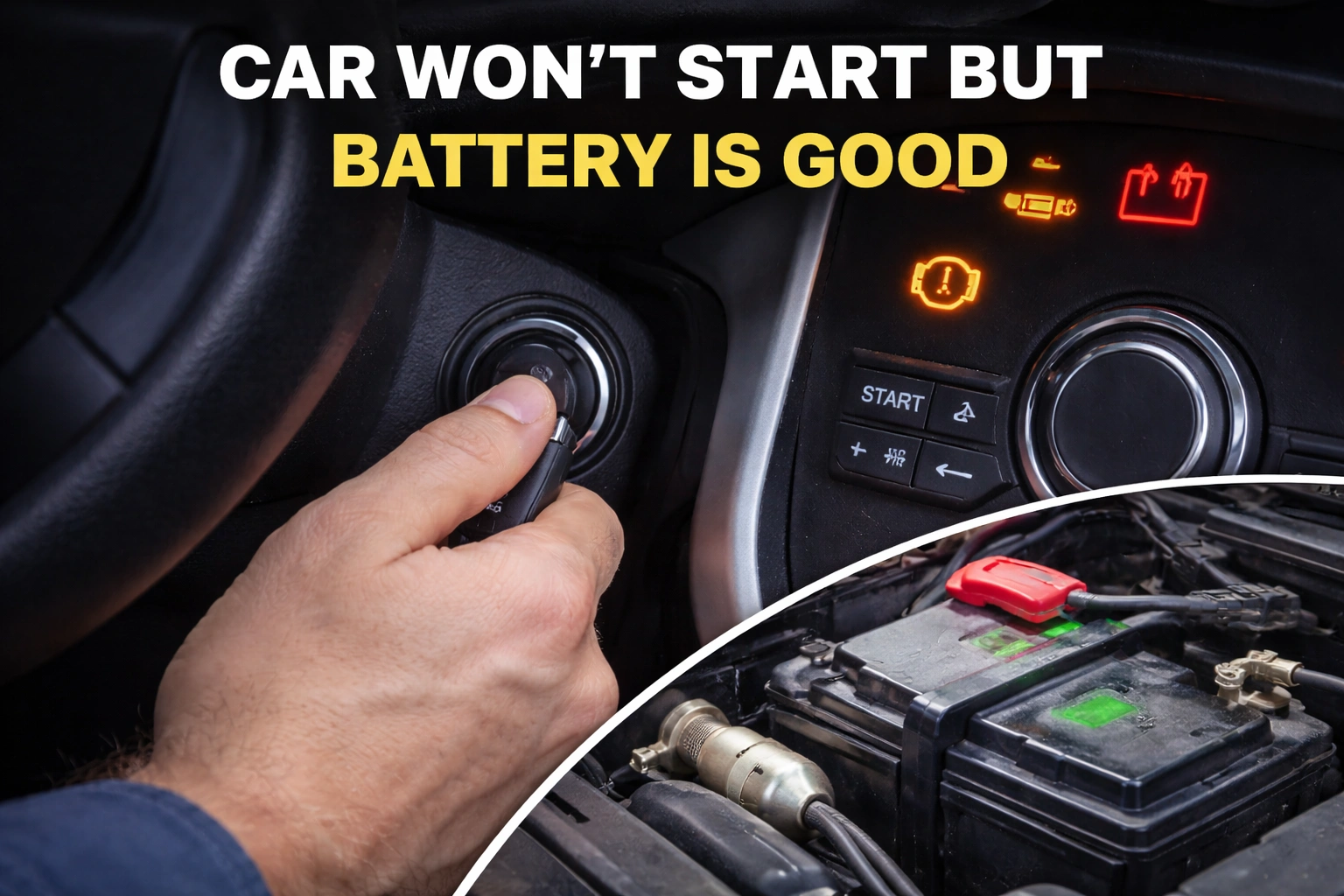
A vehicle that refuses to start can disrupt an entire day within seconds. When the dashboard lights turn on, headlights shine bright, and electronics function normally, the battery often appears to be in good condition. Yet the engine will not fire. That moment creates confusion. If the battery is fine, what else could prevent the engine from starting?
Starting an engine requires more than stored electrical power. It depends on a coordinated sequence involving the starter motor, ignition system, fuel delivery, sensors, and electronic control modules. A problem in any one of these areas can stop the engine from running, even when battery voltage is healthy.
Identifying the cause requires careful observation of symptoms. Does the engine crank slowly or not at all? Is there a clicking sound? Does it crank normally but fail to ignite? Each detail points toward a different mechanical or electrical issue. Breaking down the starting process step by step reveals where the failure may be hiding.
Understanding The Engine Starting Process
Battery Power Is Only The First Step
The battery supplies the initial surge of electricity needed to power the starter motor. When the key is turned or the start button is pressed, the battery sends current through the ignition switch to the starter solenoid. The solenoid engages the starter gear with the engine’s flywheel and begins cranking the engine.
However, even a strong battery cannot start the engine alone. It must work alongside ignition components, fuel injectors, crankshaft sensors, and engine control modules. If any part of that chain fails, the engine may crank but not start.
The presence of working headlights and dashboard lights confirms battery voltage, but it does not guarantee sufficient current for cranking or proper system coordination.
Crank But No Start Versus No Crank Condition
Two primary starting problems exist. In a “no crank” condition, turning the key results in silence or a clicking sound. The engine does not rotate. In a “crank but no start” condition, the engine spins normally but fails to ignite.
Distinguishing between these two situations is critical. A no-crank issue often points to starter motor or ignition switch faults. A crank-but-no-start issue typically involves fuel delivery or spark problems.
Accurate symptom recognition narrows the diagnostic path significantly.
Starter And Electrical System Problems
Faulty Starter Motor Or Solenoid
A worn starter motor is a common reason a car will not start even when the battery appears strong. The starter may click once or repeatedly but fail to turn the engine. Internal wear, damaged brushes, or failed solenoids prevent engagement.
In some cases, tapping lightly on the starter with a tool while attempting to start may temporarily free internal components. However, this is not a permanent solution.
Replacing the starter motor restores proper cranking function.
Ignition Switch Failure
The ignition switch sends electrical signals to the starter system. If the switch fails internally, power may not reach the starter solenoid even though the battery is fine.
Signs include intermittent starting or complete silence when turning the key. Testing voltage at the starter relay helps confirm whether the ignition switch is functioning properly.
Replacement may require professional service due to steering column disassembly.
Blown Fuse Or Relay Issue
Starter relays and ignition fuses control current flow. A blown fuse or failed relay interrupts the starting circuit.
Checking the fuse box for damaged fuses is simple and cost-effective. Replacing a faulty relay often resolves starting problems quickly.
Electrical inspection prevents unnecessary component replacement.
Fuel System Causes Of No Start
Failed Fuel Pump
If the engine cranks but does not start, fuel delivery may be the issue. The fuel pump delivers gasoline from the tank to the engine under pressure. A failing pump may produce no sound when the ignition is turned on.
Listening for a brief humming sound near the fuel tank after turning the key helps determine pump operation. Absence of sound suggests pump failure or electrical interruption.
Testing fuel pressure confirms whether adequate delivery is present.
Clogged Fuel Filter
A blocked fuel filter restricts gasoline flow to the engine. While rare for complete no-start situations, severe clogging may prevent ignition.
Replacing the fuel filter is relatively inexpensive and improves overall fuel system performance.
Regular maintenance prevents flow restrictions.
Injector Malfunction
Fuel injectors spray precise amounts of fuel into each cylinder. Electrical or mechanical injector failure may disrupt combustion.
If spark is present but fuel is not reaching cylinders, injector testing becomes necessary.
Professional diagnostic equipment often identifies injector issues accurately.
Ignition And Sensor Related Issues
Faulty Spark Plugs Or Ignition Coils
Spark plugs ignite the air-fuel mixture. Worn plugs or failing ignition coils may prevent combustion even if the engine cranks normally.
Symptoms often include misfiring before complete no-start conditions occur. Inspecting spark plugs for wear or fouling provides valuable clues.
Replacing worn components restores ignition reliability.
Crankshaft Position Sensor Failure
The crankshaft position sensor informs the engine control module of crankshaft rotation. Without this signal, the computer cannot trigger spark or fuel injection.
A failed sensor may cause sudden stalling followed by no restart. Diagnostic codes often appear in such cases.
Sensor replacement typically resolves the issue.
Engine Control Module Problems
Although less common, faults within the engine control module can prevent proper coordination between spark and fuel systems.
Electrical testing and professional diagnostics are required for confirmation.
Electronic failures demand specialized repair.
Security System And Immobilizer Interference
Modern vehicles include anti-theft systems that prevent unauthorized starting. If the immobilizer fails to recognize the key fob, the engine may crank briefly or not at all.
A flashing security light often accompanies this problem. Replacing key fob batteries or reprogramming the key may restore operation.
Checking security indicators eliminates confusion between mechanical and electronic issues.
Step By Step Troubleshooting Approach
Begin by observing whether the engine cranks. If no cranking occurs, inspect the starter, ignition switch, and relays. If cranking is present, evaluate fuel and spark systems.
Listen for fuel pump activation. Check for spark using proper tools. Scan for diagnostic codes.
Systematic testing prevents guesswork and unnecessary part replacement.
Professional assistance may be required for advanced diagnostics.
Preventive Maintenance To Avoid Starting Problems
Maintain battery terminals clean and corrosion-free. Replace spark plugs according to the manufacturer schedule. Keep fuel filters fresh and inspect starter components periodically.
Address minor warning signs early, such as occasional hard starts or intermittent clicking.
Preventive care reduces unexpected breakdowns.
The Practical Conclusion
A car that will not start despite a good battery indicates a breakdown somewhere in the starting chain. The issue may involve the starter motor, ignition switch, fuel system, spark components, or security system.
Careful observation of symptoms narrows the cause. Crank versus no-crank distinction guides troubleshooting direction. Electrical testing, fuel pressure checks, and sensor diagnostics reveal the underlying problem.
Restoring proper function depends on accurate diagnosis rather than assumption. Addressing faults promptly ensures dependable operation and prevents further mechanical complications.