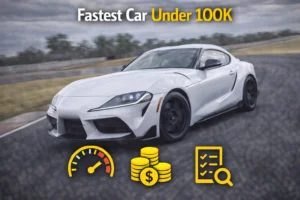
Performance has always been about more than raw numbers. Speed represents engineering discipline, balance, and the ability to turn mechanical force into controlled motion. In today’s market, that kind of performance is no longer locked behind exotic price tags.
With a budget under one hundred thousand dollars, buyers now have access to machines that were once considered unreachable. These cars accelerate faster than yesterday’s supercars, stop with authority, and remain usable on real roads.
Manufacturers have invested heavily in turbocharging, advanced transmissions, lightweight materials, and intelligent traction systems. The result is a new class of performance vehicles that combine extreme acceleration with daily usability.
Some focus on straight-line speed, others on corner dominance, and a few manage to blend both without compromise.
Choosing the fastest option in this price range requires more than checking a single metric. Power delivery, traction, gearing, and overall balance determine how speed feels and how consistently it can be used.
The following sections explore what truly defines fast, which models stand out, and how to choose the right one.
What Defines Speed In Modern Performance Cars
Speed is no longer measured by horsepower alone. Modern vehicles rely on a mix of mechanical strength, electronics, and design efficiency to achieve rapid acceleration and high top-end capability.
Acceleration Versus Top Speed
Acceleration figures reveal how quickly a car delivers power from a standstill or during overtaking. Many high-performance vehicles under this budget reach highway speed in well under four seconds. That immediate surge matters more in real-world use than extreme top speed numbers that are rarely achievable on public roads.
Top speed still matters, especially for track-focused buyers, but gearing, aerodynamics, and electronic limiters often play a bigger role than engine output alone.
Power Delivery And Traction
Engines may produce impressive numbers, but traction determines how much of that power reaches the ground. Rear-wheel-drive cars emphasize balance and driver involvement, while all-wheel-drive setups provide superior launch performance.
Modern traction systems allow high-powered vehicles to accelerate hard without overwhelming the tires. This balance between power and grip is often the difference between quick and genuinely fast.
Weight And Engineering Balance
Lighter cars require less power to achieve the same acceleration. Aluminum construction, carbon components, and compact drivetrains help reduce mass. Weight distribution also affects how stable a car feels when accelerating hard.
Balanced engineering ensures speed remains controllable rather than chaotic, which defines true performance rather than raw output.
Fastest Performance Cars Available Under 100K
The market offers several standout options that deliver exceptional speed without crossing the six-figure threshold. Each approaches performance with a different philosophy.
American Muscle With Modern Precision
Modern muscle cars have evolved far beyond straight-line dominance. Advanced suspensions, refined interiors, and improved braking systems now match their powerful engines.
These vehicles often lead acceleration charts thanks to large-displacement engines and aggressive gearing. Their value lies in delivering supercar-level straight-line performance at a fraction of the traditional cost.
European Performance Engineering
European manufacturers focus on balance and refinement. Turbocharged engines paired with rapid-shifting dual-clutch transmissions create seamless acceleration.
These cars may sacrifice a small amount of raw output compared to muscle-focused rivals, but they excel in consistency and composure. The result is speed that feels effortless rather than aggressive.
Japanese High-Tech Performance
Japanese performance models emphasize reliability and intelligent design. Many rely on forced induction combined with lightweight construction.
Their speed comes from precision rather than excess. These cars often deliver repeatable acceleration without heat-related performance drop, making them strong options for spirited use.
Real-World Speed Versus Numbers On Paper
Performance statistics tell part of the story, but real-world behavior reveals the full picture. Some vehicles dominate specification sheets yet feel less responsive in daily use.
Transmission Behavior
Transmission tuning affects how quickly power reaches the wheels. Dual-clutch and advanced automatic systems shift faster than traditional manuals, reducing acceleration gaps between gears.
Smooth and immediate gear changes keep engines within optimal power ranges, maintaining consistent acceleration.
Launch Control And Electronics
Launch control systems allow drivers to achieve maximum acceleration without excessive wheel spin. These systems manage engine output and traction automatically, producing repeatable results.
Without proper electronic calibration, even powerful cars can struggle to deliver consistent speed.
Environmental And Road Conditions
Temperature, road surface, and tire quality all influence real-world performance. Vehicles with adaptable systems handle varying conditions better, maintaining acceleration regardless of surface quality.
Choosing The Right Fast Car Under 100K
Speed should match personal priorities. The fastest option on paper may not suit every driver’s needs.
Daily Usability Versus Maximum Performance
Some high-performance cars prioritize comfort alongside speed. Others sacrifice refinement for aggressive tuning. Choosing the right balance ensures the car remains enjoyable beyond brief bursts of acceleration.
Maintenance And Ownership Considerations
High-performance vehicles require proper care. Maintenance costs, insurance, and tire replacement vary widely. Considering long-term ownership ensures performance remains sustainable rather than stressful.
Driving Style And Purpose
Straight-line enthusiasts may prefer high-torque engines, while corner-focused drivers value balance and braking performance. Understanding personal preferences leads to a more satisfying purchase.
Final Thoughts
The fastest cars under one hundred thousand dollars represent a remarkable era in automotive performance. Engineering advancements have erased traditional boundaries between everyday vehicles and elite machines. Buyers no longer need to compromise speed for practicality or reliability.
True performance comes from balance, not excess. Acceleration, control, and consistency define speed that can be enjoyed repeatedly rather than admired only in specifications. With careful selection, it is possible to own a car that delivers breathtaking performance while remaining usable and dependable.
Speed at this level is no longer rare. It is accessible, refined, and designed to be driven.