Seat belts are one of the simplest yet most critical safety systems in any vehicle. They work silently every day, locking only when needed and remaining flexible the rest of the time.
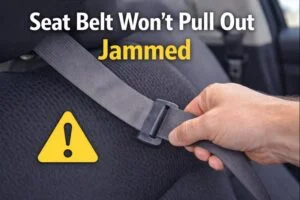
Because they are so reliable, most drivers never think about how they work until something goes wrong. One of the most frustrating moments is when a seat belt suddenly refuses to pull out. It may feel stiff, completely locked, or jammed halfway, leaving the driver confused and sometimes unable to drive safely.
A stuck seat belt often feels like a mechanical failure, but in many cases, it is the result of how the system is designed to protect occupants. Seat belts are built to lock under specific conditions, and those conditions are not limited to crashes.
Sudden movements, angles, dirt, or internal wear can all trigger locking behavior. This article explains why a seat belt may not pull out, how the locking system actually works, what you can safely try at home, and when replacement becomes the only responsible option. Understanding the cause removes frustration and helps restore both function and safety.
How A Seat Belt Locking System Actually Works
Emergency Locking Mechanism Explained Simply
Modern seat belts use an emergency locking retractor. Under normal conditions, the belt pulls out smoothly and retracts gently. When the system senses rapid movement, sudden deceleration, or unusual angles, it locks instantly to restrain the occupant.
This locking action is intentional. It is designed to respond not only to collisions but also to sharp braking or aggressive motion. The system prioritizes safety over convenience.
Why Seat Belts Lock Even Without An Accident
Seat belts can lock if the vehicle is parked on a slope, if the belt is pulled too quickly, or if the internal sensor detects a tilt. Some designs use a small weighted pendulum inside the retractor that reacts to angle changes.
If that pendulum is not perfectly aligned, the belt may stay locked even when the car is stationary.
Common Reasons A Seat Belt Won’t Pull Out
Sudden Or Aggressive Pulling
One of the most common causes of a jammed belt is pulling it out too fast. The retractor interprets this as a sudden force and locks immediately.
This often happens when someone is in a hurry. The belt feels stuck, but in reality, it is responding exactly as designed.
Vehicle Parked On An Incline
When a vehicle is parked on a steep slope, the seat belt retractor may tilt enough to trigger the locking mechanism. This is especially common in driveways or uneven parking areas.
Once the vehicle is leveled, the belt often releases normally.
Twisted Or Folded Seat Belt Webbing
If the belt is twisted inside the pillar or wrapped unevenly on the spool, it may not retract or extend smoothly. Twisting increases friction and can prevent proper movement.
Over time, repeated twisting can worsen the problem and damage the internal retractor.
Dirt, Debris, Or Sticky Residue
Seat belts collect dust, spills, and oils over years of use. Sticky residue can slow retraction and cause uneven tension.
When the belt does not retract fully, it may lock in an awkward position the next time it is pulled.
Internal Wear Or Aging Components
Seat belts are durable, but they are not immune to wear. Springs lose tension, sensors become sensitive, and internal parts wear down.
Older vehicles are more likely to experience persistent locking issues due to component fatigue.
Safe Steps To Try Before Considering Replacement
Resetting The Lock By Letting The Belt Retract Fully
The first step is to allow the belt to retract all the way back into the pillar. Do not force it. Let it rewind slowly and completely.
Once fully retracted, try pulling it out again gently and steadily. In many cases, this resets the locking mechanism.
Straightening The Belt And Adjusting Angle
Check for twists along the entire length of the belt. Straighten it carefully and ensure it feeds evenly into the retractor.
Sitting upright and pulling the belt straight out, rather than at an angle, often helps release the lock.
Leveling The Vehicle If Parked On A Slope
If possible, move the vehicle to flat ground. This simple step can immediately release a locked belt caused by tilt-sensitive mechanisms.
Many drivers are surprised how often this solves the problem.
Cleaning The Seat Belt Properly
If the belt feels sticky or slow, cleaning may help. Use mild soap and warm water, gently scrubbing the webbing.
Allow the belt to dry fully while extended before letting it retract. This prevents moisture from entering the retractor.
When A Jammed Seat Belt Becomes A Safety Issue
Signs The Retractor Is Failing
If the belt refuses to pull out regardless of angle, speed, or position, the retractor may be failing internally.
A belt that locks constantly or will not retract fully is no longer reliable in an emergency.
Why Forcing A Seat Belt Is Dangerous
Pulling aggressively or yanking the belt can damage the retractor or weaken the webbing. This compromises safety.
Seat belts are engineered systems. Forcing them can cause hidden damage that only appears during a crash.
Legal And Safety Implications
Driving with a malfunctioning seat belt may violate traffic laws in many regions. More importantly, it exposes occupants to serious injury risk.
A seat belt that does not function correctly should never be ignored or bypassed.
Repair, Replacement, And Long-Term Considerations
Can A Seat Belt Retractor Be Repaired
In most cases, seat belt retractors are not serviceable. Manufacturers design them as sealed safety components.
Once internal mechanisms fail, replacement is the recommended and safest solution.
Replacement Cost And What It Includes
Replacing a seat belt assembly typically includes the belt, retractor, and mounting hardware. Costs vary by vehicle but are usually moderate compared to other safety repairs.
Labor is often straightforward, but calibration may be required in newer vehicles with advanced restraint systems.
Why Replacement Is Often The Best Option
A new seat belt restores full safety function and peace of mind. Temporary fixes or workarounds do not provide reliable protection.
When safety is involved, replacement is rarely excessive—it is responsible.
Final Thoughts
A seat belt that won’t pull out feels like a small inconvenience, but it is actually a signal from one of the vehicle’s most important safety systems. In many cases, the cause is simple: rapid pulling, uneven angles, or a parked position that triggers the lock. These issues are easy to correct with patience and understanding.
However, when the problem becomes consistent or refuses to reset, it points to internal wear or failure that should not be ignored. Seat belts are designed to protect lives, not tolerate improvisation. Knowing how the system works, what you can safely try, and when replacement is necessary helps restore both function and confidence. A properly working seat belt is not optional—it is essential, and addressing problems early ensures it will be ready when it matters most.