
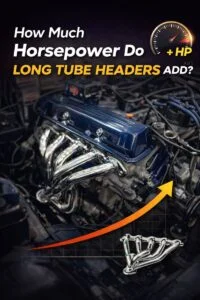
Long tube headers are one of those upgrades that almost every performance enthusiast has heard about, even if they have never installed a set themselves. They are often mentioned in the same breath as louder exhaust notes, freer breathing engines, and noticeable gains in power.
What makes long tube headers interesting is that they are not just about sound or looks. They change how the engine breathes at a fundamental level, affecting exhaust flow, cylinder scavenging, and how efficiently power is produced across the rev range.
This article breaks down how much horsepower long tube headers can realistically add, why results vary so much from one engine to another, and what actually happens inside the engine when headers replace factory exhaust manifolds.
By the end, you’ll have a solid understanding of what long tube headers do, what kind of gains are reasonable, and whether they make sense for your car and your goals.
What Long Tube Headers Are And How They Work
The Basic Idea Behind Exhaust Headers
Every engine needs to get rid of exhaust gases after combustion. From the factory, most vehicles use exhaust manifolds that collect exhaust gases quickly and route them into the exhaust system. These manifolds are usually compact, designed for durability, emissions compliance, and low cost rather than maximum airflow.
Headers replace these manifolds with individual tubes for each cylinder. These tubes guide exhaust gases more smoothly and with less restriction, helping the engine push spent gases out more efficiently.
What Makes Long Tube Headers Different
Long tube headers use longer primary tubes compared to short headers or factory manifolds. These longer tubes are designed to take advantage of exhaust pulse timing.
As exhaust gases exit one cylinder, they help pull gases out of the next cylinder. This effect, often called scavenging, improves cylinder filling on the intake stroke and helps the engine make more power.
The length and diameter of the tubes are carefully chosen to work best at certain engine speeds, which is why long tube headers tend to shine at mid to higher RPM ranges.
Why Headers Can Increase Horsepower
Reduced Exhaust Restriction
Factory exhaust manifolds are restrictive by design. Long tube headers reduce backpressure, making it easier for exhaust gases to leave the engine. When the engine does not have to work as hard to expel exhaust, more energy is available to produce power.
Improved Cylinder Scavenging
Scavenging is one of the biggest advantages of long tube headers. The pressure waves created by exhaust pulses help draw out remaining gases from the cylinder. Cleaner cylinders mean more room for fresh air and fuel, which leads to stronger combustion.
Better Volumetric Efficiency
When an engine breathes more efficiently, it can burn more air and fuel in each cycle. This improves volumetric efficiency, which directly affects horsepower. Long tube headers improve this efficiency across a wider RPM range than many other bolt-on parts.
How Much Horsepower Long Tube Headers Usually Add
Typical Horsepower Gains On Stock Engines
On a mostly stock naturally aspirated engine, long tube headers typically add anywhere from 10 to 25 horsepower. Smaller four-cylinder engines may see gains closer to the lower end of that range, while V6 and V8 engines often benefit more.
The exact number depends on engine size, factory exhaust design, and how restrictive the original manifolds were.
Gains On Performance-Oriented Engines
Engines that already have good airflow from the factory may see smaller gains, often in the 8 to 15 horsepower range. However, these gains usually come with stronger torque improvements and better throttle response, which are noticeable in real-world driving.
Modified Engines See Bigger Results
Engines with supporting modifications such as upgraded intakes, camshafts, or cylinder heads often see gains of 20 to 40 horsepower from long tube headers. In these cases, headers allow other upgrades to work more effectively by removing a major bottleneck in exhaust flow.
Torque Gains Matter As Much As Horsepower
How Torque Changes With Long Tube Headers
While horsepower numbers get the most attention, torque gains are often more important. Long tube headers typically improve torque in the mid-range, where street cars spend most of their time.
This results in stronger acceleration, smoother power delivery, and a more responsive feel when pressing the throttle.
Why Torque Improvements Feel Bigger Than Numbers Suggest
A 15-horsepower increase may not sound dramatic on paper, but when paired with improved torque, the engine feels noticeably stronger. This is why many drivers report a clear difference after installing long tube headers even if dyno numbers seem modest.
Factors That Affect Horsepower Gains
Engine Size And Configuration
Larger engines with more cylinders usually benefit more from long tube headers. V8 engines, in particular, show consistent gains because they move more exhaust volume and benefit greatly from improved scavenging.
Header Design And Quality
Not all long tube headers are equal. Tube length, diameter, collector design, and build quality all affect performance. Well-designed headers matched to the engine’s characteristics produce better results than generic designs.
Exhaust System After The Headers
Headers work best as part of a complete exhaust system. If the rest of the exhaust is restrictive, gains will be limited. High-flow catalytic converters and properly sized exhaust piping allow headers to do their job effectively.
Engine Tuning
Modern engines rely heavily on computer control. Installing long tube headers without adjusting the engine tune can leave power on the table. Proper tuning often unlocks additional horsepower and ensures the engine runs safely.
Long Tube Headers Versus Short Headers
Differences In Power Delivery
Short headers improve airflow compared to stock manifolds but usually focus on low to mid-range performance. Long tube headers tend to shift power higher in the RPM range while still improving mid-range torque.
Installation And Fitment Considerations
Long tube headers are more complex to install. They often require more space, sometimes relocating components or modifying exhaust routing. Short headers are easier to install but usually offer smaller gains.
Choosing The Right Option
For maximum power and performance, long tube headers are usually the better choice. For mild upgrades or limited space, short headers may make more sense.
Realistic Expectations Versus Marketing Claims
Why Advertised Numbers Can Be Misleading
Some manufacturers advertise large horsepower gains based on heavily modified engines or ideal test conditions. These numbers are not always representative of real-world street cars.
What Dyno Testing Actually Shows
Independent dyno tests consistently show moderate but meaningful gains from long tube headers. The key takeaway is that headers improve efficiency rather than creating power on their own.
Supporting Modifications That Improve Results
Intake Upgrades
A free-flowing intake complements headers by improving airflow into the engine. Together, these upgrades create a balanced system.
Camshaft And Valve Train Changes
Engines with performance camshafts benefit greatly from long tube headers. Improved exhaust flow allows aggressive cam profiles to work more effectively.
ECU Tuning
Tuning adjusts fuel delivery, ignition timing, and throttle response to match the new airflow characteristics. This step often adds several extra horsepower beyond the headers alone.
Sound Changes With Long Tube Headers
Louder And Deeper Exhaust Note
Long tube headers usually make the exhaust louder and deeper. The longer tubes and improved flow change how sound waves travel through the system.
Potential For Drone Or Harshness
Depending on the rest of the exhaust setup, long tube headers can introduce drone at certain speeds. Choosing the right mufflers and resonators helps manage this.
Reliability And Daily Driving Considerations
Heat Management
Long tube headers generate more heat in the engine bay. Proper heat shielding or ceramic coatings help protect surrounding components.
Emissions And Legal Concerns
Some long tube headers are not emissions-compliant in all regions. It’s important to check local regulations before installation.
Maintenance And Longevity
High-quality headers last many years, but poor-quality materials can crack or leak over time. Investing in a reputable product pays off in reliability.
Cost Versus Value
Typical Price Range
Long tube headers range from a few hundred to over a thousand dollars, depending on material and design. Installation costs vary based on vehicle complexity.
Power Per Dollar Comparison
Compared to many performance upgrades, long tube headers offer solid value. They improve power, torque, and sound in one package.
When Long Tube Headers Make The Most Sense
Performance-Focused Builds
Headers are ideal for drivers looking to improve overall engine performance rather than just peak numbers.
Naturally Aspirated Engines
Naturally aspirated setups benefit the most because exhaust flow improvements directly affect power output.
Enthusiasts Willing To Tune
Drivers who plan to tune their engine after installation get the best results and the safest operation.
Situations Where Headers May Not Be Ideal
Strict Emissions Requirements
If emissions compliance is a priority, long tube headers may not be suitable without additional modifications.
Minimal Performance Goals
For drivers seeking only a slight improvement, simpler upgrades may be more cost-effective.
How Long Tube Headers Compare To Other Bolt-On Mods
Compared To Cold Air Intakes
Headers often provide more consistent gains than intakes alone, especially at higher RPMs.
Compared To Exhaust Cat-Back Systems
Cat-back systems mainly change sound, while headers directly affect engine efficiency and power.
Long-Term Benefits Beyond Peak Horsepower
Smoother Power Delivery
Improved airflow makes the engine feel smoother and more responsive across the rev range.
Better Engine Efficiency
More efficient exhaust flow can improve overall engine behavior, even if fuel economy gains are small.
Final Thoughts
Long tube headers do not turn a car into a race machine overnight, but they deliver real, measurable improvements when expectations are realistic. On most engines, gains fall between 10 and 25 horsepower, with higher numbers possible when combined with tuning and supporting modifications.
Just as important as the numbers is how the car feels afterward — stronger mid-range pull, better throttle response, and a more engaging exhaust note.
When chosen carefully and installed correctly, long tube headers are one of the most rewarding exhaust upgrades available. Understanding what they do and what they don’t do helps ensure the investment makes sense for your build and your driving style.