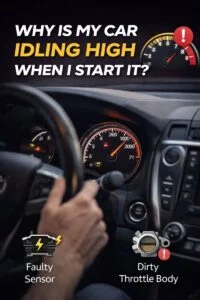
A car that idles high right after you start it is a small mystery that can quickly become irritating. At first glance it might seem like a normal warm-up quirk, but when the revs stay up longer than they should or jump to very high numbers, it’s worth understanding why.
This guide explains, in plain language, the common reasons for high idle at startup, how to tell one cause from another, simple checks you can do safely, and the repairs a shop might recommend.
I include practical tests, likely costs, and give you simple tips so you can make smart decisions.
When you understand what affects idle speed, it becomes much easier to spot whether the behavior is harmless or worth fixing. That knowledge also helps you avoid unnecessary repairs and have a more confident conversation if a mechanic needs to get involved.
How Idle Speed Is Controlled
The Engine Needs Different Air And Fuel When Cold
When an engine is cold, it needs a richer mixture and slightly higher idle speed so it keeps running until components warm up and operate normally. Modern cars manage this automatically with sensors and valves so you rarely notice it.
That initial, modestly elevated idle is normal; the problem is when it stays high, hunts, or climbs beyond the designed range.
Electronic Control And Mechanical Components Work Together
The engine control unit monitors temperature, airflow, and throttle position and adjusts the idle using the throttle body, idle air control (or equivalent), and variable timing. Mechanical parts such as vacuum hoses and the exhaust gas recirculation system also affect idle.
When one of these parts misbehaves or a sensor reads wrong information, the system responds by changing idle speed — sometimes in the wrong direction.
Common Causes Of High Idle At Startup
Idle Air Control Or Idle Motor Problems
Many engines use an idle air control device (or an electronic motor inside the throttle body on drive-by-wire systems) to meter small amounts of air when the throttle is closed.
If that valve or motor is stuck open, dirty, or maladjusted it allows too much air in and the idle climbs. Cleaning or replacing the component often fixes the issue.
Vacuum Leaks And Unmetered Air
A vacuum leak lets outside air enter the intake without being measured by the engine’s airflow sensors. The ECU tries to compensate by adding fuel or adjusting idle control, but that can raise the idle.
Vacuum leaks often make a characteristic hissing noise and are a common cause of unexplained high idle. Typical leak points are vacuum hoses, intake gaskets, PCV connections, and cracked intake boots.
Dirty Or Sticky Throttle Body And Throttle Plate
Carbon buildup around the throttle plate or in the throttle bore can prevent the plate from closing fully or can confuse throttle position readings.
Even a small gap lets extra air bypass the throttle, causing an elevated idle. A throttle cleaning is a low-cost service that often cures startup high-idle problems.
Cold Start Enrichment And Auxiliary Air Systems
On many engines, cold start enrichment systems or auxiliary air regulators intentionally increase idle while the engine warms up. These systems should reduce the extra air as temperature rises.
If the temperature sensor, thermostatic actuator, or enrichment system fails, the engine can keep idling high longer than intended. This behavior is especially common in older cars or vehicles with separate warm-up air devices.
Faulty Sensors (Coolant Temperature, MAF, TPS)
Sensors tell the ECU how to set idle and fueling. A coolant temperature sensor that reads colder than reality will command richer mixture and higher idle.
A faulty mass airflow sensor (MAF) or throttle position sensor (TPS) can also send wrong data and produce a high idle as the ECU chases the perceived engine state. Scanning diagnostics often reveals sensor faults or unusual readings.
Sticking Or Faulty EGR Valve Or Other Emissions Devices
An EGR valve that sticks open or has carbon build-up changes the amount of recirculated exhaust gas and can upset idle control. While EGR faults more commonly cause rough idle or stalling, in some cases they can make the idle higher during warm-up as the engine management tries to compensate. Cleaning or replacing the EGR valve may be required.
Fuel System And Injector Issues
If an injector leaks or the fuel pressure regulator allows too much fuel at idle, combustion behavior can change and the ECU’s idle control may respond by raising RPM. This is a less common cause of high idle at cold start, but it’s on the checklist when simpler items have been ruled out.
Symptoms That Help You Identify The Cause
High Idle Only For A Few Seconds Then Normalizes
This is often normal cold-start enrichment. The idle should drop as the engine reaches operating temperature. If it does, monitor over a few starts — normal. If it stays high much longer, investigate further.
High Idle That Persists Until You Rev The Engine
If the idle stays high until you physically blip the throttle or drive and then it returns to normal, dirty throttle plate or sticky IAC action is likely. Cleaning and an idle relearn or reset may solve it.
High Idle With A Hissing Or Whistling Noise
Hissing or whistling usually indicates a vacuum leak. Listen around the intake manifold, brake booster hose, and large vacuum hoses while the engine is idling. A simple smoke test at a shop is a reliable way to find leaks.
High Idle Plus Engine Light Or Error Codes
If the check engine light is on, scan for codes. Faults like MAF, TPS, or coolant temperature sensor errors often show up and lead you directly to the problem. Many modern cars log freeze-frame data that helps determine why the idle rose.
Intermittent High Idle Or High Idle After Battery Disconnect
An intermittent high idle that appears after battery replacement or a reset may indicate the ECU needs an idle relearn procedure, or that a sensor reading is unstable. Some cars require a specific idle relearn sequence after battery disconnects or throttle body service.
Simple Tests You Can Do Safely At Home
Visual Inspection For Hoses, Vacuums, And Connections
With the engine off and cool, look for cracked vacuum hoses, loose clamps, disconnected lines, or damaged intake boots. These are inexpensive and easy to replace and often fix high idle problems.
Listen For Hissing At Idle
Start the engine and listen for hissing near the intake or firewall. It’s easier to hear with the hood open. If you suspect a leak but don’t hear it, spray a little carb cleaner or use a propane torch (unlit, being careful) near suspect seams; a change in RPM suggests where air is entering. Use extreme caution — keep sparks and hot surfaces away. When in doubt, have a shop perform a smoke test.
Check For Codes With An OBD-II Scanner
A basic scanner will show pending or stored engine codes. If any sensor is reporting out-of-range values, the codes will help you focus the repairs and avoid guesswork. Many auto parts stores will scan for free.
Throttle Body And IAC Visual Check
If you can access the throttle body, look for carbon deposits on and around the throttle plate. If present, a careful cleaning with throttle-body cleaner can restore proper sealing. On older cars with an external idle control valve, remove and inspect that device for carbon build-up or sticking.
Monitor Live Sensor Data If You Can
Advanced scanners or apps can show live readings (coolant temp, MAF volts, TPS position). If the coolant temp shows very low even after a warm engine, suspect the temp sensor. If MAF readings are abnormal, clean or test the sensor. These live values speed diagnosis.
Common Fixes And What To Expect
Cleaning The Throttle Body And IAC
A throttle cleaning plus IAC cleaning is a relatively low-cost first step. Many independents and DIYers report significant improvement after cleaning. On drive-by-wire cars the throttle body may also need a relearn procedure afterward.
Replacing Vacuum Hoses, Gaskets, Or Boots
Replacing cracked vacuum hoses or intake boots is inexpensive and often resolves the problem quickly. Replacing a leaking intake manifold gasket is more labor-intensive but necessary if the gasket is the cause.
Replacing Faulty Sensors
A failed coolant temperature sensor, MAF sensor, or throttle position sensor should be replaced if testing indicates it’s bad. Sensor replacement is straightforward; however, some sensors require calibration or adaptation.
EGR Cleaning Or Replacement
If the EGR valve is stuck or clogged, cleaning the valve and passages may restore normal idle behavior. In some cases the valve is replaced. EGR jobs can vary in price depending on accessibility.
Fuel System Repairs
If a fuel pressure regulator or injector is leaking and causing erratic idle, a fuel system diagnosis will determine the right fix. These repairs are more complex and should be done with proper equipment.
When High Idle Is A Symptom Of Something Bigger
ECU Software Or Adaptation Problems
Rarely, the engine control unit may have corrupt idle adaptation values after long-term issues or battery disconnection. A dealer or shop can perform a deeper reflash or adaptation reset if required.
Mechanical Air Leaks Into The Intake Or Exhaust
A large intake leak or a broken intake component can lead to sustained high idle and other drivability problems. Exhaust leaks at the exhaust manifold can also create oxygen sensor confusion and cause idle issues indirectly.
Aging Or Failing Engine Components
On high-mileage engines, worn valve guides, stuck PCV valves, or degraded gaskets can create persistent idle irregularities. While less common than sensor or vacuum faults, these mechanical items are part of the full checklist.
Prevention And Maintenance Tips
Keep Intake And PCV Systems Clean
Regular maintenance — intake cleaning during major services, and checking the PCV valve — limits carbon build-up and reduces the chance of sticky throttle plates or erratic idle control.
Replace Sensors And Hoses On The Manufacturer Schedule
Sensors and rubber vacuum parts age; replacing them when worn avoids many odd idle complaints. Checking for cracked boots and brittle hoses during oil changes catches small problems early.
Use Quality Fuel And Keep Fuel System Serviced
Fuel system cleanliness helps keep injectors and regulators working as designed. Periodic fuel-system cleaning or high-quality fuel keeps deposits down.
Perform Idle Relearn Procedures When Required
After battery replacement, throttle body cleaning, or part swaps, follow manufacturer idle relearn steps where applicable. A proper relearn lets the ECU re-establish the correct target idle behavior.
Guideless From Top Sources
- Cars.com and other reputable repair resources list vacuum leaks, idle air control faults, and throttle-body carbon as the most common causes of high idle. These are simple starting points for diagnosis.
- Technical repair guides explain that unmetered air from vacuum leaks causes the ECU to overcompensate and raise idle, which makes a smoke test or visual check high-value steps.
- Shops and DIY resources recommend throttle-body cleaning and idle-control cleaning as first-line repairs because they are low cost and effective in many cases.
- Older systems use thermostatic auxiliary air devices for cold start enrichment; failure or contamination of those systems can cause prolonged high idle until the problem is addressed.
- Diagnostic scans showing out-of-range readings for coolant temperature, MAF, or TPS often point directly to the part that needs cleaning or replacing. Start with codes and live data to avoid unnecessary parts replacement.
Troubleshooting Tips For A Mechanic Visit
- Have The Technician Scan For Codes And Review Live Data.
- Inspect The Throttle Body And Idle Air Control For Carbon Buildup.
- Perform A Visual Vacuum Inspection And Consider A Smoke Test.
- Test Coolant Temperature Sensor And MAF/TPS Values Under Crank/Idle.
- Check EGR Operation And PCV System For Sticking Or Blockage.
- Confirm Idle Relearn Procedure Was Performed After Any Service That Could Affect Idle.
Final Thoughts
High idle at startup is a common complaint with a mostly manageable list of causes. Start with the easy, low-cost items: listen for vacuum leaks, clean the throttle body or IAC, and scan for trouble codes. Many fixes are inexpensive and quick; a few require deeper inspection or sensor replacement.
By following the logical steps in this guide — and using the checklist when you see a technician — you’ll avoid unnecessary parts swaps and get the right repair faster. Acting early usually prevents bigger problems later and keeps the car running smoothly.