
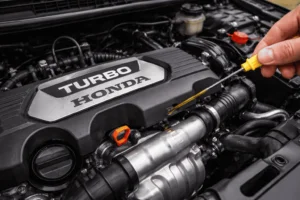
The CR-V’s 1.5-liter turbocharged engine transformed the model: more punch in a small, efficient package, and a big step forward in fuel economy.
But along with those gains came a cluster of issues owners and technicians have learned to watch for — some minor and easily fixed, some that can lead to expensive repairs if ignored.
In this piece I’ll walk you through the real problems that have shown up with Honda’s L15 1.5-liter turbo — oil dilution, misfires and valve deposits, turbo and intake complaints, and a few electrical/software wrinkles — and tell you exactly how to spot each one, what to check first, what your dealer might do, and how to limit your risk.
This is written like a shop conversation: clear, no-nonsense, and focused on what actually matters when you’re trying to decide whether to drive it, fix it, or argue warranty.
Real facts and supporting references
- WardsAuto reported on the 1.5L cold-weather oil-dilution concern and Honda’s response in 2019. The article described regional reports and subsequent warranty attention.
- Honda extended warranty coverage and later faced class-action filings related to oil dilution on certain model years; TopClassActions and other legal summaries document the claims and settlements.
- Consumer Reports and owner communities logged early CR-V reports of fuel-in-oil symptoms and drivability complaints on affected model years.
First: read this before you worry
Two short realities up front:
- Some water-cooler horror stories are real, some are anecdotes. The 1.5T did have patterns of repeated issues (documented investigation, warranty extensions and class-action filings). That doesn’t mean every 1.5T will fail — it means owners should be aware and proactive.
- Most failures are avoidable or manageable if caught early. Regular checks, attention to oil level and smell, and prompt diagnostic scans are high-value actions you can take today.
With that out of the way, let’s go through the problems in order of how often they show up in shop bays and owner reports.
1) Oil dilution with gasoline — the headline problem
What it is, in plain terms
Oil dilution means raw gasoline is getting into the engine oil and thinning it. Thinner oil loses lubricating ability; bearings and other parts see higher wear.
On the 1.5T, this showed up especially in colder climates and short-trip duty where the engine didn’t consistently get fully warmed. Honda and several industry publications documented this behavior and Honda extended limited warranty coverage while investigating fixes.
Why it happens (shop-level explanation)
The L15 uses direct injection and a turbocharger. Direct injection sprays fuel straight into the cylinder and relies on piston ring sealing and combustion characteristics to keep unburned fuel out of the crankcase.
Under certain conditions — cold start, short trips, or unusually rich operation during warmup — fuel vapor or unburned fuel can pass by the rings or condense on cylinder walls and end up in the crankcase.
Turbocharged engines can exacerbate pressure swings that encourage blow-by. Over time the oil level creeps up and viscosity falls.
Typical symptoms you’ll see first
- Rising oil level on the dipstick (oil reads higher than “full” without adding oil).
- A faint gasoline smell on the oil or on dipstick wipe.
- Occasional rough idle or hesitation during cold starts.
- Greater than expected fuel smell near the oil cap.
- In severe cases, check-engine light or misfires. Owners and services documented these symptoms early on.
How to check it yourself
- Park level and let the engine cool. Pull the dipstick, wipe, reinsert and check level. Repeat to confirm.
- Smell the oil on the dipstick — fuel-thinned oil has an obvious petrol scent.
- If you suspect dilution, have oil sampled or run a simple oil-consumption and oil-quality check at a shop (they can centrifuge or test flash point / viscosity).
- Note patterns: after a short city run does oil level jump? That’s classic fuel dilution.
Dealer response and fixes
Honda issued software calibrations and warranty extensions and in some cases replaced or reconditioned engines where severe wear occurred.
Software changes can reduce fuel injection timing or alter cold-start strategy to limit dilution, and Honda’s early responses included extended warranty protection for affected model years. But for engines that already suffered wear, mechanical repair or replacement may be required.
What to do now
- Check oil level weekly if your car mostly does short trips.
- If oil rises or smells of fuel, don’t ignore it — have the dealer check for software updates and run an oil test.
- Keep service records; if the issue becomes severe you’ll want documentation for warranty or lemon-law discussions.
2) Misfires and intake/valve cleaning (carbon and deposits)
The core problem
Direct-injected engines don’t route fuel across the intake valves the way port injection does, so the valves don’t get that “cleaning” action from fuel. Over many miles this can allow carbon and oily deposits to build on intake valves and ports, causing rough idle, misfires, and reduced throttle response.
How it shows on the CR-V 1.5T
Symptoms are classic: intermittent misfire codes (P0300 and cylinder-specific codes), rough idle when cold, stumble on acceleration, and sometimes a persistent check-engine light.
Owners and independent sites flagged valve-deposit symptoms on many modern direct-injection engines including Honda’s L15 family.
What shops do to diagnose
- Scan for misfire counts and stored codes.
- Use a borescope to inspect intake valves (if necessary).
- Perform a relative compression or cylinder balance test to rule out mechanical issues.
- Check for soot loads and PCV/PCV-system function (positive crankcase ventilation that can carry oily vapor to the intake).
Repair options
- Walnut blasting (mechanical media cleaning) of intake valves — very common and effective on GDI engines.
- Short-term: professional intake cleaning chemicals or fuel system cleaners sometimes help, but walnut blasting is the most reliable.
- Preventive: some owners add a small, low-flow port injection kit (aftermarket) to wash valves; these can be expensive and affect emissions legality.
Cost and expectations
A walnut-blast service typically runs several hundred dollars depending on labor access. It’s a straightforward fix with good results when deposits are the problem.
3) Turbocharger complaints — noise, oil leaks, and failures
What to watch for
Small turbochargers have to spool quickly and run at high RPM, which makes them sensitive to oil quality and supply. With oil dilution or irregular oil pressure, bearings can wear quickly.
Owners have reported whistling, metallic noises after shutdown, or performance loss — classic early-warning signs of turbo bearing wear or shaft play. The CR-V’s turbo is usually robust, but contaminated/old oil or insufficient warm-up/cool-down cycles shorten life.
Symptoms
- Unusual whining, whistling, or grinding noise from the turbo area.
- Excessive blue smoke on hard acceleration (oil burning).
- Noticeable drop in boost and power.
- Oil leaks in intake or intercooler piping (visible oil residue).
Diagnostics and fixes
- Measure boost pressure with a gauge to confirm poor boost.
- Inspect intercooler and piping for oil; oil in piping suggests turbo seal wear.
- Check oil supply lines for clogging or restrictions.
- Turbo replacement is a common fix for internal bearing/shaft failure; rebuilds can be an option but shops often recommend new replacement cartridges.
How to reduce risk
- Keep oil changes current and use OEM-specified oil.
- Avoid shutting the engine off immediately after long, high-load driving — let the engine idle briefly so oil flow cools turbo bearings.
- If oil dilution is present, fix that first — a contaminated oil supply will destroy a turbo fast.
4) Fuel system and injectors — poor spray, stalling or hesitation
Why it happens
GDI systems rely on precise injector spray patterns. Carbon or varnish in injectors degrades spray, which reduces combustion quality and can lead to hesitation, rough idle, or misfire.
What to watch for
- Intermittent stumbles under throttle, especially when cold.
- Poor fuel economy or uneven idle.
Fixes
- Injector cleaning (flow and spray testing) and, if needed, replacement.
- Combining injector cleaning with intake valve cleaning often resolves stubborn drivability issues.
5) PCV and crankcase ventilation — small pipe failures that cause oil migration
The short version
A failing PCV system or clogged ventilation can change crankcase pressures and increase the likelihood of blow-by or carry oil vapor into the intake. On the 1.5T this can worsen dilution and deposit problems.
What to look for
- Oil in the intake tubing or intercooler.
- Increased oil consumption.
- Rough idle or long-term deposit growth.
Fix
Replace rubber hoses, check PCV valves and replace per service intervals. It’s cheap and often overlooked.
6) Software, sensors and dealers’ role
ECU strategy matters
Honda has deployed software recalibrations for cold-start fueling strategy, misfire thresholds, and transmission behavior to mitigate some issues. If your vehicle is an early 1.5T, make sure the dealer has applied all applicable TSBs and software updates.
WardsAuto and other outlets described Honda’s software and warranty responses in 2019 when oil-dilution patterns were first publicized.
What to do at the dealer
- Ask for the full service history of software/ECU updates and any warranty extensions applied.
- If you have persistent oil dilution or misfires, ask them to run freeze-frame data and oil-level logs. Detailed documentation helps for warranty or potential legal remedies.
7) Long-term consequences — what happens if you ignore it
Left unchecked, oil dilution thins the oil and raises wear rates: bearings, cams, pistons and turbo bearings are at risk. Misfires and carbon deposits increase exhaust temperatures, which can damage catalytic converters. Turbo failure can seed the intake with metal debris, requiring major repairs. In short: small, early symptoms can escalate into expensive engine or turbo work if ignored.
Cost expectations and what repairs usually run
- Oil change / short-interval oil service: $50–$120 (depends on oil type and shop).
- Intake walnut-blast cleaning: $300–$700 depending on labor access.
- Turbo replacement: $1,000–$4,000 depending on rebuilt vs OEM and labor access.
- Engine replacement/rebuild (worst case from severe dilution damage): several thousand dollars — shop quotes vary widely by region.
- Injector cleaning or replacement: $100–$800 depending on parts and labor.
If you use a dealer under warranty, many owners have engine-related repairs covered for specific model years; always check current Honda warranty or extended coverage status for your VIN.
Decision flow — should you drive it, check it now, or demand dealer action?
- If you see mild symptoms (slightly raised oil level, faint petrol smell at dipstick, occasional rough cold idle): check oil weekly, book a dealer inspection, ask about software updates. Don’t panic but don’t ignore.
- If you see clear dilution (oil clearly smells of fuel or level rises significantly), misfires occur frequently, or you notice turbo noise/oil in intake: stop long highway drives and get it examined ASAP. Document everything and ask the dealer to log oil level readings — this helps if warranty coverage or legal remedies are pursued.
- If you’re nervous and your vehicle matches affected years (Civic/CR-V/Accord 2016–2019 etc.): get a dealer to confirm whether your VIN is covered by any warranty extension or TSB.
Final thoughts
The 1.5-liter turbo brought great efficiency but also a set of interrelated, sometimes subtle problems. The keys to keeping yours healthy are simple: watch oil level and smell, maintain oil service intervals, keep an ear out for turbo noise, and don’t ignore misfires.
The earlier you catch oil dilution or deposits the more conservative and inexpensive the fix.